![[pdf]](icons/pdf.png)
|
|
|
|
| Poroelastic measurements resulting in complete data sets for granular and other anisotropic porous media | |
|
If the overall porous medium is anisotropic due either to some preferential alignment of the constituent particles or to externally imposed stress (such as a gravity field and weight of overburden, for example), I consider the orthorhombic anisotropic version of the poroelastic equations:
 's from the stresses and strains, as
this extra notation is truly redundant when they are all being treated as small
(and therefore resulting in linear effects), as I do here.
's from the stresses and strains, as
this extra notation is truly redundant when they are all being treated as small
(and therefore resulting in linear effects), as I do here.
The 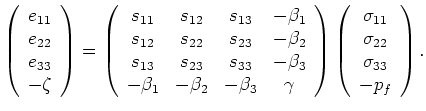 are strains in the
  directions.
The
directions.
The
 are the corresponding stresses.
The fluid pressure is
are the corresponding stresses.
The fluid pressure is  . The increment of fluid content
is
. The increment of fluid content
is  . The drained compliances are
 .
Undrained compliances (not yet shown) are symbolized by
.
Undrained compliances (not yet shown) are symbolized by  .
Coefficients
.
Coefficients
 , where
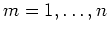 is again the Reuss average modulus of the grains.
The drained Reuss average bulk modulus is defined by
is again the Reuss average modulus of the grains.
The drained Reuss average bulk modulus is defined by
 , I have drained compliances replaced
by undrained compliances. A similar definition of , with drained compliances replaced
by grain compliances has already been introduced earlier in the discussion.
The alternative Voigt (1928)
average [also see Hill (1952)]
of the stiffnesses will play no role in the present work.
And, finally,
, I have drained compliances replaced
by undrained compliances. A similar definition of , with drained compliances replaced
by grain compliances has already been introduced earlier in the discussion.
The alternative Voigt (1928)
average [also see Hill (1952)]
of the stiffnesses will play no role in the present work.
And, finally,
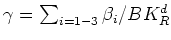
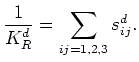 , where
 is the second Skempton (1954) coefficient,
which will be defined carefully again later in our discussion.
is the second Skempton (1954) coefficient,
which will be defined carefully again later in our discussion.
The shear terms due to twisting motions (i.e., strains
 ,
,  ,
,  and stresses
 ,
,
 ,
,
 ) are excluded from this discussion
since they typically do not couple to the modes of interest for anisotropic
systems having orthotropic symmetry, or any more symmetric system such as
transversely isotropic or isotropic.
I have also assumed that the true axes of symmetry are known,
and make use of them in my formulation of the problem.
Note that the
) are excluded from this discussion
since they typically do not couple to the modes of interest for anisotropic
systems having orthotropic symmetry, or any more symmetric system such as
transversely isotropic or isotropic.
I have also assumed that the true axes of symmetry are known,
and make use of them in my formulation of the problem.
Note that the  's are the elements of the compliance
matrix
's are the elements of the compliance
matrix  and are all independent of the fluid, and
therefore would be the same if the medium were treated
as elastic (i.e., by ignoring the fluid pressure, or
assuming that the fluid saturant is air).
In keeping with the earlier discussions, I typically call these compliances
the drained compliances and the corresponding matrix
the drained compliance matrix
and are all independent of the fluid, and
therefore would be the same if the medium were treated
as elastic (i.e., by ignoring the fluid pressure, or
assuming that the fluid saturant is air).
In keeping with the earlier discussions, I typically call these compliances
the drained compliances and the corresponding matrix
the drained compliance matrix  , since the
fluids do not contribute to the stored mechanical energy if they are free to drain
into a surrounding reservoir containing the same type of fluid. In contrast, the
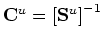
undrained compliance matrix
, since the
fluids do not contribute to the stored mechanical energy if they are free to drain
into a surrounding reservoir containing the same type of fluid. In contrast, the
undrained compliance matrix  presupposes that the fluid is
trapped (unable to drain from the system into an adjacent reservoir) and
therefore contributes in a significant and measureable way to
the compliance and stiffness (
presupposes that the fluid is
trapped (unable to drain from the system into an adjacent reservoir) and
therefore contributes in a significant and measureable way to
the compliance and stiffness (
![$ {\bf C}^u = \left[{\bf S}^u\right]^{-1}$](img91.png) ), and also
therefore to the stored mechanical energy of the undrained system.
), and also
therefore to the stored mechanical energy of the undrained system.
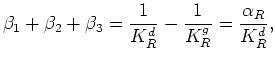
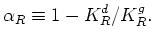
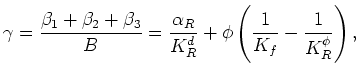
Although the significance of the formula is somewhat different now, I find again that
coefficient is given by
 that comes into play when the pores are heterogeneous,
regardless of whether the system is isotropic or anisotropic.
I want to emphasize that all these formulas are rigorous statements based on the earlier
anisotropic analysis. The appearance of
that comes into play when the pores are heterogeneous,
regardless of whether the system is isotropic or anisotropic.
I want to emphasize that all these formulas are rigorous statements based on the earlier
anisotropic analysis. The appearance of  and
and  is not an approximation,
but merely a useful choice of notation made here because it will make clear the similarity
between the rigorous anisotropic formulas and the isotropic ones.
is not an approximation,
but merely a useful choice of notation made here because it will make clear the similarity
between the rigorous anisotropic formulas and the isotropic ones.
 coefficients

|
|
|
|
| Poroelastic measurements resulting in complete data sets for granular and other anisotropic porous media | |
|