


The difficulties of imaging below salt edges are compounded by the difficulty of generating an accurate velocity model in these areas. The majority of imaging techniques require an accurate velocity model in order to produce a well focused result. The geophysical regularization scheme in particular expects the events to be flat along the offset ray parameter axis - that is, that the correct velocity be used.
I applied the geophysical RIP scheme to the Sigsbee2A dataset,
using different velocity models. The correct velocity model can be seen
in Figure ![[*]](http://sepwww.stanford.edu/latex2html/cross_ref_motif.gif) . The result of migration using the correct
velocities is Figure . The result of 3 iterations
of geophysical RIP using the correct velocities is in
Figure .
. The result of migration using the correct
velocities is Figure . The result of 3 iterations
of geophysical RIP using the correct velocities is in
Figure .
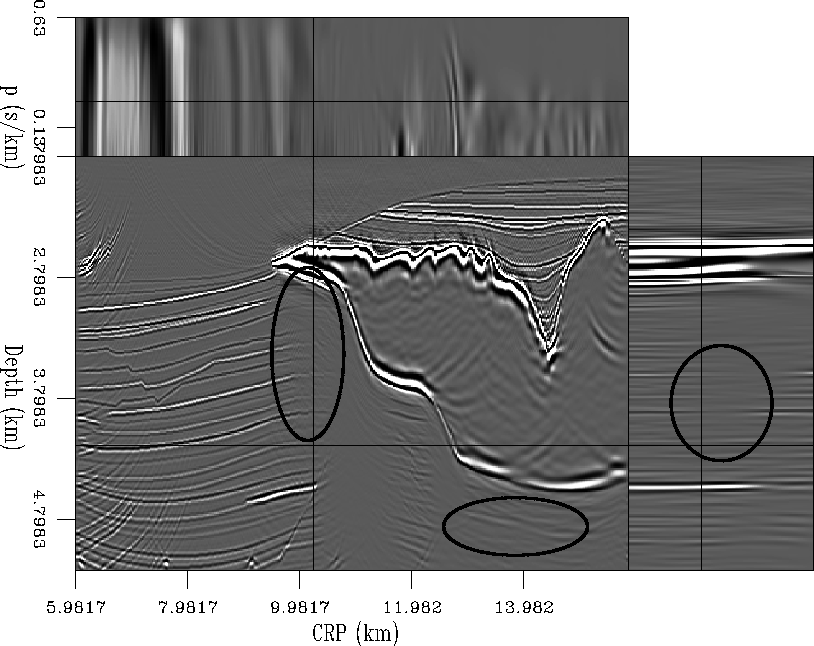 |


To test the sensitivity of the geophysical RIP, the first
incorrect velocity model I tested simply scaled up the correct
velocities by 67#67. As expected, the migration result using this velocity
model (Figure ) shows the events positioned deeper
than they should be and moveout along the offset ray parameter
axis.
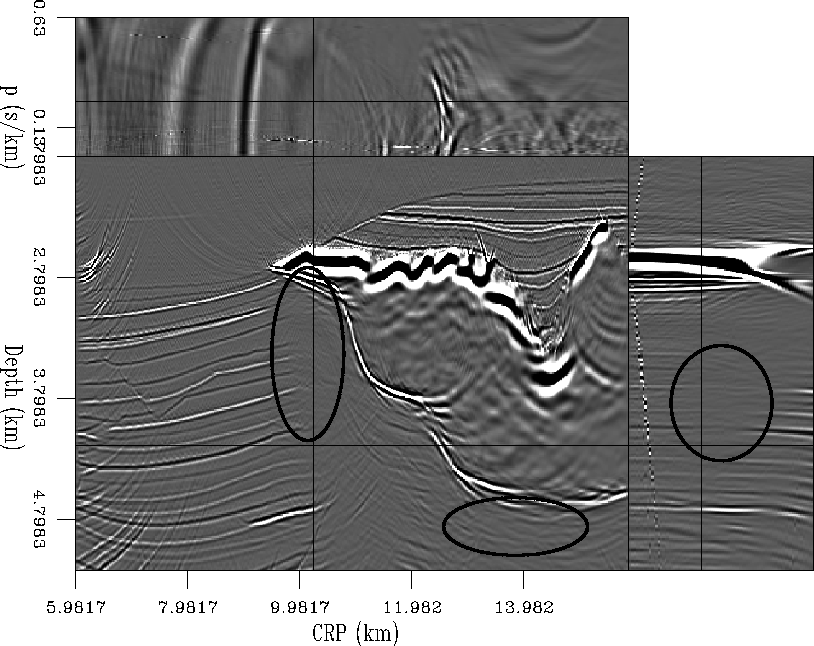 |
Recall that the geophysical regularization operator acts horizontally along the
offset ray parameter axis. It is this sensitivity that we are interested
in observing in the result of 3 iterations of geophysical RIP
using the high velocity model (Figure ). Note
that once again the geophysical RIP has cleaned up many of the
artifacts. In the CRP-depth panel, the events extend farther under the
salt, in a similar way to the inversion result using the correct velocity
(Figure ). The more interesting result is the
CIG panel. The inversion is still successfully filling in the
holes along the events at the mid-range of offset ray parameters. At
large ph, where the moveout is more pronounced, the regularization
has made some attempt to change the dips to be more horizontal, but the
moveout is still visible. This means that this result is most likely
not safe to use for velocity analysis, but this inversion
technique was never intended as a velocity tool. Overall, this result
indicates that this technique can produce a better image than migration
alone, even when the velocity model is incorrect by up to 67#67.
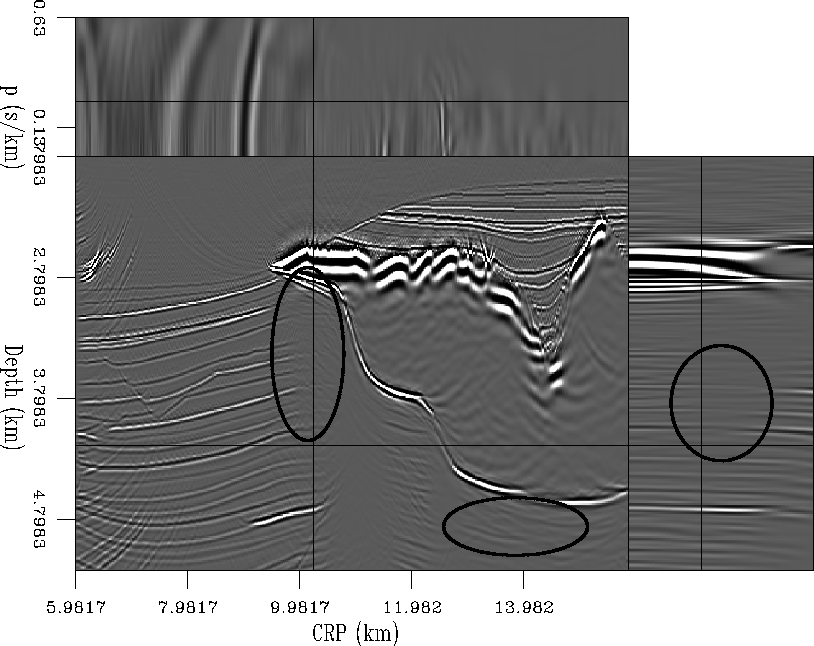 |
). In the CRP-depth panel,
the events extend farther under the salt and events under the salt can be
seen (inside the ovals). In the ph-depth panel, the
holes in the events are filled in (inside the oval).
|
vel.smoothvel
Figure 20 The smoothed velocity model. Note that the canyon in the top of the salt has disappeared. | 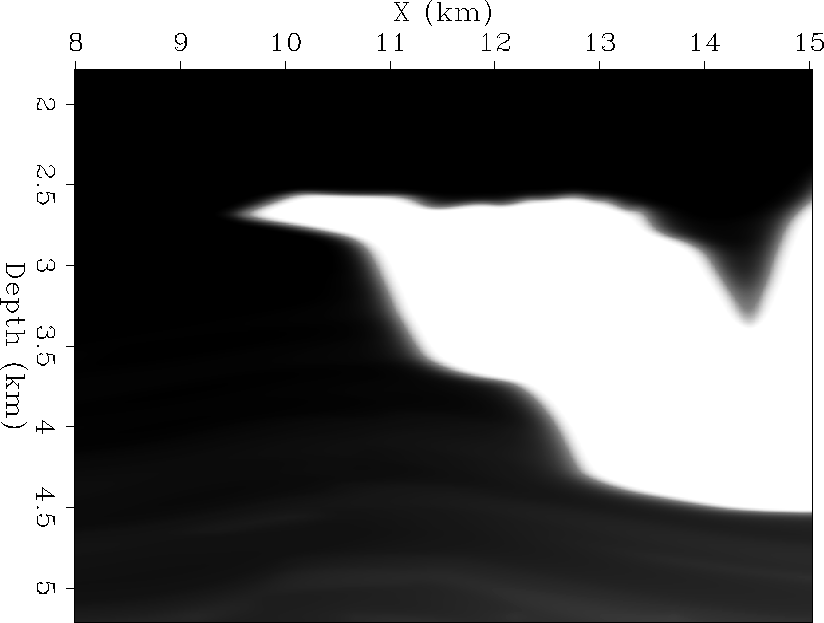 |
 |
.
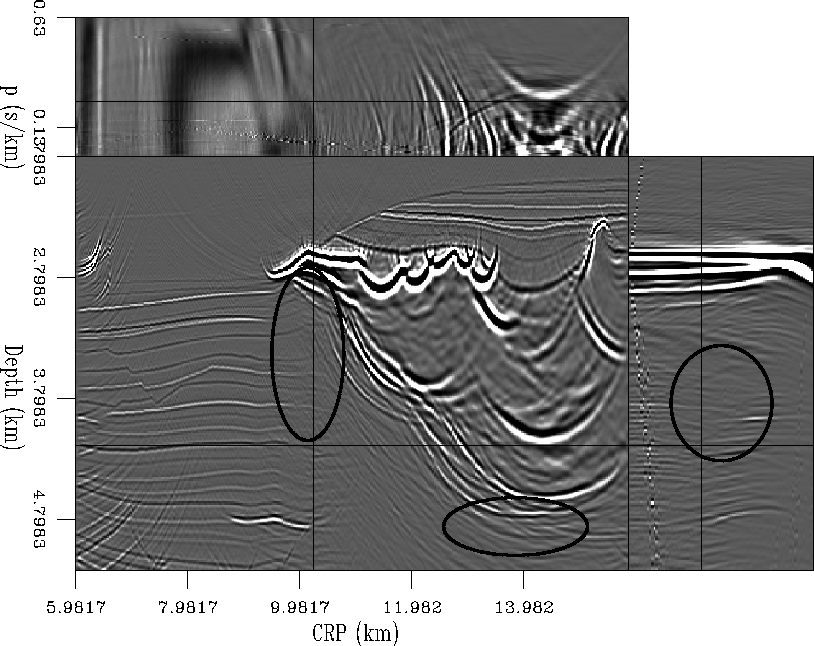
A more extreme velocity model I tested was a severely smoothed one
(Figure ). This model has been smoothed so
much that the canyon in the top of the salt has disappeared. As
expected, the migration result from this model isn't very good
(Figure ). The depth positioning of events
is fairly good away from the salt, but becomes poor near the salt.
The salt top and bottom are very poorly imaged. The events in the
CIG panel appear to be mostly random.
 |
.
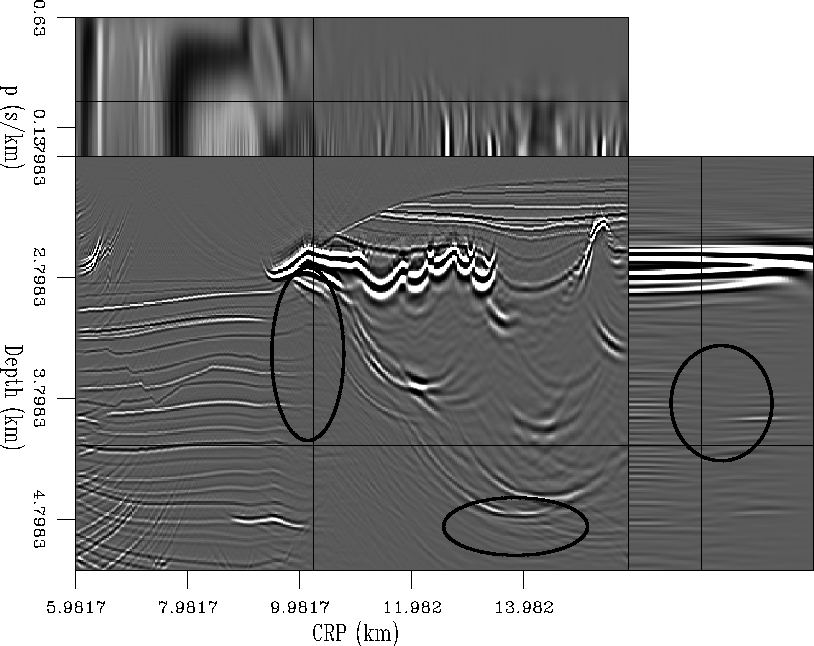
The result of 3 iterations of geophysical RIP using this smoothed
velocity model can be seen in Figure . Although
many of the artifacts have been cleaned up, overall the image is not
any better than the migration result. The events in the CIG
panel are more horizontal, but they are not more believable than the events
in the CIG of the migration result. This is a reassuring result,
as it indicates that the regularization was not able to artificially
introduce events where the data indicated otherwise.
The results of geophysical RIP with incorrect velocity models are encouraging. As long as the velocity model is not too inaccurate, the regularization operator behaves as it would for the correct velocity model and produces a better image than migration alone. In the case of a highly inaccurate model, the inversion itself prevents us from producing an image that would conflict with the known data. Overall, as long as the velocity model is reasonably close to correct, the assumption of zero moveout made by the geophysical regularization operator is acceptable.