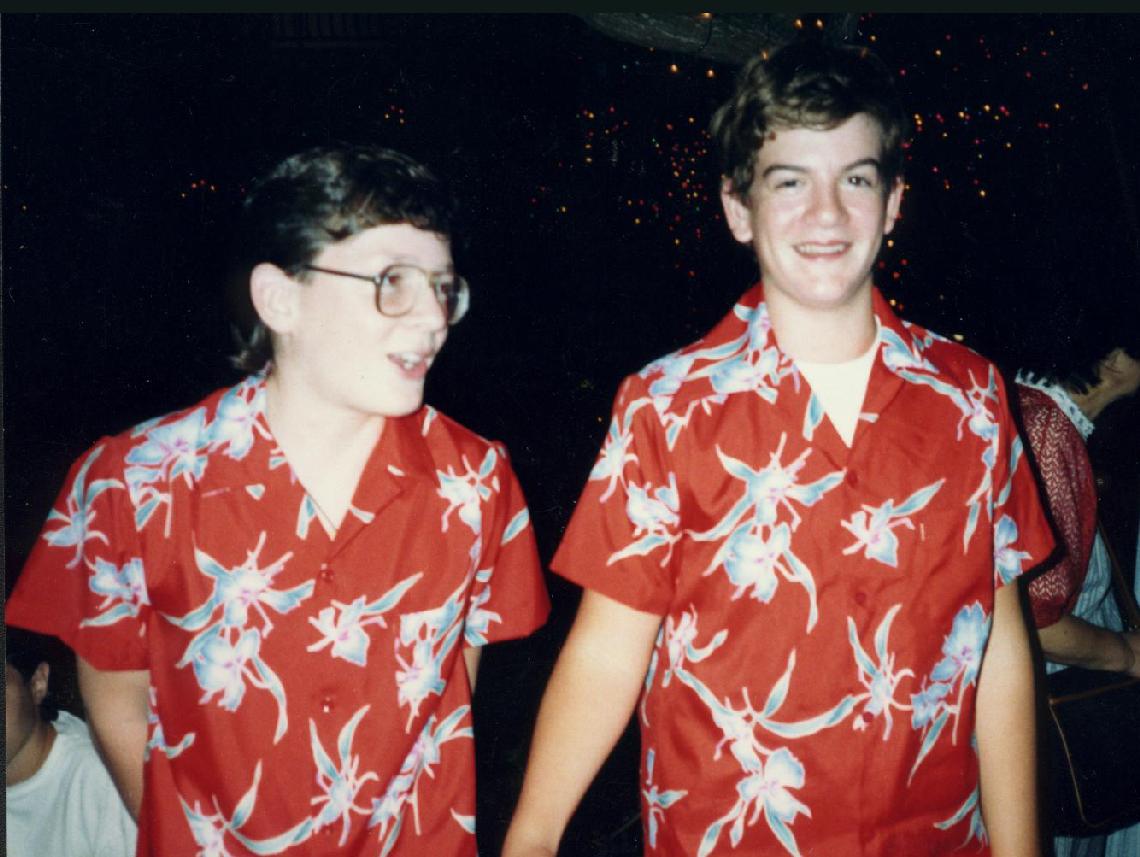
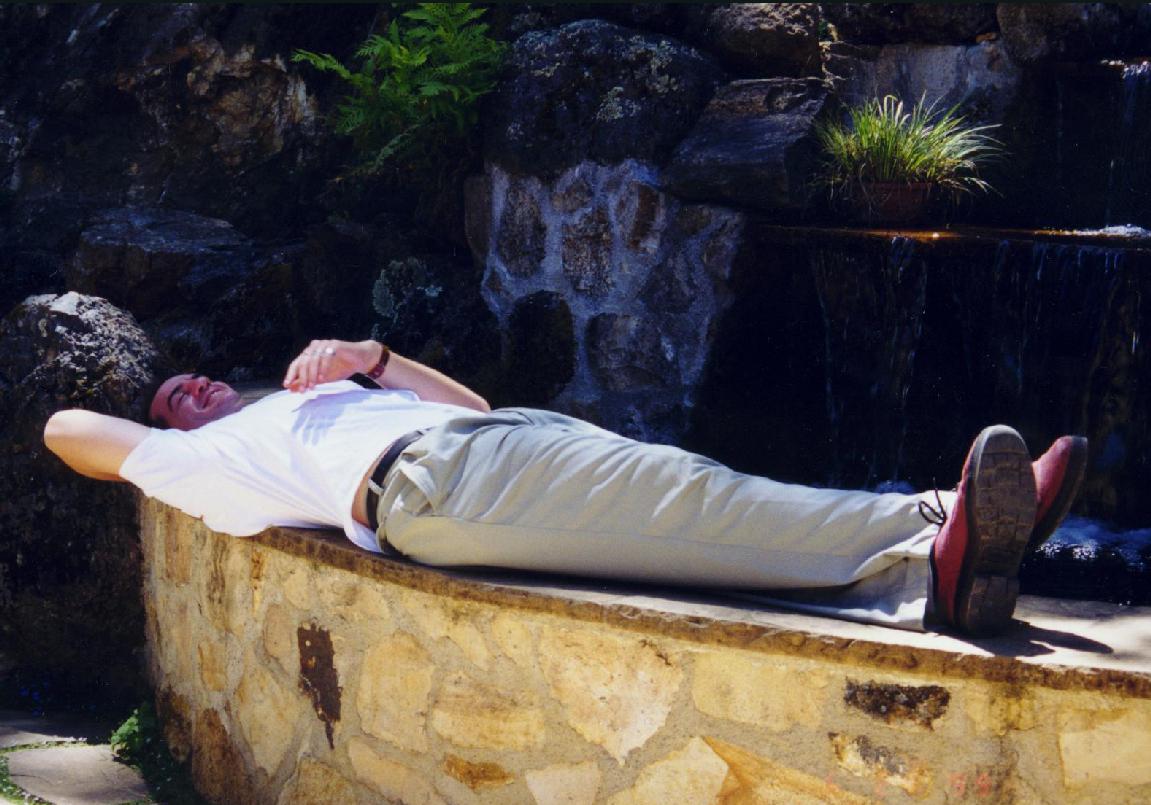
June 14, 1974 - August 20, 1999
"What do we have to look forward to today?
There are a lot of things we have
to look forward to today."
Short version Long version Updates .
| http://sepwww.stanford.edu/data/media/public/sep/jon/family/jos/ | 4/02 |
|
|
June 14, 1974 - August 20, 1999
"What do we have to look forward to today?
Short version Long version Updates . |
|
All that by age 25!
Try to imagine what could have followed! The Fateful HourThe FuneralP.A.Weekly, Emily Wilska, Joel Black, Joshua Allen.Memories of Jos by 116 peopleWebTV farewell to JosResume. Journey to his grave.
|
How to
contribute your memories. Please do!
Printing
links to here
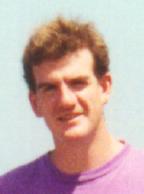 Johannes Dianovich Claerbout, 25,
a lifelong resident of Stanford,
died of a massive heart attack at his
job in Mountain View Aug. 20. The
youngest of three boys, "Jos" was
born in Mountain View and attended
Nixon Elementary School, Jane
Lathrop Stanford Middle School,
Gunn High School and Pomona
College.
Johannes Dianovich Claerbout, 25,
a lifelong resident of Stanford,
died of a massive heart attack at his
job in Mountain View Aug. 20. The
youngest of three boys, "Jos" was
born in Mountain View and attended
Nixon Elementary School, Jane
Lathrop Stanford Middle School,
Gunn High School and Pomona
College.
After graduating from Pomona with degrees in economics and religion, he became an engineer at WebTV in Mountain View. He taught himself Web design and computer engineering, and in his spare time, he loved to knit his trademark "toessel" hats, which he displayed on his former Web site, www.toessel.com He wrote screenplays and short stories and taught himself massage; he spoke Spanish and had just started learning German when he died. He was also an amateur filmmaker, and recently filmed a Silicon Valley version of Alfred Hitchcock's "Rear Window," set in office cubicles. He was a volunteer bike mechanic, worked with Habitat for Humanity, taught English in Ecuador, and traveled to Alaska twice to study Japanese and work on a fishing boat and for the Green party. "He fit into 25 years what most people don't do in several lifetimes," said Caryn Huberman, a friend of the Claerbouts. Claerbout loved a good bargain; he often shopped at Ragtime, a local thrift store, and his older brother Andrew recalled that Jos often came home thrilled with his latest 29-cent shirt. Family members say Jos will be remembered for his enthusiasm and extraordinary good humor. "He had no inhibitions about living life as fully as he could, and he loved everyone he came in contact with," said his brother Andrew. "He knew all the cafeteria workers (at Pomona College) by their first names, and he probably knew what their grandmothers were like too. Everything to him was amazing; everything in his life was superlative, and he wanted everyone else to experience life in that way."
His father is a professor of geophysics at Stanford University. He is survived by his parents, Jon and Diane Claerbout of Stanford; and two brothers, Andrew Claerbout of Burlington, VT and Martin Claerbout of Maui, Hawaii. Services have been held. Donations may be sent to the American Heart Association or to the charity of the donor's choice.
(adapted from Palo Alto Weekly obituary ).
|
Next
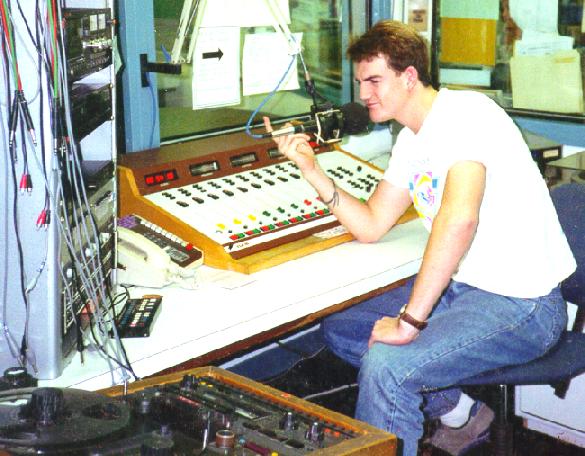
"Jos, 19, served as radio station KSPC's General Manager, Development Director, News Director, and DJ. He was the first ever to become General Manager as a Freshman." "He came to KSPC at a tumultuous time... He leapt into the middle of this storm with a smile on his face and conviction in his heart about supporting the little guy." "He would practice his Spanish on unsuspecting business line callers: 'Hola, Ka -Ese -Pay -Say.' (Hello, KSPC.)" Erica T y r o n remembers much more. |

|
Jos, 20, the Alaskan fisherman at the dock in Seward.
After a summer of unlucky fishing he was lean and hungry looking.
In the photo he might look far, far away,
but actually he was exuberantly present.
The next day he shaved off his mustache.
He would soon become the campaign coordinator
for the Green Party representing Alaska's candidate for US Congress.
She writes:
To see more of Alaska, make your screen big and
click on the picture.
While Jos, 21, was a tour guide at the
historic Kennecott Mine
in the
Wrangell / St. Elias National Park
in Alaska,
his brother Martin got married in Hawaii.
Jos came.
Here he is,
offering his wedding toast.
He even had a few words in Japanese for the bride's parents,
words he had learned in Fairbanks at a summer school in '91.
His wedding gift to Yasuko and Martin was something
that he had selected with great care and could ill afford:
a fur rug/blanket from an Alaskan Elk.
Next
"Although my passion (and some would say life's work),
my political involvement and
the electoral campaigns in particular have taken a toll on me,
my family and my friends.
[Jos's article] helped me remember that there are far
more positive benefits that come out of these efforts,
that make them truly worthwhile -- regardless of the costs involved.
I laughed until I cried reading
his account of our campaign stop
before the Americans for the Constitution group.
Alaskan politics are like none other.
The size of Alaska makes running a statewide campaign
to reach a half million people
scattered like seeds in tall grass -- an enormous undertaking.

Next


"Everything to him was amazing; everything in his life was superlative; and he wanted everyone else to experience life in that way," writes Brother Andrew.
|
It's been stated of Jos and its true,
That his antics surprised quite a few, If he stood here today, He'd hug you and say : Stop that crying, there's laughing to do! Young Jos was a hit with the ladies,
|
Jos programmed and filmed and he knit,
|

Yossel writes about his knitting site at his knitting site.
"This isn't really a knitting site. Sure, you'll find some patterns here, and I might even talk about yarn somewhere. But coming to my site for knitting patterns is like taking a class in literary criticism from Mike Tyson [former heavyweight boxing champion]. The truth is, this site is really about absurdity, bombast, and baseless enthusiasm; the patterns are an insignificant part of it."
Humor aside, we think his his toessel site is about love of life.
Next
Jos wearing
a "Papa-bear toessel",
a hat he knit.
Here is
a side view too.
Here he is as a
model
on his
toessel web site.
Professor
David Menefee-Libey
writes,
"I was thinking about the way Jos had of humanizing really huge and
overwhelming issues like the religious/political issues
we talked about in the portion he taught of my US Congress class:
abortion, euthanasia, freedom of worship, etc.
Without diminishing the gravity of the issues at hand,
he often found aspects of them which were absurd to the point of silliness.
A good joke would often diffuse tension,
and we could go on with our often very serious discussion.
His seriousness and goofiness were woven together."
[ example]
The picture
(mother's favorite)
shows Jos, 23, at a WebTV Halloween party.
His costume is a "couch",
a joke on his bringing an orange couch to work.
His boss criticised it, but she often sat on it.
Jos's roommate Camilo writes:
"I met Jos at work.
And in the first month I worked with him
I suggested in a joke that we should get a couch.
Of course,
Jos took me very seriously and started working his magic
to convince the manager that we had to get a couch.
So we went out to the Goodwill and almost immediately he spotted exactly what he
wanted.
It was an old, bright orange couch, and he loved it.
He sat down just for one second;
he sat down and waited.
And I watched him for about a half hour negotiate with all the
workers there, in Spanish, to try to get it down from the eight dollars
that they were asking. It would be unheard of to pay the full price!"
Next
"We knelt
on the stern, facing the sea, in between
the spool and the stern. We each had
by our side
a tub of 250 pieces of bait with ganyons attached.
The first complication is speed. From the time a becket is
snapped to the line, I had about seven seconds
before I had to snap the next one. Bear in mind
that there's 250 ganyons in one of these tubs and
the hooks get messed up pretty frequently.
There was no time to stop the line, so if one of us
got stuck, the other would have to do double time.
The second complication is that a becket is not the easiest of
snaps and attaching it to a line whizzing by at 3
miles an hour ain't so easy either.
The rope had to be stabilized prior to snapping,
which is why we wore gloves.
Even with the leather glove I managed to give myself rope burn.
Now, besides all this, snapping is dangerous.
...
I took this this job very seriously.
What makes it dangerous is the possibility of
getting hooked and taken off the boat.
Once that becket is snapped,
that line is going out,
with a dangling hook attached.
And before you think I'm joking,
bear in mind that this gear is designed to catch fish that weigh over 300
pounds, compared to my paltry 180."
[This one was
420 pounds.]
Go enjoy
his Alaska diary.
Next
Jos's daily greeting to his workmates:
"Are we going to have fun today?"
"I don't even like convertibles! Jos, why would I want a convertible?"
"To carry all of the gold bars these ideas are going to bring you!"
"I've been convinced that
I must go to business school
and launch this idea myself!
. . . . .
. . . . .
oh, no. Somebody else is going to have to go to business school."
"Amigito,"
Jos began,
"I have a wonderful idea
that you would be a fool not to want to be a part of."
I can still hear him pitching an idea that at first glance seems ludicrous,
at second seems idiotic,
and at third begins to seem quite profitable. --Jano
"Jos didn't just do things. He embarked upon expeditions"
--Ashton
"You'll be so beautiful
in this toessel with these stylish dreadlocks, Grandma,
all the men at Pine Haven Home
will be after you."
[Read the
whole story].
photo taken about July 6, 1999
Next

 Next
Jos, 20, and his big fish.
Next
Jos, 20, and his big fish.
 Next
The Promoter
Next
The Promoter
"Renée
what color convertible are you going to get?"
Next


"Hey Popster, how do we code this to push these two colors apart in intensity while preserving their hues and making sure their RGB values stay in bounds?"Dad writes,
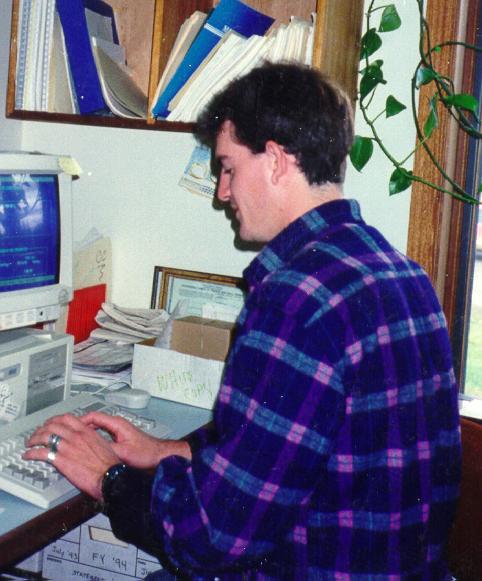
"Jos found his color picker to be a real challange. Beyond the product development challenges, the American color television standard itself (NTSC) is a hodgepodge of engineering compromises. He really did enjoy getting to the bottom of things. Without an adequate math background, he did his best to understand Fourier transforms -- he needed them to explain television and color.When he "engaged himself" to WebTV 18 months earlier I had told him not to get his expectations too high, that WebTV was full of engineers with four year engineering degrees. He proved my fears unwarranted. I recall my surprise and delight and his enthusiasm when he came to explain Huffman coding to me -- and he explained it magnificently. When he learned that "object coding" was possible in Javascript he immediately began modifying his colorpicker to introduce it."
Next
Jos with Mother in bliss.
Do they have the same eyes?
Father writes,
"When Mother is able to write, she will tell you about 25 years of love --
not all one sided either.
She could say,'He knew what I was doing with my life;
he cared about it; and he talked to me about it.'"
[Read more].
Next


Jos at Grandma's cottage on Lake Michigan. It was three weeks after he turned 25 years, and it was six weeks before the end.
Next:
A week later
he died of cardiac arrest.
In the last week of his life he made a movie,
Rear Cubicle.
In this video capture he experiments
with the microphone overhead.
He is saying, . . .

"What do we have to look forward to today?
There are a lot of things we have to look
forward to today.
We're just having a lot of fun."
Jos changed his name. After leaving home and arriving at college he jumped on his bicycle and went off to the county courthouse where he changed his name. It cost him $200 and a couple trips back to the courthouse.
What? You couldn't find the name "Dianovich", even using the world's biggest search engine?
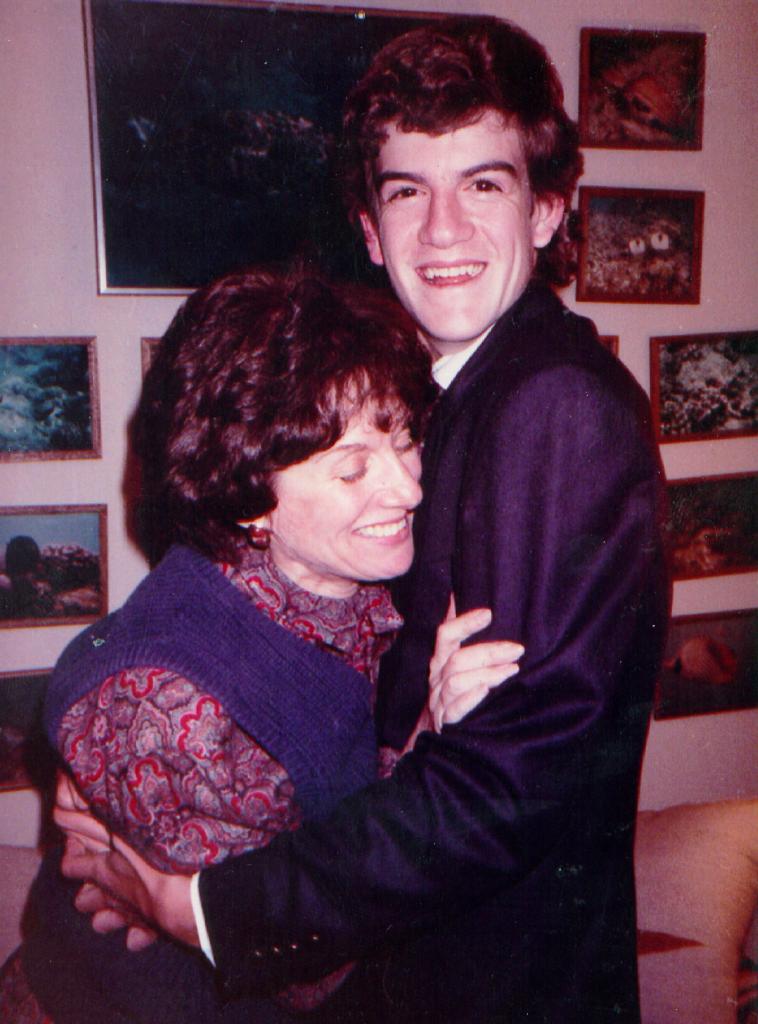 Jos's mother is of Russian ancestry.
In Russia, if your name is
Dimitry Ivanovich Mendeleev,
it means that your first name is Dimitry and your
father's first name is Ivan.
I don't think the Russians have any Dianovich,
meaning someone whose mother is Diane.
But they would understand it. As Jos did.
His mother is Diane.
"Johannes Dianovich" means Johannes son of Diane.
"Josmom" is her handle.
Jos's mother is of Russian ancestry.
In Russia, if your name is
Dimitry Ivanovich Mendeleev,
it means that your first name is Dimitry and your
father's first name is Ivan.
I don't think the Russians have any Dianovich,
meaning someone whose mother is Diane.
But they would understand it. As Jos did.
His mother is Diane.
"Johannes Dianovich" means Johannes son of Diane.
"Josmom" is her handle.
He never liked his given name, "Jeremy David". His popster had advised him to wait until the day he went to college and got all new friends. Then change his name. So he did.
So how did he come up with that name?
The name "Johannes" is a classic name in his father's ancestry. We'll never know for certain why he chose Dianovich. Our best guess is that it was to balance his karma and to honor his mother.
In Holland, "Jos" is a common nickname for Johannes. So Jos was the name of Johannes Dianovich Claerbout. "Jos" is pronounced "Yohs" as in Yossel's Toessels.
Jos applied to Stanford, Reed, Pomona, UC San Diego, UC Santa Cruz, Colorado College, Puget Sound, and Lewis and Clark. Although his grades and SATs were not tops, he was admitted by every one of them. We don't know what his teachers wrote about him, but these application essays are real zingers!
Parents purchased for Jos a book of college application essays.
He refused to look at it before he finished and mailed his own creations.
Afterwards he didn't look at it either.
(In season, this page receives about 35 visitors/day.)
My
Amusing Anecdote
is getting rather old and tired;
the last several months have left him
completely exhausted.
I will undoubtedly retire him in the middle of February.
As for my Personal Philosophy,
he's still young and eager to see the world.
Like most
Essay Topics
his age,
he is in an exploring stage.
He values experience over possessions,
and good humor over all.
There hasn't been a day
when I've been depressed and gloomy
when my Personal Philosophy hasn't jumped up onto my lap
and with one lick made me feel much better.
I know I'm going to hold onto my Personal Philosophy forever,
but my parents say it's time to trade in
my Amusing Anecdote and Pet Peeve for a piece or two of Humble Pie.
If there is some other question you wish we had asked,
please ask it now and answer it here.
[Here is
what happened.
-Popster]
Jos wrote his college applications in the fall
of his senior year of high school.
Instead of relaxing thru the spring semester,
he managed to graduate in January
and left for Mexico to take a job.
He had hoped to get a job doing
the management control system in a rock crushing plant in Campeche,
but that fell through and he ended out
in the city of Escuinapa with frequent
expeditions to a local farm job.
He had a wonderful time there
and made many friends
(but was happy to see his parents when they arrived for a visit).
If Jos were writing this page he would add that he survived an
attack by killer bees.
The metallic-looking hooks are merely a fierce Mexican weed.
And then it hit me.
The world is full of crackpots,
lunatics like
Shakespeare, Michelangelo, and Newton.
People who insisted on being able to do so many things,
but without any sort of accreditation.
It occurred to me that as soon as society found a way
to screen these people early on,
to detect them so that they wouldn't discourage a populace
that couldn't do everything,
society would be able to take great leaps forward,
and invent such important devices as the machine gun, the
atomic bomb, and television.
But how to do it?
What would discourage these subversive mavericks and encourage mediocrity?
What great invention was found that did this so swiftly?
The method would have to be universally accepted by all,
and it must be applied early in a child's life,
preferably in his school years.
Then it hit me.
Standardized testing.
In its infancy during the turn of the century,
it came of age in the middle, with its brainchild, the S.A.T.
What else could explain nerve agents and the 1040 tax form?
By screening out philosophers and artists, the S.A.T.
effectively opened the flood gates for millions of more worthy people,
who for the betterment of society,
were able to go on and create napalm and our current congress.
My mind is reeling with the weight of the discovery.
If I'm able to bring this test back with me through the millennia,
think of the ramifications! "The Dukes of Hazzard" could be in production by early 1287!
And maybe "Star wars" satellites will
be orbiting the Earth by the 1400's.
Salad shooters in every home by 1650?
Dare I dream?
Just think how idyllic life would be by 1992!
I grab a copy of five S.A.T.'s,
and run from the bookstore.
I step anxiously
into the time machine,
excited about the prospect of being able to save the world from
its inefficiencies.
It's raining.
The time machine has dropped me off in a dark street;
puddles are gathering between its wide cobblestones.
My year-watch reads 1516, Italy.
I didn't expect to get wet,
and hadn't dressed accordingly,
so I pull my jacket up over my head
and run toward the first doorway
I find among the wall of buildings which line the street.
The doorway,
like the street,
is narrow,
and the rain continues to
penetrate my clothing,
threatening the pages of five S.A.T.'s.
I lean against the door as
hard as I can,
to get out of the rain as much as possible.
It must have been a cheap door.
Nevertheless,
I'm no longer leaning
against it,
I've now crashed to the floor,
and I'm lying on top of the door inside what
appears to be someone's living room.
Somewhat dazed, I stagger to my feet,
and am rudely accosted by an old man
with long white hair who seems to live in the house.
He yells at me,
"Perdoni l'interruzione,
dov'e la sala da ballo!"
Recalling my years of high school Italian,
I quickly take his meaning to be,
"Why are you in my living room lying on
my front door?" I respond "I'm sorry,
I thought this was my aunt's house" in Italian,
which is "Mi dia per favore dei francobolli."
Having somewhat calmed the man by this
remark,
I realize that he would be a perfect subject.
Reaching into my jacket I pull out the book
and decide to test just how smart the average man from Italy really is.
I ask, (in perfect Italian),
what is wrong with this sentence?
He looks up at me quizzically,
then beckons me with his finger to follow
him into an adjoining room.
I do,
asking him to answer the question.
He shakes his
head and mutters,
and we've arrived in a room lit by candlelight and adorned by
drawings and notebooks.
Opening one of them,
he shows me a sketch of his.
It shows
a naked man with four arms and four legs,
each in a different position,
standing inside
a circle.
"This is ridiculous!" I shout.
"He's got twice as many limbs as he should
have!
How can you do an anatomical drawing when you don't even give the guy the
right number of limbs!?"
Disgusted, I hand the notebook back to him and ask him
another question.
"He only works eight hours?"
"Yes!" I answer enthusiastically.
Maybe this man does have the spark in
him to truly create good work!
Maybe he could write for `Different Strokes'!
"Eight hours...lazy bum," the man mumbles,
flipping through the notebook to show me another drawing.
He hands to me a sketch of a rather primitive glider.
"Oh this would never work," I begin.
"It doesn't have a motor!
And what
have you written under it?
What is that,
backwards?
It's gibberish!",
I throw the
notebook back at him and storm back to the living room.
Hanging on the wall is the
painting of a rather homely girl,
her hands are crossed in her lap.
"This is horrible!" I yell at the man.
"You can't tell if she's about to start
smiling or about to stop!
How can it be art if you can't even tell her emotions?!"
Grasping my book,
I run out the doorway.
It's sort of sad,
some people in
this world just have no grasp of what culture really is.

Mumsie and Popster are glad he didn't use this
this earlier version
which is even more exuberant.
Do you have a personal philosophy?
 Why yes,
I do have a
Personal Philosophy.
I keep him in the garage.
He is short and four legged.
His fur is still soft, as he is rather young.
Young that is, in comparison to his two garage companions, my
Pet Peeve
and my
Amusing Anecdote.
My Pet Peeve is a large badger-like animal,
bred from a long lineage of
Overly Broad Or General Essay Questions.
She is expecting two children this Spring,
to be named
Tell Us About Yourself
and
Write About A Moment That Meant A Great Deal to You.
Why yes,
I do have a
Personal Philosophy.
I keep him in the garage.
He is short and four legged.
His fur is still soft, as he is rather young.
Young that is, in comparison to his two garage companions, my
Pet Peeve
and my
Amusing Anecdote.
My Pet Peeve is a large badger-like animal,
bred from a long lineage of
Overly Broad Or General Essay Questions.
She is expecting two children this Spring,
to be named
Tell Us About Yourself
and
Write About A Moment That Meant A Great Deal to You.
 From your own literature I understand that Reed students are:
From my friends and alumni I've talked to, I understand that Reed students are:
Clearly, there's a small disparity between what I hear and what I read.
I have to ask myself, what would a Reed student do in this situation?
They'd go to the college and make up their own mind.
And that's just what I plan to do.
Question:
Have you ever planned to graduate from high school
on January 24th so that you could take a job implementing the
management control systems for a rock crushing plant in
Campeche, Mexico that was offered to you by a man whom you had
worked for as a heavy equipment export broker last summer?
Answer:
Yes.

Jos with an armadillo in Escuinapa, Sinaloa, Mexico
 Nobody in Escuinapa spoke English
so Jos's Spanish grew in leaps and bounds.
Father recalls a taxi ride between two nearby towns --
Jos in front, parents in back.
Jos never looked at the road,
but kept his eyes on the taxi driver's face
while engaging him with gusto
on the merits of local music groups.
Nobody in Escuinapa spoke English
so Jos's Spanish grew in leaps and bounds.
Father recalls a taxi ride between two nearby towns --
Jos in front, parents in back.
Jos never looked at the road,
but kept his eyes on the taxi driver's face
while engaging him with gusto
on the merits of local music groups.
 When I look at the rate of industrialization of the world throughout the last
several thousand years,
it appears exponential.
That is,
after slowly rising for eons,
it skyrocketed near the end of the nineteenth century.
I'm pondering this.
Could there be one invention,
just one that set the world on fire?
Is it possible that one simple creation
by man's hands could be a catalyst to this burning reaction of mechanization?
The cotton gin?
No, too early.
The airplane?
No, too late.
Hmm.
When I look at the rate of industrialization of the world throughout the last
several thousand years,
it appears exponential.
That is,
after slowly rising for eons,
it skyrocketed near the end of the nineteenth century.
I'm pondering this.
Could there be one invention,
just one that set the world on fire?
Is it possible that one simple creation
by man's hands could be a catalyst to this burning reaction of mechanization?
The cotton gin?
No, too early.
The airplane?
No, too late.
Hmm.
The process
by which foreign foods become native staples,
such as the potato in Ireland and Italy
with its pasta,
is a mysterious one.
If Bob works 8 hours at an hourly salary of `d' dollars,
er,
lire,
and `c'
cents,
er...uh..lire,
his total salary for the eight hours will equal how many do...lire?"
[Historical note:
When Jos wrote this, a well-known part of the junk mail
received in every household was a large envelope
from Publisher's Clearing House. On the envelope
well-known television personality Ed McMahon
announced that
you may have already won many tens of thousands of dollars
which you could claim by reading further.]
If you could spend a year pursuing any activity,
all expenses paid, what would you do?
Be specific, and describe why your choice is meaningful to you.

What could I do in a year to develop a charity base, to amass the large fortune necessary to drop a virtual penny into the seemingly bottomless pail of World Need? Make an obscene amount of money. But how to do it? Here are some estimates I've arrived after significant research:
I'm no fool. I'm sure this is obvious. While the life of a destitute bike mechanic sounds promising, I can't turn down the opportunity of TEN MILLION DOLLARS PLUS VALUABLE PRIZES! Especially when I MAY ALREADY HAVE WON!
If International relief is going to get the kick in the butt it needs, I see it as foolhardy to do anything but dedicate my year to the winning of the Publishers Clearinghouse Sweepstakes. The realization of my destiny came upon me (as I'm sure it has come upon you) as a bit of a shock. In fact, it was sort of revelation. Just as Buddha had done when he achieved Nirvana under the blossoming tree, I knew then that it was time to cast aside my material goods and selflessly work toward my goal. One year later it was finished. I would like to share with you my year of triumphs and pitfalls, my year of accomplishment.
As I watch news of my philanthropy on the television, it occurs to me. If we all just spent less time fantasizing, and more time making personal sacrifices for the good of others, then finally this could be a world in which we'll all want to live.
If I had the ability to change one thing about American society, my decision would not be a difficult one. I would ban television.
If you are looking for universal reasons, read Four Arguments For The Elimination of Television by Jerry Mander. However, If you're curious about my personal complaint with it, read on.

I grew up a couch potato. Not a closet potato, but a flaming tuber. I owned several couch potato manuals, and can still recall some of the exercises outlined within. The From the La-Z-Boy to the toaster oven stretch and the Cooking with power tools sections are still ingrained in my mind. I mention these because, looking back, it seems I hardly read at all. I watched upwards of seven hours a day.
Everybody watched it, so I could talk about it with friends in those between-television times, like school.
I stopped watching television completely several months ago. I found that I became a more reflective person, simply because I had more time to think. Television had stopped putting its ideas in my head. I was pondering my childhood, and to my dismay, found that it could be summed up adequately in one sentence. "I watched a lot of T.V."
I will never be more creative, energetic, or more genuine than I was in my childhood, and how did I spend it? Alone in the dark, watching re-runs of Jack Tripper walking into a revolving door with his face in "Three's Company." My youth is something I cannot have back.
One of my older brothers, Andrew, hasn't owned a television since he entered college four years ago. I always thought this was ridiculous. How boring life would be without a T.V.! He always suggested that I quit watching, but I declined, explaining how I was down to watching just four or so hours a day.
Last summer I enrolled in the University of Alaska Fairbanks and studied Japanese. I had no television in my dorm room, so I spent my leisure time reading, doing homework, or working in a nearby bike shop as a mechanic. The most amazing thing I found was that the world did not end. Nothing changed. I didn't miss out on news (I read the paper) and if anything, I was more relaxed.
Late in my stay, I got a roommate. John had driven from Minnesota to Alaska to get a job in Denali National Park. When that fell through, he arranged for housing at the University and received employment as a waiter at a local restaurant. When I would arrive back at the Dorms from my job near dinner time (my class got out at noon) I would see him in the lobby, watching the communal television, which is where he had been for the last several hours. I wanted to yell at him "You're in Alaska! Get out of there and do something! Look around you!" I realized I had some reasoning of my own to do on the subject of television.
My name is Jeremy Claerbout, and I'm a televisionaholic. I've been sober for five months now, and I'm beginning to piece together my life. I'd like to hope that I speak for a lost generation, a generation that didn't "change that channel", but I fear that with such progress as "Nintendo" and "Sega" home video games, I'm not going to be the last person in this country to whittle away the best years of my life sitting passively in front of a television with a look of glazed acceptance.
Describe the educational experience that has had the most significant impact on your life.
Last summer, for a variety of reasons, the least of which not being to get away from the town in which I have lived for most of my life, I spent a month in Alaska. The trip was planned well in advance, as this was something I had been waiting to do for over a year. As one lives not solely to appease oneself at this age, I travelled to Alaska not only to enjoy a "hearty, rugged lifestyle", but to enroll in an intensive Japanese class at the University of Alaska Fairbanks, lasting four hours a day. This, if nothing else, convinced my parents that I would stay out of trouble.
 My misconceptions of needing ice picks and tundra gear to get from my dorm
room to class were quickly dispelled as temperatures rose to 98 degrees,
and I learned that it isn't snow capped mountains that Fairbanks is famous for;
it's trees.
As far as the eye can see.
I was adrift in a sea of conifers.
Which is nice, I guess, if you're a moose.
A quick check failed to locate any significant antler growth,
and I decided it was time to leave my cross country skis in the closet
and search for the Alaska experience.
A data search at the University library wasn't of much use,
and I concluded, sadly,
that if I was going to have anything to show for my month in "The
Last Frontier",
I should get a job.
My misconceptions of needing ice picks and tundra gear to get from my dorm
room to class were quickly dispelled as temperatures rose to 98 degrees,
and I learned that it isn't snow capped mountains that Fairbanks is famous for;
it's trees.
As far as the eye can see.
I was adrift in a sea of conifers.
Which is nice, I guess, if you're a moose.
A quick check failed to locate any significant antler growth,
and I decided it was time to leave my cross country skis in the closet
and search for the Alaska experience.
A data search at the University library wasn't of much use,
and I concluded, sadly,
that if I was going to have anything to show for my month in "The
Last Frontier",
I should get a job.
The next day I arrived at "All Weather Sports", a local bike shop. In an earlier telephone conversation with the owner, Simon Rackower, I assured him that, mechanically, "I can do almost anything to a bicycle". This bit of constructive hyperbole found me at the shop the next day, peering intently through the windows, trying to spot Simon, and start the interview. Then, there he was. Stepping out from behind the counter was a man in his mid-forties. Long, blackish gray hair surrounded the baldness which slowly crept farther back on the top of his head. His glasses were thick, almost impossibly so. His neck was arched, and he approached me with an oddly "western" gait, his feet rolling out as he walked.
As I introduced myself, he became confused. He had forgotten our interview and my current presence in his store was keeping him from a ride he wanted to go on. As I debated whether or not to apologize, he mumbled something to someone behind me, (there was no one there, I quickly surmised Simon wasn't a big believer in eye contact) and vanished into the back of the shop. He returned, carrying a box, which contained an unpacked bicycle.
"Here, build this."
This was my interview. No pesky forms, no letters of recommendation, no "How I spent my summer" questions. Just me. And a 1991 Bianchi Axis Cross-bike.
 Twenty seven hours later,
my interview was over,
and I learned that in fact,
I couldn't do "almost anything" to a bicycle.
It was quite a miracle that after this test,
(which would be something akin to a prospective employer
finding out that I hadn't graduated from second grade)
Simon hired me anyway.
Twenty seven hours later,
my interview was over,
and I learned that in fact,
I couldn't do "almost anything" to a bicycle.
It was quite a miracle that after this test,
(which would be something akin to a prospective employer
finding out that I hadn't graduated from second grade)
Simon hired me anyway.
For the next two weeks, I spent long hours in the shop with this introverted graduate of Cornell, sometimes until three in the morning, discussing matters as relevant as a bent derailleur hangar to abstractions such as gun control, and even the bombing of Hiroshima. When a subject came up, his opinion, if the same as mine, would solidify my position. If it was different, more often than not I would come out arguing "his" side. He was an extremely learned man, and was able to back up all of his conclusions with fact.
This experience of one-on-one debate was new for me. Instead of spending my time at the University, I'd run to the bike shop during my free time to get what almost seemed to be a "truer" education. I abandoned my romanticized views of Alaska and college life to pursue those things which can't be learned in school. Working on piecework on bicycles, I probably averaged about $1.15 an hour, but my mentor taught me many lessons I haven't forgotten. While the translation of "O-genki desu ka?" may be slipping slowly from my mind, the way I interpret the second amendment, and so many other things in my life, will never be the same.
If people lived to age 32,
I would have had my educational mid-life crisis last year
while I was sitting in AP Biology class.
For my whole life, I had an aspiration to be a doctor
and had enrolled in this class
seeing it as something of a stepping-stone to my goal.
But then it fell apart.
I remember the moment clearly.
Our teacher had my undeserving rapt attention
as she droned on about the partial diffusion of sodium chloride
through the Loop of Henle in the nephron,
the operational unit of the kidney.
As I looked down at what few items I had scribbled on my paper
(a heading for my notes, the notes themselves,
replete with sufficient question marks,
and a scribbling of what could have been a large dog, or a banana),
it occurred to me that
I really didn't care,
and I would rather repeat high school
than spend eight years of my life studying pedantic details
that as near as I can figure,
were of questionable importance to a high school student to begin with.
I knew more of the intimate details about my
spleen than most of my personal relationships.
I've completely forgotten the importance of DNA polymerase, but what I did learn from that class is that if my time in school is limited, I'm going to take classes in the interest of learning, not to pass some absurd test or to live up to someone else's unfounded aspirations.
It is because of this that I am seeking a liberal arts education and am unable to conceive of what I will be doing after college. I have learned that any plans I make at this stage in my life are destined to be more of a hindrance than a help to my education.
In what was little more than a ploy to get out of the the town I've lived in for most of my life I spent part of last summer in Alaska studying Japanese at the University of Alaska at Fairbanks. It was an accelerated language course where I received a semester's credit for a month of work. It didn't come easily, as the class met every day for four hours and there were frequent tests. However, I knew that after three years of forgettable classes and unforgettable work I was finally getting an education that could focus my attention without scattering it among several classes. That, if extended into a college experience, could finally have an impact on my life. Gee, where to find one?
I will be graduating at the end of this semester on January 24th to take a job that has been offered to me by a former boss. I worked for him as a heavy equipment export broker during August of last summer. I discussed with him my plans for an early graduation, and he offered me work on several projects of his in Mexico. If all goes as planned, I shall board a plane in the beginning of February. Why am I telling you this? Because, as one method of satisfying my graduation requirements, I started doing volunteer construction work for Habitat for Humanity in a nearby neighborhood. Working for Habitat has done so many things for me, it's difficult to list them all. Without looking at its results, the physical labor itself is important; I've always been in good shape, but actual WORK is just something not taught at Henry M. Gunn High School. My work with them is also my first meaningful volunteer labor and has opened my eyes to the fact that I don't just have to sit around and feel guilty about the homeless, I can do something about it.

 Six weeks before my son died ... Jos Claerbout died ...
we took a week at Grandma's cottage.
Grandma's cottage is on the old family homestead
at
the edge of Lake Michigan
between the woods and the sandy beach.
Brother Andrew joined us for a week of intergenerational renewal.
My two sons tower over Grandma.
She never called them by name,
perhaps because they tower above her and she is 88 years old.
Brother Andrew did the cooking and read stories to Grandma.
Jos (rhymes with Yohs)
scanned ancestral photos
onto the internet
and delighted Grandma by showing them enlarged and brightened
on his computer screen.
Six weeks before my son died ... Jos Claerbout died ...
we took a week at Grandma's cottage.
Grandma's cottage is on the old family homestead
at
the edge of Lake Michigan
between the woods and the sandy beach.
Brother Andrew joined us for a week of intergenerational renewal.
My two sons tower over Grandma.
She never called them by name,
perhaps because they tower above her and she is 88 years old.
Brother Andrew did the cooking and read stories to Grandma.
Jos (rhymes with Yohs)
scanned ancestral photos
onto the internet
and delighted Grandma by showing them enlarged and brightened
on his computer screen.
Ninety year old great aunt Evy wanted a birthday present for a grandchild but she could hardly get out of the old folks home. Jos sat her down in front of his portable computer, went to Amazon, and showed her how to select some Dr. Seuss books. She never noticed when he slyly put the charges on his own credit card and she was astonished when the books arrived a few days later.
 Looking at a hundred year old photograph
of Grandma's mother, Jenny,
was enough to give Jos a crush on her.
He later showed off her photo to his work friends
promoting Great grandma a "real hottie".
Looking at a hundred year old photograph
of Grandma's mother, Jenny,
was enough to give Jos a crush on her.
He later showed off her photo to his work friends
promoting Great grandma a "real hottie".
From the old albums we learned that Grandma's childhood name was "Nory". Grandma told family stories of her childhood on the farm 80 years ago. I did little but sat close to my mother as the boys enthusiastically pursued their projects. At one magical moment my mother mistook me for my departed father, simultaneously mistaking my sons for me, her son.
Jos told Grandma that he intended to knit a hat for her. She was incredulous that a big man with such a strong presence would know anything about knitting. He sat down on the couch next to her with his overstuffed knitting bag. "Isn't this beautiful yarn, Nory?" He produced a circular knitting needle and began to cast on. Her eyes brightened and they talked of yarn and needles and stitches. "I call my hats 'toessels'," he said, "Yosell's toessels."
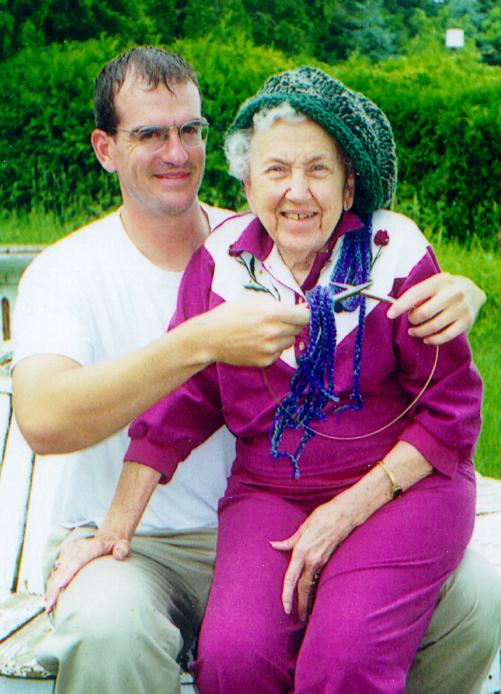 "Grandma, this is going to be a beautiful toessel".
She could see it would indeed become a beautiful hat.
"I am making this toessel for you, Nory."
She beamed.
In the several hours of the evening, the toessel took form.
"Nory, this is going to be a beautiful toessel and you are
going to look beautiful in it."
She was sitting on his lap.
By the hour, it was becoming a more beautiful toessel.
"Nory, you will be very beautiful in this toessel."
"Grandma, this is going to be a beautiful toessel".
She could see it would indeed become a beautiful hat.
"I am making this toessel for you, Nory."
She beamed.
In the several hours of the evening, the toessel took form.
"Nory, this is going to be a beautiful toessel and you are
going to look beautiful in it."
She was sitting on his lap.
By the hour, it was becoming a more beautiful toessel.
"Nory, you will be very beautiful in this toessel."
Jos expounded further on the charm of toessels with fins and with dreadlocks. Who else could convince Grandma that she needed a hat with added dreadlocks? "Nory, when you shake around these dreadlocks you will be irresistable to all the men at Pine Haven Home".
"All two of them," she quipped.
I am a no-nonsense, hard science, engineering person. To my surprise, a word popped into my head that I could not recall ever using. That word is "blessed". I felt blessed.
The time came for Grandma to model the toessel. Jos put the toessel on her. She strutted around the room, giggling and tossing her shoulders about in some way known instinctively to middle school girls when they become aware of their beauty. How could anyone ever feel more blessed than Grandma or me?
[Look at his hands.]
[Photo taken about July 6, 1999 -- possibly the last photo of him]
| KSPC radio Program Guide (with Jos tribute) |
(at KSPC) Fall 1999
(here) Fall 1999 |
| |
|
| KSPC radio Program Guide | Spring 1993 |
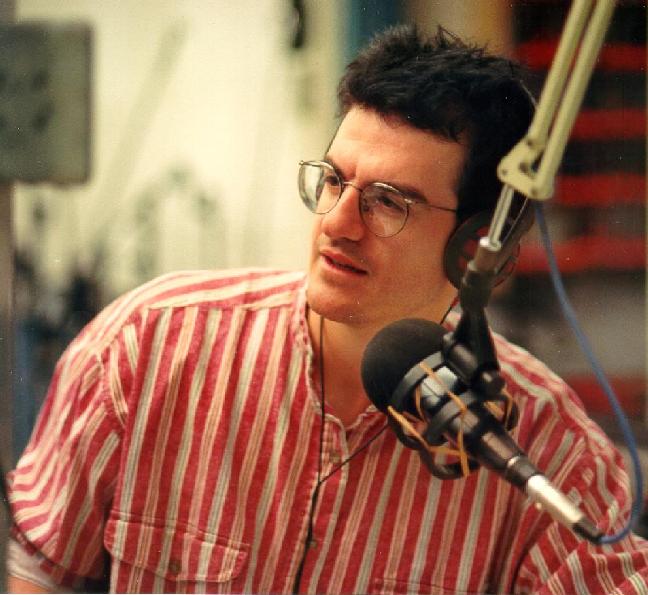 Hey there.
My name is Jos and I need your help.
We here at KSPC have a problem.
We're offering a musical format that's as widely varied,
exciting and as supportive of small acts as possible.
Tuning in on any given day may yield folk, blues, ska, metal,
hip hop or even station favorites Mecca Normal and Steroid Maximus.
Hey there.
My name is Jos and I need your help.
We here at KSPC have a problem.
We're offering a musical format that's as widely varied,
exciting and as supportive of small acts as possible.
Tuning in on any given day may yield folk, blues, ska, metal,
hip hop or even station favorites Mecca Normal and Steroid Maximus.
The fact that you've asked for this program guide tells me you know this already; so why am I babbling at you? Because you're in the minority. Most of your neighbors seem to think that "alternative" music is actually played on a station recently voted "The Most Popular" in the country.
We're giving you this bumper sticker in the hopes that you'll put it on your car (or your bicycle, plane, canoe, whatever) to help spread the word that true college radio is still alive and kicking. If not, I sure hope you enjoy MTV.
|
9PM ALTERNATIVE Your friends may not like you or your music. I understand. I'm Manic Stylings. |
 |
1974-1999
Johannes "Jos" Claerbout served as KSPC's General Manager, Development Director, News Director and DJ while a student at Pomona College. He was the first student ever to become General Manager during his second semester here at the colleges - a testament to the leadership, maturity and just plain moxie that he possessed.
He had a significant impact on KSPC, during a time when the staff were finding a new identity amidst thecommercialization of "alternative" music. He will be missed but never forgotten.
Find out more about this wonderfully warm and funny young man at:
http://sepwww.stanford.edu/data/media/public/sep/jon/family/jos/.
|
 |
|
I would like to say that were it not for KSPC, I would never have known Jos Claerbout. However, that would be plainly untrue. I think it is safe to say that virtually everyone within a five mile area of wherever Jos happened to be at the time knew who he was. I will say, though, that my first experiences of Jos occurred in the context of the station. As a first-year, I quickly became involved with the radio station during Jos' second semester as General Manager. During my first few hesitant attempts at being a DJ, I often found myself interrupted by a very tall, very effusively friendly young man who plied me with various records. "Your last name's Arango? There's a song by Ruins that sounds just like that! Ah, here it is. Grubdango! Play this!" Though my early encounters with Jos followed a similar pattern ("You _do_like Foetus, don't you?"), we gradually began to develop a deeper friendship, becoming roommates, writing partners, roadtrip companions, and co-filmmakers. As time went on, I continued to realize what a very impressive person Jos was. He was able to strike up a conversation with virtually everyone he encountered (except for the time we met Satan in a convenience store in New Mexico at four in the morning -- even Jos was speechless) He was incredibly intelligent and gifted in so many things. KSPC was lucky to have had Jos Claerbout involved in the station. If I were on the air right now, I would have to end this piece with the song Jos, under his alter ego of Manic Stylings, played on his last radio show, shortly before leaving to go fish in Alaska. The Nova Sangre 7" by a band called Sulfer had just arrived. "This is the greatest song ever recorded," said Manic, "but, then again, I'm a sucker for horns." --Padgett
Jos came to KSPC at a relatively tumultuous time. I had just started advising KSPC that year, (and shakily so), the staff were getting bombarded with record label reps selling the latest ?alternative? grunge band of the month (which they weren?t buying), and as General Manager, Jos found himself in the middle of several heated discussions about why the station was still calling itself ?alternative? when it was clearly a term that had outlived its usefulness to describe what the station played. It was a time when the staff decided to make a stand and support independent artists only during our underground (formerly known as alternative) shows -- which prompted the ire of many a major label record rep. Jos leapt into the middle of this storm with a smile on his face and conviction in his heart about supporting the little guy. He was an extremely intelligent, compassionate and endearing person. He had a self-confidence and charm that is unusual in 17- to 18- years young college students. Soon after he was named General Manager, he took it upon himself to tour several radio stations, looking for new ideas and new people. He designed and had made his own business cards -- on my copy of his card he scrawled ?Roadie? above his title, an example of the self-effacing humor he often used. Jos amazed me and made me laugh, often. He would practice his Spanish on unsuspecting business line callers: ?Hola, Ka - Ese - Pay -Say {KSPC}?. He encouraged me to practice my bass and play music with him. He spoke to everyone about everything, and was respectful to people from all walks of life. He was taken from the world far too soon, but he definitely lived his life to the fullest every day. I miss him a lot. --Erica
| ||
The day was as bad as those before it, my life was steeped in melencholy. I felt fat and lazy and those feelings were back. The reason was obvious. I was in heat. I stumbled from class to class, thinking not of Spanish or Human Ethology but instead of females and their ilk. Yes, I had felt like this before and it had not been pretty.
Dousing myself in Polo® I would walk up and down College Avenue, hoping that my scent would fall upon sympathetic nostrils. At best, I was ignored. At worst, I was avoided. Sadly, the truth became evident. I was out of season.
One night, on my fifth lap and second bottle of cologne, I saw a heavenly apparition outside of Harwood Dorm. It was a woman. Working on a bicycle. As the night was drawing long, I walked up to her and tried a line.
"Gee, you know, I find it appropriate that a bike of such perfection is being worked on by human of the same caliber."
She cast an eye in my direction while her body, clad in a flowing white robe, paid attention to the bicycle. While her hands touched the grease of the drive train, they were not consumed by it.
"You must be in heat," she wryly commented.
"Does it show?" I asked, trying to fan away the fumes of Polo haze that were dangerously close to giving me away.
"Does a bear shit in the woods?" she retorted, adjusting her headset with only her thumb and forefinger. "No, don't answer that. I know what you need. You need to understand the art of Jen Bhuddism. That is the only way that this heat that has afflicted you will be lifted."
"Is that your name then...Jen?"
"No, It's Ahimsa. And yours?"
"Jos."
"What a weird name. Are your parents hippies? No, don't anwer that. Here..." At this point Ahimsa took some spare brake cables and a freewheel and fashioned me a bicycle seat, which she mounted on her handlebars. "Jump on, we don't have much time to waste." I did, and Ahimsa began to peddle, merging us effortlessly with traffic. Probably because we were going 35 miles per hour.
She pointed to the snow capped tip of Mount Baldy, saying, "There... there Jos is where you need to be. There I will teach you." With that, she shifted into a higher gear and sped up to 55 miles per hour, which Ahimsa said was a reasonable pace for climbing Mount Baldy. Besides, any faster would be illegal.
My lungs began to ache from the smog about halfway up and I pleaded with Ahimsa to stop, but she continued on, saying we were almost there. "Besides," she commented "You're not even pedalling." I sat back, desperately trying not to throw up and offend my new mentor.
What seemed like days later, we reached the summit. Ahimsa looked at her watch with a disappointed scowl.
"Shoot, 13 minutes, I'm getting slower. I guess my legs are getting flabby." I touched a twig to her muscular pulsating thigh to see if I could find evidence of any fat. The twig stattered upon touching the leg, evidence that I had discovered a material harder than granite.
"Alright Jos, I will save you from your foolish sexual drives now. Sit on the ground." I did as I was told with my legs crossed, just as Ahimsa, although I was unable to match her lotus position. "It is now, Jos, that we begin."
"What is the sound of one crank turning?"
"If a chain has no oil, but there is no one around to hear it, does it make a sound?"
I was dumbfounded. I had never before been forced to come to terms with such existentialist bicycle philosophy.
"Let's try something easier." she said. "This is just for you. Let us consider the baboon. This baboon is named Lyle. Lyle gets hungry. This is called his hunger drive, not unlike your sex drive." I smiled and nodded, my legs were becoming tired. "So when Lyle is hungry, what does he do? He travels the forest, looking for food. He discovers new places, perhaps even other baboons. His drive gives him the motivation to explore and create. However, once he encounters the food, he no longer has the drive. It is fufilled. Jos, what would happen if Lyle did not eat?"
"He would die, " I responded. "Geez, this was going to be easier that I suspected" I thought to myself.
"Now, if you did not fufill your sexual drive, would you die?"
"Uh...welll.......maybe?"
"No, Jos, you would not die. If Lyle never fufilled his hunger drive, yet did not die, do you realize what he would accomplish? He would acquaint himself with the entire jungle and would be constantly active. He could design an ape language or perhaps even learn to play the guitar. These would be accomplishments, but they would not bring him peace. There is only one way to achieve inner peace, and that is by the continual upkeep and maintenance of the bicycle. Jos, you must take this sexual drive of yours, this energy, and funnel it into overhauling bottom brackets and cleaning drivetrains. It is only then that you shall enter the kingdom of Jen Bhuddism. Jos, do you think you are ready?"
I was tired and had to pee, so I said yes.
For forty days and forty nights, Ahimsa and I stayed on the top of The Mount, truing wheels, adjusting brakes, upgrading components, wrapping handlebars, cleaning rims, fixing flats and adding deflectors. During this time I did not have sex, nor did I eat. I channeled these two drives into the maintenence of the bicycle, and although at times I got hungry or horny, I would merely work harder and the feeling would pass. I eventually conquered them both, and as Ahimsa and I spent our last night on the mountain burning a pair of "Rapid Fire UnderBar" shifters I realized that it didn't matter if I never met a woman. I had my Nishiki. I finally understood Jen Bhuddism.
Now on to .. and the art of Chaos maintenance.
--..
Visit the amazing and inspiring
Life of Jos Claerbout
http://sepwww.stanford.edu/data/media/public/sep/jon/family/jos/
from the handwritten diary of Jos
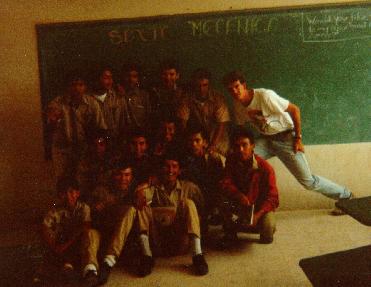
The teacher for the Sexto Mecanico didn't show up on Friday and as the students celebrated by making desk sculptures, the school secretary invited me to test the resolve for my new profession by going in cold, an opportunity I hesitantly accepted.
Now my parents know that if there is any skill I was born with, it is knowing how to handle myself in difficult situations. Being an unknown gringo stepping in to substitute teach a class full of greasemonkeys his same age is what I would call a difficult situation.
 Just as you'll never lose money underestimating the intelligence of the
American public,
you'll never lose face
underestimating the taste of an Ecuadorean auto mechanic.
After a brief review of "What's your name?"
I switched the class theme to "How to ask a gringa for a date".
I took two volunteers to the front of the class to be our subjects.
As there were no women in the class,
I asked the class' opinion which of our subjects should be the woman.
Needless to say, this was a big hit.
For lowest common denominator humor you can always count on
questioning a man's sexuality.
Nevertheless, I pumped the class for how to pick up a woman in Spanish
and we got the whole process down to four questions
which I had our participants act out.
They were:
Just as you'll never lose money underestimating the intelligence of the
American public,
you'll never lose face
underestimating the taste of an Ecuadorean auto mechanic.
After a brief review of "What's your name?"
I switched the class theme to "How to ask a gringa for a date".
I took two volunteers to the front of the class to be our subjects.
As there were no women in the class,
I asked the class' opinion which of our subjects should be the woman.
Needless to say, this was a big hit.
For lowest common denominator humor you can always count on
questioning a man's sexuality.
Nevertheless, I pumped the class for how to pick up a woman in Spanish
and we got the whole process down to four questions
which I had our participants act out.
They were:
Unfortunately, the fourth question stumped them. Their first two attempts, "Will you be my girl? and "Would you like to have sex?" were both a teeny too direct, so we all finally agreed on
While I'm sure I haven't spawned a new generation of Latin Lovers, I hope at the very least that I taught those guys that English exists for other purposes than just a requirement of high school.
| The Student life, Pomona College | (photo added later) Fall 1995 |
Author's note - There are many of you out there diligently taking advantage of everything Pomona College offers. You happily study, learn, and fully benefit from the college's many opportunities. This article is not for you. It is for the rest of us.
You're not sure that you should be here.
You used to enjoy your time at Pomona,
but lately things have just gotten routine.
You're not sure you should be in college.
You're trying to decide whether to just grit your teeth
for the remainder or drop out and take that job you were offered last summer.
This apathy goes beyond mere "Spring slump";
you're sure that there's something more at work here.
There is nothing wrong with doubting that you should be in school
at this point in your life.
There is something wrong with doubting and staying anyway.
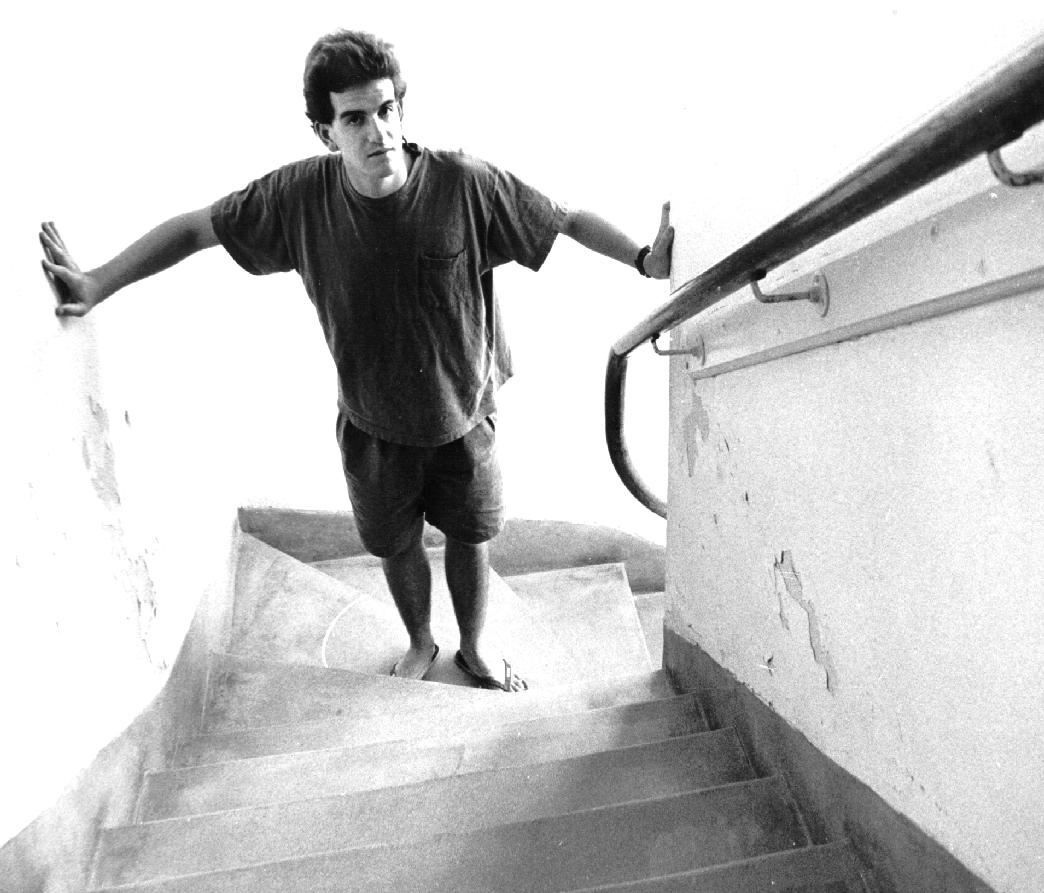 The best thing I ever did for my
Pomona education was to leave school.
I write this article not so as to relive my days of misdirection,
but out of respect for other students who are currently
experiencing the same emotions that I did several years ago.
If you're burned out on college,
grinding through your remaining years
or
dropping out completely
are not your only options.
It's time to discuss the wonders of leave.
The best thing I ever did for my
Pomona education was to leave school.
I write this article not so as to relive my days of misdirection,
but out of respect for other students who are currently
experiencing the same emotions that I did several years ago.
If you're burned out on college,
grinding through your remaining years
or
dropping out completely
are not your only options.
It's time to discuss the wonders of leave.
What is the "leave of absence"? Depending on the individual, leave can vary in length from a semester to a year on up. Your school record goes on temporary hiatus, leave is, as it is commonly known, "a year off".
As much as we have earned our reputation as slackers, Pomona students seem to have a hard time letting themselves have "time off". Maybe it is because of their parents, their financial aide, or even themselves; a hundred barriers pop up when something out of the norm is proposed. Odd or not, sometimes "time off" is the most rational option.
I am a stealth junior. I say this because I would have been a senior this year, had I not neglected to take any classes Fall '94 and Spring '95. I was in Alaska, you see, the commute would have been hell. In Spring of 1993, I felt many of the things that some of my younger friends feel now: was all this money being spent worth it? Was I really taking advantage of my time in college? The answer was no, I was treating my time here just as I had treated high school: as a game, trying to figure out how to get by with the best grades and the least possible work. Twenty thousand a year to try to outwit the Econ. Department wasn't a very good bet.
I fought off the realization at first. I came up with a thousand different options. Maybe I was just tired of the campus; maybe living at one of the other Claremont Colleges would make a difference. Perhaps I needed a good summer job. What I really needed was time off. What I lacked was perspective.
Perspective is necessary at a place like Pomona. It's one of the few places in the world, where, to succeed, all you need to do is read good books, think good thoughts, and write good papers. The rest, from rent to food to entertainment, is taken care of. I would venture that many in this world wish for such a life. Many at Pomona just wish that it was time to graduate. That is a shame.
It is, however, an understandable shame. For many of us here, college was not a choice. It was simply the step that came after high school. For some, it is just the step that comes before graduate school. At least in my case, my college experience suffered from its lack of election. As it was never seriously considered that I would not attend, the fact that I indeed would attend was practically meaningless.
Not having made the choice about college meant that I valued Pomona little, and treated my time here as one long "escape from classes" strategy more than anything else. My days were filled with friends and extracurriculars, jobs and volunteer work; whatever was necessary to fill the hours with something besides studying. I often felt of leaving, transferring to another school that would be "better" than Pomona. It wasn't for several weeks before the end of my Sophomore year that I realized the problem wasn't the school; it was me. My pampered ass simply didn't deserve to be here.
So I left. At first, it was exhilarating. I ran two political campaigns, vomited in the Bering Sea, and lived in the same town as Tom Bodett. I was having so much fun that I was trying to decide what to do with my second year of "leave". Indeed, I was, like my parents had feared, questioning when I would ever return to college.
Then, sometime in April, things changed. My job turned into a mindless routine; I got my boss accidentally thrown in prison; it was still snowing. To be honest, it kind of sucked.
I started thinking back to college; remembering a place where I could talk with people about things other than moose and country music. A place where putting in a ten hour work day would be considered incredible; a place where all you had to do was learn. Part of me still wanted that.
And that's why I came back. I was fortunate enough to still be welcome in my parents' household, and some of my professors still remembered my name. My college experience this year has been something totally novel for me. I'm finally here because I want to be, and the difference is both exhilarating and exhausting.
So that's my story. Perhaps it relevant to you; I envy you it it's not. If any of this hit close to home, my advice to you is: "Get away, come back if you want." To look back on one's college years in regret would be horrible.
As a postscript, the paperwork for taking a leave is negligible. Simply talk with either Dean Quinley or Dean Clark and you're on your way. Above all, don't make this decision hastily.
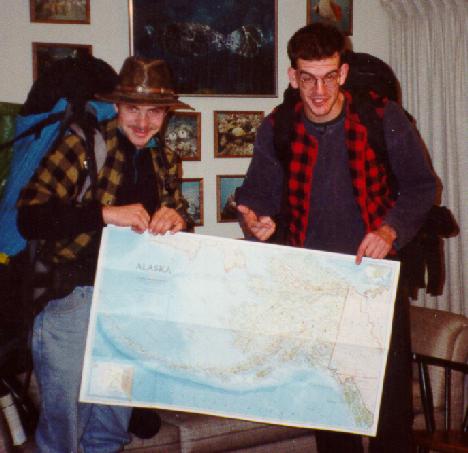 5/23/94
We arrived in Anchorage around two in the
afternoon on Friday. Our initial excitement and
plans to "just pitch our tent outside the airport",
were dampened somewhat by the information
woman's insistence that Alaska isn't "just one big
wilderness area." As we sat in the airport the theme
that would soon repeat itself sunk into our heads,
"we have no plan, we have no plan." Would
misery exist without expectations? It was soon
ascertained that money would have to be spent
(and after our pre-departure splurge, this wasn't
appealing to either of us) and the local youth
hostel came up as the winner. In economics, the
concept of an externality is defined as something
that arises out of an activity that affects a third
party in a way not necessarily intended. They
can be positive (you like listening to the local
school band practice) or negative (like
pollution). Youth hostels are an excellent
example of something that can yield positive
externalities. Put a bunch of travelers together
in a very small place and guess what? They
exchange information. It was quickly
discovered that our initial destination, Homer,
was full of people like ourselves (clueless,
unemployed) and that Seward was really our best
bet.
5/23/94
We arrived in Anchorage around two in the
afternoon on Friday. Our initial excitement and
plans to "just pitch our tent outside the airport",
were dampened somewhat by the information
woman's insistence that Alaska isn't "just one big
wilderness area." As we sat in the airport the theme
that would soon repeat itself sunk into our heads,
"we have no plan, we have no plan." Would
misery exist without expectations? It was soon
ascertained that money would have to be spent
(and after our pre-departure splurge, this wasn't
appealing to either of us) and the local youth
hostel came up as the winner. In economics, the
concept of an externality is defined as something
that arises out of an activity that affects a third
party in a way not necessarily intended. They
can be positive (you like listening to the local
school band practice) or negative (like
pollution). Youth hostels are an excellent
example of something that can yield positive
externalities. Put a bunch of travelers together
in a very small place and guess what? They
exchange information. It was quickly
discovered that our initial destination, Homer,
was full of people like ourselves (clueless,
unemployed) and that Seward was really our best
bet.
After a few too many hours in a bus station, 2:30 Saturday afternoon found us on a bus to our aforementioned destination. I spent most of the three hour trip admiring the scenery and reading the second paper that I had picked up in Anchorage. The town came off as pretty civilized for a place that was said to only have 2,000 people, tops.
We stepped off the bus a little before six straight into a good downpour in 35 degree weather. This was unquestionably John's and my trial by water. We had come prepared for the worst --- 2 large tarps, 2 tents, 2 thermorests, plenty of stakes --- preparation that was not in vain. As we stumbled sumo-wrestle toward our campsite under the weight of our glad bag wrapped backpacks, I began to question my "dry sandwich" approach to camping in the rain. The theory was one tarp underneath the tents side by side, and one tarp above, either suspended in the trees or weighted or tied down. A nice theory, but in practice its dry implementation would prove considerably more difficult.
 Our campsite was shared by four other tents all
of which would be gone by morning. Had we
known what was in store, we might have done
the same. So there we were, standing utterly
rain proof, wondering how our current situation
would translate into a like one inside of our
tents.
Our campsite was shared by four other tents all
of which would be gone by morning. Had we
known what was in store, we might have done
the same. So there we were, standing utterly
rain proof, wondering how our current situation
would translate into a like one inside of our
tents.
We first dropped the ground cover, the bags on tops of it, and finally, the rain tarp. While cumbersome, the operation kept each one of us dry while setting up our sleeping accommodations underneath. Our first attempt, which secured the tarps with nothing more than shallow stakes in the rocky earth, failed miserably and when the wind started nearly whipping us into the air, our tent security was replaced with rocks and cords through the tarp's grommets.
Our first trips gave us nothing more than an understanding of the workings of the harbor. It docked mostly work ships in the north and sailboats and charters toward the south. It also fostered an interesting multicultural atmosphere (although not by the color-conscious ethos of those who define themselves as "ists" of the latter) by docking many boats owned and operated by ethnic Russians (who, I later found out, lived in Alaska without losing their geographic and social identity). I had the pleasure of speaking with one of the captains whose full sized beard came down to his mid sized waist riding pint sized legs. Nationally Chinese, I found he was Mongolian, but unfortunately spent more time speaking with his young peer, an 18 year old thrown out of high school for "sexual harassment" who seemed unrepentant in his egoism. Alaska certainly isn't worried about drying up its supply of odd characters. It is they who I am determined will pepper these pages.
Our second day of dock walking resulted in the chance meeting with Perry Buchannan, long time owner of the seiner/longliner Dolly B. (I'll try to explain the fishing terms later on.) He said he would probably need workers for the halibut opener, a 24 hour fishing extravaganza on June 6th. As this was just the 23rd of May and he didn't want to talk to us again until June 3rd, we were left with free time and uncertainty were we to take the offer as solid or as just a possibility. What was the best way to, as Jack would put it, look out for number one without stepping on number two? We decided the best way was to stay in the dock area and familiarize ourselves with these novel surroundings while seeking any work to tide us over and stem the flow of money out of our wallets.
We learned it was day two of the ten day black cod season (look for an econ. rant later on) which we were too late for. After that came halibut and our best bet for employment seemed to be processing jobs at the local canneries until the third rolled about. The very friendly employment service in town tipped us on to two local canneries that might or might not be hiring. Icicle Seafoods and Dragnet Fisheries. (I hear the latter always gets their fish.) We were off.
Upon our arrival at the behemoth Icicle, we were directed toward the personnel department, Anne Green. The directions were given to us very slowly, with lots of hand signals and positive reinforcement. I guess the connection between uncleanness and stupidity is close in many people's minds. After winding our way through an enchanted forklift and conveyor belt jungle, Annies office appeared. She happily accepted our applications --- happy, because she didn't need to hire us now, but reserved the option for a few days hence. Off to Dragnet.
Next to a large orange dock, this Fish Detective/processing agency was just the opposite of Icicle. Where Icicle was a towering gray warehouse, Dragnet was 4 portable trailers with squatters under the dock. Jack was the man I was to talk to. Approaching the door I was greeted by another figure leaving the center portable with heavy facial hair and an enormous gut. I suspected I had found my man. Positively identifying himself, Jack, in his brusque and fluid manner informed us of everything that Anne had, telling us to check back the next day.
We did, and upon doing so were jokingly lambasted by Jack for squandering a day as beautiful it could only be spent "chasing pussy and drinking beer." He went on to talk to us and another one of his workers for several minutes. His type was one with which I was not well acquainted. Words and sentences flowed from a growling throat that demanded credibility. He was lamenting the loss of two of his workers to Anderson's, another processor. "Sure, they'll get work now, but they'll get screwed come the 15th. There's no loyalty at a place like that. You come work for me and you've got a job through September. Here for ?? more weeks, then to Dillingham, Kasilof, Dutch Harbor, Bristol Bay.. The worker, who reminded me amazingly of an oversized (?) Piggy from Lord of the Flies bubbled out his adoration of an agreement with his boss (minutes before, in a private conversation with John and I, he wondered why he wasn't going to Anderson's as well. Nothing was coming into Dragnet.)
Jack's manner was one of supreme self reliance. To question anything, he said was to place yourself in battle against a rabbit in a briar patch. While I may have privately questioned some of what he said, none of my incredulity slipped into my speech. I know where I'm outclassed. Jack's personality was magnetic and I was drawn in. I quickly decided that "The true Alaska experience could be quicker found under the docks of Dragnet than in between the corporate walls of Icicle. I would prove myself much more right that I would have preferred.
By the close of the first week in Alaska, John and I moved in under the Dragnet dock. The cod season was to finish noon the following day and many boats were to be expected. So 2 PM Friday we packed up our stuff and made the 1-1/2 mile trek to our future employer. No boats had arrived so we prepared more food. We had been carbo-loading for the past 24 hours fearing the 48 hours on, 12 off, 48 hours on work schedule that Jack had described was endured by last year's crew. At 6 dollars an hour and overtime after the first 8, ALASKAN BIG MONEY was finally headed our way, right?
The anxious crew of 10 saw an uneventful day of stone pitching turn to an evening of the same. Saturday rolled around and the dearth of boats spun the wheels of the rumor mill as all of us tried desperately to figure out why all boats entering the bay veered right, toward Icicle. When the entire day yielded only one 14,000 pound catch (about 3 hours for a 6 man crew) I became curious myself and more ready to believe that Jack had somehow done something to "piss off" the fishermen. If this were true, we were all in trouble. My conversations with Norma in the office yielded the shielded admission that "someone might have said something" to anger the fishermen, who had decided to show Dragnet just what a bad idea it was to piss them off.
Only two ships came in Sunday. The total three were all registered in Seattle and a ten year patron of Dragnet decided to go elsewhere, all of which lends support to the theory above. And so, without working an hour, came to an end of my time with black cod in Alaska.
It marks my first experience as a member of the exploited proletariat. I couldn't complain too much though, 4 crew members had been shipped from Kenai (120 miles away) with big expectations. My travel had been limited and rent there cost me $6 less a night (that is, zero) than at the campground. I also got to see another marvelous economic principle in action. Stacked on the dock were hundreds of pallets, those 2x4 contraptions used to stack goods on. We put some under our tents and burned around 2 a day for food and warmth. Our private cost of retrieving the pallets was only about 5 minutes each. Dragnet, however, probably lost a few dollars for each one we burnt. Any feelings of guilt were quickly absolved upon the realization of my relative abject poverty.
John and I had been disappointed with our experiences in Alaska up till now (he more than I, years of travel have taught me the value of diminished expectations). We hoped that another trip to the Dolly B would straighten things out. It did, sort of.
A few harried trips between town and the docks finally secured us what we were looking for -- fishing jobs for halibut. After talking to many people I learned that the average share (given to a deckhand) of a halibut catch was somewhere between $20 and $2,000. It was known to be a gamble. But when Perry let us move into his boat a few days before the opener, that gamble became a sure thing. As romantic (retrospectively) as dock life may be, a kitchen is a wonderful thing. Now, I'm going to skip a lot here, just so I can get to the description of long lining. If this takes any less than 15 pages, I'll be surprised.
This is the first stage John and I were involved in. (Oh, before I go further --- I'm going to describe all this in excruciating detail --- I'm sorry in advance if anyone gets bored. But knowing my readership, fish stories are always welcome.) Herring was the bait to be used. Packaged in boxes of 110 we were to get the thawed fish in half and dump them into our individual bucket. Each layer of fish had to be salted generously to avoid spoiling. Between the three of us we cut about 16 boxes worth. Bear in mind that there were 3500 hooks that awaited bait, a fact I put as far out of my mind as possible. I applied to variants of the same work ethic to my labors.
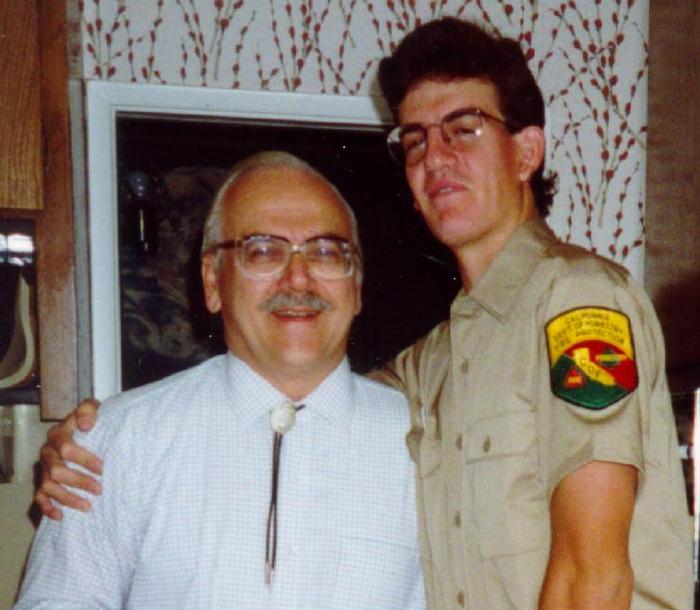 The first was one I had learned with
the CDF
[California Department of Forestry and Fire Prevention]
on a dangerous day assisting tree
removal near power lines. There are times to
joke and there are times not to joke. When one is
in danger of losing a thumb, it is not a time to
joke. It is as my father had commented about his
uncle Fritz, an otherwise very personable fellow
-- you just couldn't talk to him when he was
operating a power saw, he wouldn't say
anything. Am I finally learning discipline?
Nevertheless, the job was done and the salted and
covered tubs were put away for the night.
The first was one I had learned with
the CDF
[California Department of Forestry and Fire Prevention]
on a dangerous day assisting tree
removal near power lines. There are times to
joke and there are times not to joke. When one is
in danger of losing a thumb, it is not a time to
joke. It is as my father had commented about his
uncle Fritz, an otherwise very personable fellow
-- you just couldn't talk to him when he was
operating a power saw, he wouldn't say
anything. Am I finally learning discipline?
Nevertheless, the job was done and the salted and
covered tubs were put away for the night.
This was done the morning of the fifth. It was now time for those freshly sharpened hooks to pierce tender fish flesh -- and by my arduous accomplishment. The hook was an ugly affair. (I've kept one and picture it at right). About 3 inches long and 2-1/2 inches wide. Each herring piece was to find a home double pierced on these hooks. My speed was good -- over 500 an hour -- a rate which qualified me for the dubious title of "Masterbaiter", a pun of such caliber that I had not heard it since I left Hawaii. My fingers still have holes in them from this exercise. Not as many holes in them as the fish, though. Upon completion of three hours work, we were done. Each baited hook (with attached ganyon and becket) was laid in a tub, circularly filling it incrementally. The ganyon was an 18 inch cord that ran between the hook and the becket, the large snap at the end. A becket looks something like this. By placing one's hand around it with the thumb here, it would snap open, and could be effectively attached to the drag line. I have managed to acquire one of the marvelous contraptions for the belated benefit of all interested parties.
So, the afternoon of the fifth, we were off. It took us 3-1/2 hours to reach Cliff Bay, where we anchored for the night. Like so much of coastal Alaska it was impossibly and effortlessly beautiful. Thickly wooded slopes of mountains veered toward the water, stopping just inches short of dropping their growths into the flat jade pool that lapped at their precipice.
Unfortunately, more earthly (or rather, humanly) responsibilities beckoned to John and I inside. We were to cook dinner -- chili cheese burgers. Let me assure you, I was thrilled. But I have to do this stove justice. Let me try, as fairly as possible, to recount Perry's instructions for its proper lighting.
Alright, first open up this wing nut -- that lets the diesel down there to the burner. If you take off this metal lid, you can see the diesel flowing into the chamber there. Now, get a paper towel and SET IT ON FIRE, then THROW IT DOWN THERE. Replace the lid (emphasis added). After Perry's initial explanation, John and I were able to repeat only one phrase to each other for the next hour. "Take a lit paper towel and throw it in the gas." Ah, adventure.
Well after several meals we both had 4 eyebrows between us, which was a good sign, and felt adventurous enough to attack an actual meal (on my list, chili cheese burgers served on toast ranks pretty down low for actual meal, but in Perry's $135 foray into the supermarket for pre- departure food, it was one of the only things that had emerged. We did, however, have enough Mountain Dew and Cheetos to last us a lifetime. And eating like this, that wouldn't be long.
Well, I'll save you the bore of the entire cooking saga, which I think is better reduced to a few sample quotations.
"Wow, that's a lot of grease.""If I were you, boys, I'd use a skillet."
"Ya know, I bet if we slid this knob to open, there'd be a lot less smoke in here."
"Are burgers supposed to look like that?"
And the meal, once served, can best be described by just two words.
"Mmm. Diesel."Sleep came early as tomorrow we had to be up for the 5 hour trip to lay our first line. (I'll explain all that in a bit.) I woke up to the singular churn of a boat motor laying steady noise after the intermittent burst of a wave clap under the hull (not coincidentally, where I slept). I lay in bed, awake, for at least an hour, and although not seasick, could not help but remember my vain attempts at age 6 to convince my mother I was suffering from a heart attack while crossing the English channel by car ferry. (Anyone not understanding this reference, should consider themselves better off for it.) I was more comfortable laying on the floor then, and things seemed not to change much in more than a decade. Upon finally getting up, I found I was a lot better off outside, which is where I decided to situate myself. The ride was uneventful and at 12 PM we were ready to start laying gear.
This is probably the most dangerous aspect of long lining and also, not surprisingly, the stage where Perry and Dan (the other crew member) had decided we had matured enough to get by without a significant amount of their help. Now, to long line, you put out skates (sometimes a skate is quixotically defined as 10 skates strung together). Each lesser skate is about 1800 feet (the most you can get in a box). Therefore, each greater skate is 3-1/2 miles, of which our boat has 3. These were all wound onto an enormous spool mounted on the stern of the Dolly B, about three feet from the edge. Now, to put out a skate, it was first necessary to put out a big floating flag and a buoy, which marked the beginning of the line. To these, more than 100 feet of rope (I forget just how much) are attached, the end of which hooks on to the anchor, which is in turn connected to the first skate. Obviously, the beckets must be attached to the line as it goes out. This is where John and I came in. We were to kneel on the stern, facing the sea, in between the spool and the end of the ship. We each had a tub of 250 pieces of bait with ganyons attached by our side. Now, when the first skate started lowering into the water, the stress began. The line passed over my right shoulder and the bait was by my left. It was the opposite for John. And since the rope was spooled, it would swing from one side of the boat to the other as it unfurled. Dan was quite proud of showing us all the holes it had burned in his jacket over the years. I was determined not to have any such points of pride myself. So here's the routine. Rope starts going out. I reach into my tub, grab a becket and snap it on. 15 feet later, John does the same. Repeat. Easy, right? No. Let me just list enough complications to make mother wince.
The first one is speed. From the time a becket is snapped to the line, I had about seven seconds before I had to snap the next one. Bear in mind that there's 250 ganyons in one of these tubs and the hooks get messed up pretty frequently. There was no time to stop the line, so if one of us got stuck, the other would have to do double time.
The second is that a becket is not the easiest of snaps and attaching it to a line whizzing by at 3 miles an hour ain't so easy either. I dropped four ganyons total during this phase, John three. The rope had to be stabilized prior to snapping, which is why we wore gloves. Unfortunately I had my cloth glove on my right hand and my leather one on the other. By the time I realized it, I had already burned a cute little hole in the crotch of my right hand. Still a gross little thing a week later. Even with the leather glove I managed to give myself rope burn on my middle finger.
Now, besides all this, snapping is dangerous for the kinesthetically stupid, which is why I mentioned that CDF story a while back. I tend to be kinesthetically stupid, a defect I balanced by taking this job incredibly seriously as well as taking as many precautions as I could.
What makes it dangerous is the possibility of getting hooked and taken off the boat. Once that becket is snapped, that line is going out, with a dangling hook attached. And before you think I'm joking, bear in mind that this gear is designed to catch fish that weigh over 300 pounds, compared to my paltry 180.
There are, of course, ways to avoid this. The best is the one I followed, and did for 3-1/2 hours while on my knees:
It worked, I'm alive, but your knees really start to get to you after a while. Course, after laying three of these, there was yet more work to be done. And not just more work, but REAL work.
Now here's where things get interesting. By the time we had laid the last skate, it was time to pick up the first. We did this by bringing it up the side through some rollers, and back to the spool. Dan, who was experienced, would pick the beckets off the line and throw them onto the "table". (I have no better way to describe the rectangular cover for the hold. It was about three feet high.) Once on the table, it was John and my turn. For the first skate, he took the job of hook replacer and I of hook remover. Most of the hooks came up with nothing, and when thrown on the deck, John would coil them around the lip of one of our friendly tubs. Now when a fish other than a halibut was attached, I had to take out the hook from the mouth (or the head, or the eyeball) of this "junk" fish. At first, I proceeded with great difficulty. My experience in this realm was somewhat limited and the cod, shark, flounder, and skate that had the misfortune of coming my way often died before I could return them to the water. It should be noted that birds have a fascinating reaction to large dead fish. They know that it's food, but they just don't know how to eat it. Nothings funnier than a swarm of ducks surrounding a belly up cod, all of them fighting for property rights, but having not the foggiest notion of how to eat the damn thing.
Well, I was continuing to blunder along when one of these two foot sharks came close to chomping down on my finger. (They didn't have much in the way of teeth, but one hell of a bite, let me assure you.) That's when the idea of forcing my fingers downs these fish's throats lost its favor, and ramming the becket down there to keep the mouth open came into fashion. And if you can picture me stooped over a fish, hands going furiously, instruments in its mouth, you see that there was only one possible title I could be given -- Jos Claerbout -- Fish Dentist!
This realization bred a whole sick sort of office chatter I would engage in with my patients. "Oh, yeah. I see your problem now. It's this hook that goes in your mouth and comes out your eyeball." "Now, you're going to experience some discomfort." "Hey, that's weird, you've got the same problem as the last guy." At times my tone was compassionate and conciliatory. "You want the hook out, I want the hook out." But at times I admit I lost my temper: "Stop bleeding!"
 All in all, though mortality rates dropped to
about 25% with my more personalized service.
And one last note on junk fish -- skates. They're
the ugliest damn fish I've seen in my life. Here,
I'll try to draw the underside of one for you.
All in all, though mortality rates dropped to
about 25% with my more personalized service.
And one last note on junk fish -- skates. They're
the ugliest damn fish I've seen in my life. Here,
I'll try to draw the underside of one for you.
Well not very good, but suffer.
So, on the off chance we actually caught a halibut (commercial fishing seems to be the moral equivalent of cutting off your head to eradicate pimples) it would be pulled out of the water with either a) hand on the ganyon, b) a large, fireplace poker-esque object, c) tongs, d) all three, which invariably caused all of us to cuss out the others as incompetents and weaklings. We were swearing like ... never mind. So every couple hundred hooks, we'd pull up a halibut, and once it had been measured (they had to be over 32 inches) it would be attached to a line strung along the port side of the ship (we were picking off starboard). Had we had a large catch (over 10,000 lbs), we would have had to stuff the fish in the hold. Normally, a crew of four allows you to clean them right after they're picked, but as neither John nor I knew how, this would have to wait.
We started picking the first skate around 6 PM. It was dismal. We pulled in fewer than 20 fish on the whole thing. But because halibuts are big fish (anywhere from 25 to 350 pounds) it wasn't a total skunk. The second skate was better, but comparatively pathetic to the 15,000+ pounds that Perry had been hoping for. Highlights included a ten foot shark that has managed to get hooked in the head (the ganyon was cut when we saw it) and some 70 pound halibut. It was almost surreal, working until 3 in the morning with the wind gushing, the boat rocking, our bodies racked with cold and fatigue (okay, I'm exaggerating) plunging on. We were twenty miles off shore and the only bright light came from the lamps mounted on the ship itself. We worked as an effective team, no complaining until the job was done at 3:15 and we were in bed.
6:15 same day. I awake, Perry tells me it's time to get started. As I grumble in the kitchen trying to decide what to eat for breakfast, Dan asks me if I'm ready to start yet. Reeses peanut butter cups and 4 Ritz crackers won the day. Breakfast of champions.
We started picking the third skate almost immediately. Perry had been up for an hour navigating us to the site. As I took the job of hook replacer it quickly became evident that we were picking our way towards an Alaskan skunk in the box. I collapsed into my bed at 11:30 uncertain of my share, uncertain of the price of halibut, but certain of one thing -- we did not have much.
My sleep was jarred by the fear that our fiberglass hull would not live to tell its friends about the spankings it was delivering to the waves. And at 5 PM, June 7th, I was woken up with the phrase, "Come on, time to clean some fish".
Before I start this, I should mention that its been almost two weeks since I've written. More on Day of Despondency later.
So, coming into the harbor we had to clean the (now thankfully) small number of fish we brought in. Since neither John nor I was experienced, this was accomplished assembly- line style. Dan took the head, effectively (and in scarcely more than one motion) cutting out the gill plates, and getting, as a special bonus, the entire set of internal organs! It was then passed onto me, where I would reach into the body cavity, wiggle my fingers a bit, and retrieve a homendashen shaped thing. Yesiree. Fish gonads. And don't I feel inferior now. Holding a testicle the size of your hand is a most .. singular experience.
I would then spoon out the bloodline and some interesting goop at the top of the spine called the 'sweet meat.' I won't even venture to guess what this was, as I suspect fish don't have sinuses. This whole process took a little over an hour, as we had fewer than 100 fish. John would clean the fish off and drop them into the hold.
As we drew nearer and nearer to dock (to sell the fish), it became increasing necessary to provide the illusion that these fish had been chilling in the hold on one ton of ice instead of working on their tummy tans for the past 24 hours. This necessitated stuffing the fish with ice, a process that even without time constraints was difficult as our hands quickly froze underneath our gloves. Two minutes after finishing this it was time to remove the hold cover as we had docked and now we were to unload the fish.
A net dropped into the hold and we threw them in. There's really not more to it than that and I'm three weeks behind on the journal.
So ... cutting to the chase, the 2,074 pounds of halibut, at 1.35 a pound, at a 8% share, minus gas and food (loved those Cheetos) I get a check for $164 dollars. Boy, that's almost five dollars an hour!
Well, it was a letdown. But it turns out Perry was going to seine for salmon at the end of the month, so we had jobs with him. Well, not exactly. He found somebody who was experienced, so we were effectively un-hired. Then his son, Steve, hired both of us, later saying there was only room for one of us. As the handwriting on the wall couldn't get much larger, I decided to hit the road.
So, 7:30 PM on a Thursday (the 9th, I believe) I decide to go to Kenai, then maybe to Homer. The bus? No way, man, I'm becoming an advanced wanderer. It was time to start hitching.
So I head out of town, totally overburdened with gear, until I come across a road sign reading:
Moose Pass  22
Anchorage   95
Homer	   120
I'm not sure on those distances, but it's not off by any factor greater than two. Like my approach to so many endeavors, I decide to bring some levity to this seemingly despondent art and become the Happy Hitcher.
I would accomplish an effective rudimentary hand relationship with drivers as follows: Car approaches. Jos holds up hands in front of him with grin on his face. Meaning --- 'Okay, check out this great idea!' Next he points at car. Meaning --- 'You'. Then by painting to Moose Pass on the sign, an extremely reasonable destination. Then a thumbs up meaning --- Jos thinks it would be a good idea for you to take him to Moose Pass. Always wanting to hear the other side, I would then turn to the driver and shrug with my hands out, soliciting their opinion. This was usually accomplished by them driving past, an act I saw as a bit rude considering my extensive roadside theater. I kept in good spirits (I figured people are more likely to pick up a smiling hitchhiker) by verbalizing my hand motions. It was hard not to laugh hearing myself repeat 'You, me, Moose Pass, good, okay?' over and over.
While most drivers just drove on past, several pointed to their left. I had a bad feeling they were saying 'Hey, idiot, if you want to go to Moose Pass, why aren't you on the right road? Moose Pass is over there!' It was only later that I learned they were in fact attempting to communicate 'No, you idiot, why are you trying to hitch from me, I live here.'
So then the first hitched ride of my life came along. A 35 year old driving a jeep Family wagon with a child seat in back, I felt secure. And so I met Leif.
Norwegian by blood, Leif looked every bit his thick blond heir and a mustache to match, he was only about 50 pounds short of being Thor. He was very personable and I quickly learned that the bullshitting skills I have worked so hard to acquire over the course of my life made me the perfect hitcher. We discussed all sorts of things, (including boats) but what I found interesting was when our talk would turn to his impending marriage. He was a laconic as they come, but when we got to this topic, he actually choked up. It was like nothing I had ever seen. It was still a year off and made him as jittery just thinking about it. Date lots of people. A mantra oft repeated by mother and one worth following to avoid the crisis of self doubt this fellow was facing. And a bit after the town of Moose Falls, he drops me off, at the fork in the road. (Okay, break, two things. First, there aren't many roads on the Kenai peninsula (see map above) and secondly, it's very safe --- so, no fretting at home, Okay?)
So a half hour and a short drizzle gives way to Mark, driving a pickup. He's about my age, listening to a Rush album he loves. Not much to say, except that Leif is his boss. Interesting how that works, eh? I'm dropped off at a small town gas station, where I meet Don. This is where the story gets more interesting, so I'm going to take a break for sleep.
Don seemed rather nonplused by life. Not that he was depressed, or fundamentally unhappy with it, but just that it wasn't serving up anything tasty. My request for a ride in his motor home was met with a sort of 'well, if I gotta' look.
I eagerly hopped into the luxurious accommodations of the aging motor home. At about 40 feet, I suspected there was space for luxury and the plush red swivel seat that met my buttocks confirmed this. Enough luxury to accommodate a 600 dollar bulldog as well. Bruno didn't like the ride and his perpetual nervous slobber over his owner's bedroll assured me that Don's wet toes would drive home this fact over the course of the night.
When I pointed this out to Don, he wasn't surprised, commenting the trip makes Bruno nervous. Bruno confirmed this by knocking his cosmetics onto the floor. Having already established that I recognized the importance of and did indeed like the dog (an important ritual for Alaskan guests and hitchhikers) I turned to Don himself.
He was in his mid-late twenties and from Michigan originally. A small gut (and overall roundness) proved that Alaska's not the only state with harsh winters. His overall demeanor was to travel the world with, he was easy to talk to, and as it was around 9:30 at night, that's all I really wanted.
I had to admit that my talents for boosting people's egos have increased dramatically, while discussing college,
'Yeah, I never went.'
'Nothing wrong with that. Most people I know shouldn't even have been there. You probably made a better decision than they did.'
"Huh. It's true. Ya know, a lot of the guys that I work with went to school and got psychology degrees, and I earn the same amount of money."
"Yup. Some people just make the wrong choices."
Bearing in mind that Don's job was to pump water out of the ground in order to lower the water table to allow construction underground, I'm suddenly glad that I had realized that being a "people person" did not necessitate taking the Major of the Masses. (I should probably thank my parents.)
Well, Don got me to Kenai around 10:30. Arriving in a gas station we met his other dog, a white lab that had been chained to his truck all day without food. It was so happy to see us that it peed all over my shoe. That being, in these formative years, a novel experience, I found it funny. After much shenanigans, we drove the two vehicles to a campsite where I spent a very wet night in my tent. (No R.V. accommodations were offered.)
Morning came and I shuffled to the curb, overloaded, to practice my art. I had packed nothing but Ramen and candy bars (we had many on the boat) to eat on my journey. The Ramen was gone the night before and the snickers bar in my mouth offered little sustenance. And lent less perseverance even, to the task at hand. Half an hour of attempting to flag a ride yielded nothing and in a desperate attempt I even involved candy in my roadside shame. It went something like this. YOU! ME! (behind my back) REESES! Yum! Ride! About half of the drivers laughed, some looked vexed and one woman looked downright offended. A diabetic? Just as I was giving up and had turned away from the road, an old dirty Cadillac El Dorado came to a dusty stop. And there I met Vinnie the Pol[itician]. As I clumsily stepped into the car the old man extended his hand.
"Vincent Riley of Kenai. Pleased to meet you. Where ya going?"
"Uh. Jos .. Claerbout --- Homer"
"Now, I gotta warn ya, kid. I'm a bullshitter and a politician."
"I'm home. Let's go."
So we embarked on the hour long trip to Homer. One, I may add, that was never interrupted with silence. Politics and Economics were favorite topics of Vinnie, and ones he spoke of with authority. He had run for borough (equivalent to county) mayor in '72 and managed to summarize an article on derivatives for me he had just pulled from the Economist. My admission of a desire to work with the GAO met not with a drooling blank stare, but rather his own appraisal of the organization --- a committee he's on was recently audited by them. It was a great time --- the esoterics of academia with all the comforts of home. Was this man in enormous polyester pants my lost uncle? Well, we may never know as Homer proved too painfully close for my newfound preferences. He drove me though the town, relaying all the gossip that was necessary to know, and dropped me off on the Homer spit, a 3 mile long peninsula no wider than 50 yards that serves as the focal point of drunken deadbeats and misplaced academics for the world. I set up my tent.
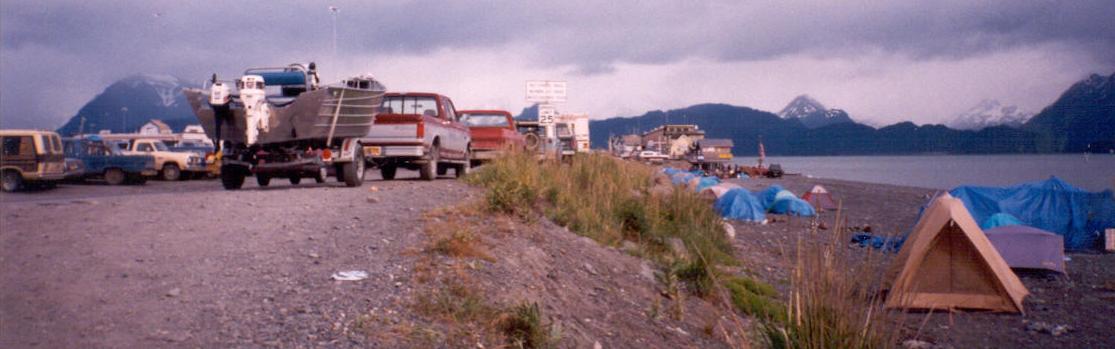
I plopped down camp on the beach, alongside of hundreds of others doing just the same. My first thoughts of Homer were of excitement. So many people, just like me, wanderers! Sharing a lifestyle and an experience --- a whole mindset. Unfortunately, my memories of Homer would be marked by a different outlook --- but more on that soon.
My first couple days in Homer I was so taken back by the beauty and intrinsic relaxation that I did little but lie around and go into town. But how to get to town? I was 5 miles out (see map above). (How I've failed to answer my true calling as a cartographer is beyond me.) I walked the first day. But that was something I would not repeat. It was time to embrace the art of hitching.
Well, I wasn't even ready for the cavalcade of characters a trip in the cab of a car would reveal. I'm finding I don't appreciate people in a psychological sense, but in a literary one. I don't meet personalities --- I meet characters. This is both an important realization and distinction. Let me introduce to you (my pathetic sense of prose striving here) a representative sample of the people I've met.
She seemed attractive behind her dark shades, seated at the wheel of the battered pick-up. My friendly offers to ride in the bed were refused, she insisted there was room up front. We chatted amiably for several minutes --- me self conscious, unshowered, sporting a bandanna. As we barreled down the spit, I noticed the sign alerting campers to the self-registration office and the daily fee of $3. I wondered aloud if I should pay it. "What do you mean, if? I'm the spitbitch". "That what?" "The spitbitch." "How nice for you." "No... I collect fees from the campers. Of course you should register." "Oh, damn."
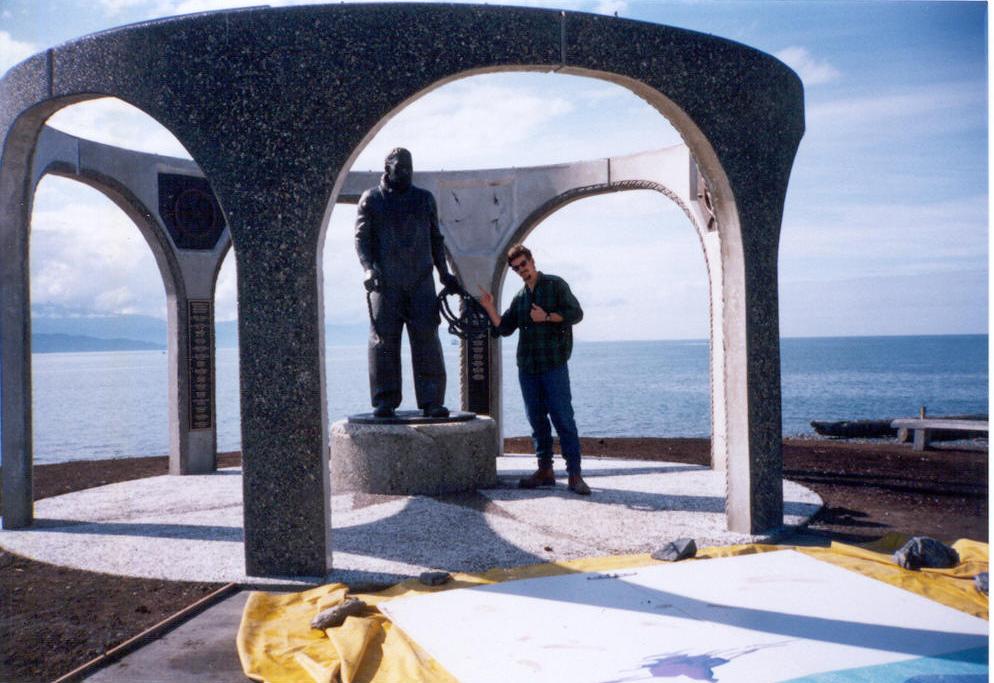
"Hey, man, jump in!" "Great, thanks!" Remembering my Alaska etiquette, I knew my next question. "What's the dog's name?" "Riff, Oh, hey, there's another hitcher." I nervously checked over my shoulder. The decaying land cruiser seemed full, the back being occupied by a Doberman-Rotweiler mix, pleasant in spite of its heritage. As I scratched the dog, the second hitcher filed into its domain, secure as Scott had commanded, "Now, Riff, we don't bite no hitchers." After ascertaining that I was not a cop (I guess he took my word for it), Scott produced a small amount of marijuana which he sold to his delighted passenger. (I politely abstained.) Blaring Ozzy Osborne's "No more tears" loud enough to wilt the ears of poor Riff, we tore down the spit.
The truck was a relic. It rattled up the dirt road toward me, obediently bowing to the side of the path at the sight of my thumb. Billy met my gaze. We got to talking. He told me of his first winter in Alaska.
"Yeah, I didn't work. Just sat and drank. Went through $30,000."
"Really, $30,000."
"Yeah, that's what I had after dealing coke in Ohio."
"Coke, really."
"Yeah, it would have been another $40,000 but I had an $800 a week crack habit."
"Really, $800?"
"Yeah, sometimes you can get a 100 dollar rock and it'll last you all day."
"How nice." Suddenly we lurched to a stop. Billy stared confused at the dashboard for a moment, then laughed. "Oh, we're in an automatic. Two pedals, not three." I decided to helpfully confirm his observation.
"Yes, two pedals."
He told me of his aspirations to be a baggage handler this winter. I assured him he would bring credibility to the profession.
I had walked three miles already to my destination. Only about two were left. The blue Saab had just passed me and I was growing more frustrated. Then, 100 meters down the road, I saw its reverse lights come on. It backed up all the way, and to my incredulity the woman invited me in. "I'm only going a little bit, but I figured that was better than nothing."
"Yeah ... I'm going to the Dry-dock."
"That's where I'm going." Her dog was named Bud, an Australian Shepherd/Golden Retriever mix (yes, I'm getting to really like dogs). We shared a pleasant and laughing conversation for 10 minutes. Her hair was red, the dog was soft.
Okay, before anybody get concerned --- most of the people I ride with are boring. Sometimes they don't say anything. I just wanted to record these characters in print.
The day I turned twenty was a day of half
hearted job searching that yielded nothing. It
was a lonely day, and even a bit depressing. But
very illuminating. On it I realized that the Heist
of the Century is over. Anything I get from now
on I'm going to work damned hard for. To
expect the world to fall into my hands is to invite
failure. And I will not fail.
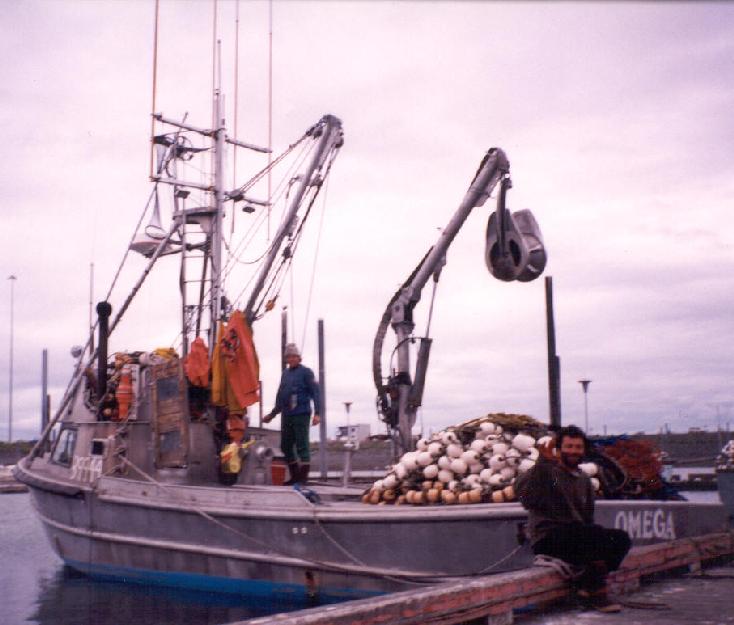
That was my only thought as I pounded the docks 4 times a day, looking for interested skippers short a deckhand. Homer's number of fishing boats seems large (although I'm sure it's tiny compared to Kodiak). I came to know the docks well. Many of the captains weren't on the boats, but any that were would surely meet with my query. The first man I talked to was interested in hiring me. He never called. Three or four days of this and I was getting down. But then, I was hired on the Norquest, a 110 foot salmon tender. Tenders pick up the fish at sea and deliver them to the docks. It promised to be too good. I enjoyed the company of the other three crew, etc. Too good to be true.
Turns out the owner of the boat hired someone at the same time the captain hired me. I was let go with a great quantity of apologies and 50 bucks for five hours work. This let down proved great. I sat in my tent the next day and just felt sorry for myself. Would I have to go to Kodiak? Should I work in a cannery? Why don't I get a real job? Will I have enough money to live here next year? I ruminated on these questions, while lamenting my pathetic situation. But then I remembered my birthday.
"If I'm going to fail, fine. But I refuse to fail sitting on my ass. If I fail, it won't be for the lack of trying." So the next day I walked the entire length of the docks, even those piers that had mostly charters and sport fishermen. I asked every captain I saw, no excuses this time. Nothing the first day. Nothing the second day.
On the third day, just as I was walking down the last pier, a voice called out. It was Todd, from the Endeavor. I have been persistent with his boss, Leroy, about a job. None had come. It appears that now Todd knows someone who doesn't have a crew. He was in Drydock. I thanked Todd profusely and prepared to head out the next day. That night I felt good.
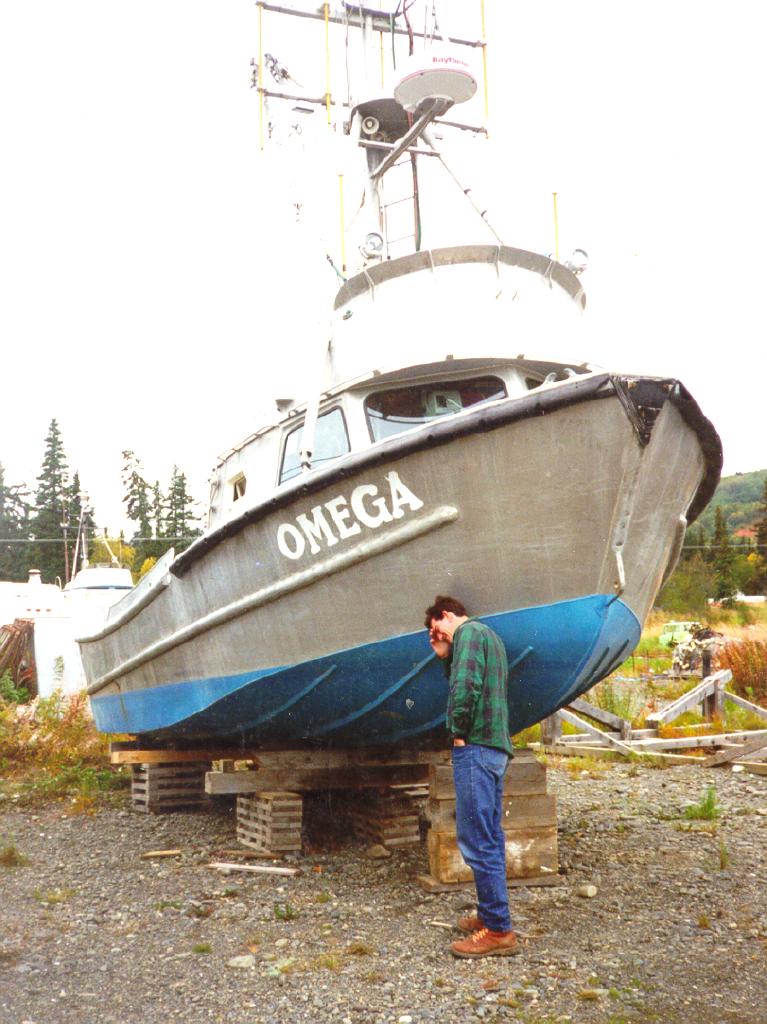
I hitched the five mile ride to the Drydock, half of it was unpaved. The trip allowed me to see a beautiful side of Alaska I had forgotten. Living on the beach, I had forgotten the lush forests and beautiful scenery Alaska has to offer. I think I may live this `isolation' next year. Arriving in Drydock, I scooped out the 32' seiner "Omega" and its skipper, Brad Chisholm. [photo taken later by parents]
I found him, working in the engine hold of the tiny boat (32 feet is a very small seiner --- most tend to be 40-45 feet long, the limit is currently 58). He actually seemed interested in interviewing me, something I welcomed, hurling up questions, as his mind strived to fix the hydraulic pump at the same time it assessed this newcomer. After a few minutes he surfaced and told me, "You're the first one to show up, so I'll probably hire you. Come back tomorrow at nine."
I was elated. I even went out and bought lunch for the first time in two weeks. Hitching back, I met Don Flynn, captain of the Lady Lee, a 46 foot seiner going down to Valdez the 10th of July.
"Yeah", he said, "I'm looking for a crew. Experience doesn't matter." "Really."
I found it hard to believe. Although the 10th was a bit late for my taste (it was currently the 23rd) I gladly took his phone number, keeping my options open. Once back in town I decided to check on my other lead, Ron White of the Middy. He confirmed he too was looking for a crew, although he was going to miss a crucial week in July. And then, in the bookstore, a fisherman walks in and starts lamenting how he just lost his deckhand and needs one immediately. It was odd.
After much thought, I decided to stay with Brad. As I have to hitch two rides to get to the Drydock, I talk to a lot of fishermen. All of them know Brad, and all of them respect him, both as a nice guy and as a fisherman. Even though we don't go out till tomorrow, I know I've made the right choice.
End Journal part 1 --- sent to parents 6/26/94.
Well, this is the first installment --- an anemic
34 pages.  Expect more soon, some of this writing
is good, and some is crap.  Plow through what
you can.  I'm probably at sea now and will call as
soon after the 3rd as I can.

				Love,
					Jos
 Parents visit Jos Claerbout in Alaska, 1994
This is a
DVD video of Jos Claerbout in Alaska in 1994 entertaining us, his parents.
I used Apple's iMovie application to edit down
75 minutes of home video to
this 31 minute recounting of the joys of Jos's first
summer in Alaska, as he told us that September.
Some of the video is a little jittery,
but Jos is Jos, always gives us smiles.
VHS video tapes are being replaced by DVD with its better picture,
sound, and compact size.
Unfortunately the DVD-R format is not accepted by all DVD players.
We've had good luck but little experience
viewing this DVD with various DVD players.
See
http://www.apple.com/dvd/compatibility/.
If you have difficulty with this DVD,
I can make a VHS tape for you.
Please don't be shy of telling us how it works out for you.
Enjoy!
http://sepwww.stanford.edu/data/media/public/sep/jon/family/jos/
|
|
|
[Dad says to Jos] Mr. Claerbout, where are we? What's that behind you? It's a moutain I believe, with some cables going up it. We're going to go up there? Well, what we're going to do is-- we are going to jump, onto the cables and then swing, arm over arm, till we get to the top. Will your mother be able to do this, or you will be helping her? I will actually have a rope fixed to my waist; it will then be running to her to carry her all the way up. Uh huh. Of course, if she does fall, she will swing, from this rope fixed to my waist. OK, and what's the name of the place where we're at? Monkey Swing Lodge, I believe.See this in 2 Mbytes streaming Quicktime video. |
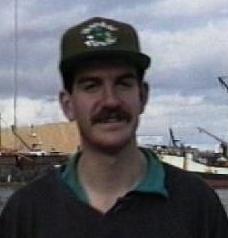 On the Seward docks we pass a boat named "The Dawn".
[Jos says] "The Dawn" makes me think of the secret Alaskan method of subterfuge, which I will explain to you...O.K.
.."the magic of Joy Soap".
Joy Soap?
You have to understand that on a boat... Boats are always spilling oil, in one sense or another. You happen to be pumping it out of your bilge by mistake or anything like this... There's a $5000 fine for putting oil on the water such that it produces an oily sheen or sticky mess.

So when you already see an oily sheen, your captain will scream,
Get me Joy Soap!whereupon you will pour Joy Soap into a bucket and toss it overboard. What this does is it weighs down the oil, something really amazing.Get me Joy Soap!
You can do this experiment at home by putting some oil, motor oil [laughs] in some water, and then pour Joy Soap on it and it will make the motor oil disappear.
So, it is proposed that if Captain Hazelwood [of the infamous tanker, Exxon Valdez] had enough Joy Soap on board, Exxon would be five billion dollars richer.
Jos tells this story on quicktime video. Choose either 2.5 Mbyte streaming or 1.7 Mbyte.
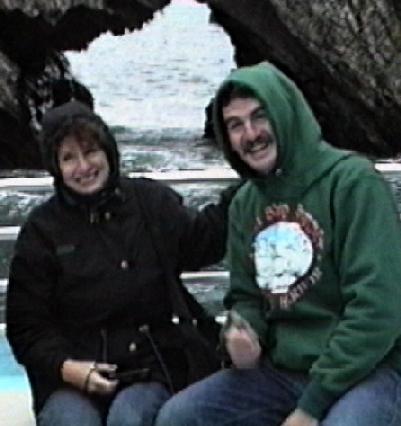
| Is anybody seasick over there? |
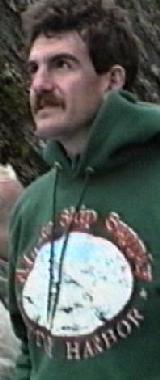
|
We arrive at the base of Mount Marathon.
[Jos says to Diane] See this sign that says, "Unmaintained Trail"? We're going to head up that trail. It looks like Hansel and Gretel here! Wait a minute! Exactly. Now the most important thing to remember is that whenever the trail splits to the left, you go to the right. It's dark! The second thing to remember.. Holy cow! It doesn't look like Cow Hill! We're not in Kansas any more! You hear a hissing sound... A sand pit's going to open up underneath you!See this in 1.5 Mbytes of streaming video. |
|

|
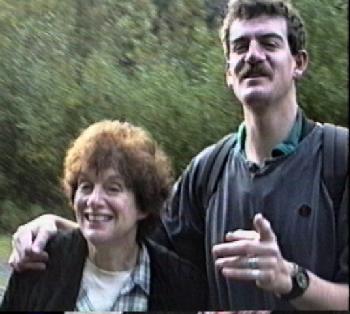
|
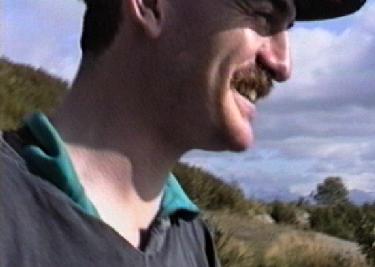
|
That's The Spit!
The spit of Homer, that's where I lived. |
|
We arrive at the Homer docks.
There's my boat! There it is. That evil one. Right there! That evil white boat called the "Anna Maria"! The pernicious boat. I will secretly sink it right now! It's actually a nice boat, but an evil captain. |
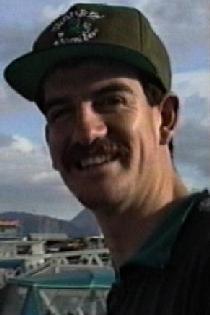
|

|
Oh dear!
So... Good bye. |
Other Jos Alaska Links: Fishing diary. Big fish. Audio tape diary. Election campaign. American Country Magazine. Mine guiding.
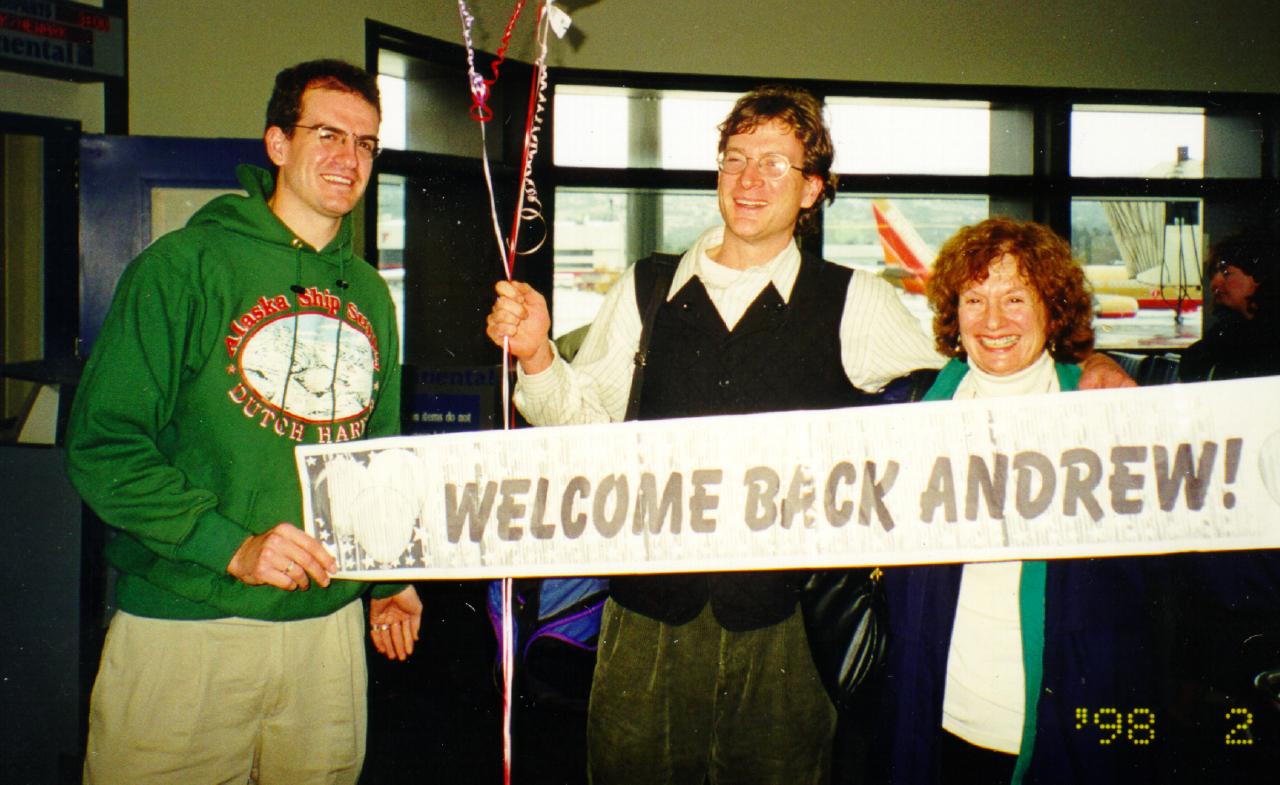
If you visit our home, we'll give you the cassette tape described here. Matt Dingee has succeeded to put this Jos audio streaming on the internet.
Jos's written fishing diary is from the early summer of '94 with captain Perry on the Dolly B out of Seward. (I can't find a picture of the Dolly B.)
The
audio tape
describes the later part of the summer with captains Brad and Mac
whose boats worked out of Homer.
Alongside is a picture of Brad's boat, the Omega.
Below is a picture of Mac's boat, the Anna Maria.
It's an understatement to say that an ocean fisherman's life has times of great stress. On the first 30 minutes of the tape, Jos tells us how Brad and Mac were very different kinds of captains and how he dealt with life on their boats.
The audiotape begins abruptly; it seems some of the beginning is lost. Jos is describing the process that salmon seiners use to close up the net. His job "plunging" is to make a lot of noise in the gap through which the fish could escape. First words on the tape are, "The salmon jump a lot...."
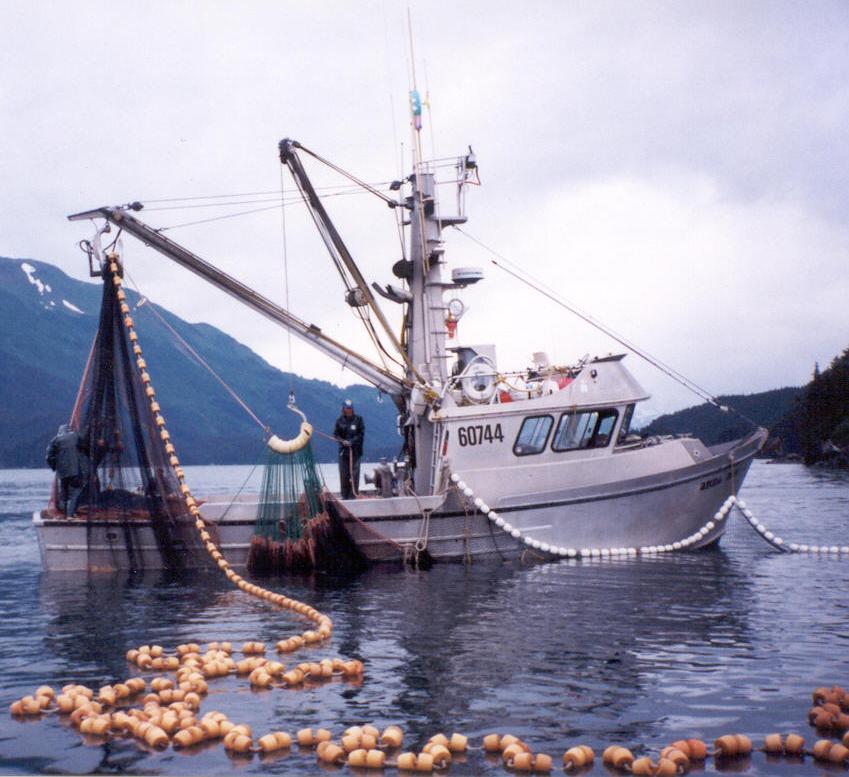
It sounds like good fun, but I recall a conversation with Jos where he said he didn't mind the work being repetitive but he didn't like finding himself rethinking the same thoughts as they repeated the same work. To make better use of his mental time, he asked us to mail him a book from which he could learn Icelandic language. (We sent him the book but he found it too hard.)
Not on the tape is another vignette: As the boat winches in the net, someone in rain gear (Jos) stands beneath the incoming net in a drizzle of salt water pulling out jelly fish, seaweed, and hopefully some salmon.
 These boat pictures look idyllic in this calm water.
Real life is another story altogether.
Dutch Harbor is at the left end of the map.
Visualize Mac's little boat far out in the Pacific
beyond the major islands of the Aleutian chain
where they caught their
big fish.
These boat pictures look idyllic in this calm water.
Real life is another story altogether.
Dutch Harbor is at the left end of the map.
Visualize Mac's little boat far out in the Pacific
beyond the major islands of the Aleutian chain
where they caught their
big fish.
Jos was quite proud of his "Dutch Harbor" sweatshirt above. That's a place very few tourists get to see. But it's the major harbor for ship haven, supply, and repair in the central North Pacific.
On the last 20 minutes of the audio tape, Jos tells us of his tourguiding life at the historic Kennecott Mine in McCarthy, Alaska.
Other Jos Alaska links: Fishing diary. Big fish. Audio tape diary. Election campaign. American Country Magazine. Mine guiding. Home video
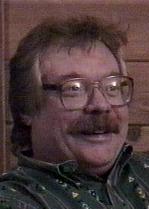
Dave T h o r p (and Bob): While Jos was in Alaska, he packed a lot into his time here, as he did everywhere. He went commercial fishing. He worked on a political campaign. Worked for me here at Glacier House, not only working on the American Country Magazine, but also for a newsletter, also selling some advertising. He took courses at the University. He was taking music lessons, bought himself a guitar. After he worked for me he went out to McCarthy, Alaska, and worked for Bob Jacobs at St.Elias Alpine Guides.
He was just a very busy, busy person. He was good at everything he did. Where he fell down was simply because he was doing something that he had no idea how to do it, but he figured it out in a hurry and he always did a really, really good job. He was just a really good kid and a hard worker and he was lots of fun to have around. We really miss him a lot up here.
 Bob sez, "I think I actually paid Jos. I paid him by the tour."
Dave sez, What summer was it that Jos was out working in McCarthy? It would have been July or August of '95. because we started the country magazine. He went to work with me in November of '94. We cleaned the house. I gave him a room, and said let's do the country magazine.
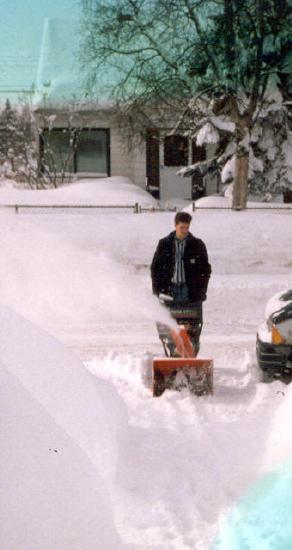
Bob sez, "He wore that stupid ass hat, the one he traded to the Mad Hatter when he bought an ad in the country magazine."
Dave sez, Jos went to work for me after coming off the Joni Whitmore campaign. Basically, the deal was that he didn't make any money on the campaign. He needed a place to stay. He was staying with me anyway and so I came up with this deal. I'm saying, "Jos, I'm going to start a country western music magazine." With his interest in punk and rap and a number of other genres it was a natural fit, but mostly he needed a place to stay.
He agreed to work for me in exchange for room and board because I fed him most of the time. He bought his own cereal because I refused to buy a lot of the country shit that he ate -- in great quantity. I never saw anybody sit down and eat, like three bowls of Cheerios at one time.
Jos went to work for me to start a country western music magazine. It was completely foreign to anything he'd ever imagined, I think, but it certainly didn't slow him down. He had a pair of great big, huge, clod-hopper boots that he bought for the winter in Anchorage, like size 13. He proceeded to go out and talk to all the people who were interested in country western music or at least advertise to the country western music crowd. You know, he was this great big Clyde Kediddlehoffer with these boots, "Hi, my name is Jos, and I'm selling country western music." He was amazingly successful.
 Our first few issues were actually profitable.
He also went out and set up all the locations
where we would distribute the magazine
because it was a give-away thing.
We gave it away for free,
but we had to go out and secure locations to put our racks
to give away the magazine.
He was just phenomenally successful
even the goofy guy that he was,
he didn't really lend himself to country western music:
the boots, the coat,
the beard, the haircut.
The only thing that was country was the hat.
Our first few issues were actually profitable.
He also went out and set up all the locations
where we would distribute the magazine
because it was a give-away thing.
We gave it away for free,
but we had to go out and secure locations to put our racks
to give away the magazine.
He was just phenomenally successful
even the goofy guy that he was,
he didn't really lend himself to country western music:
the boots, the coat,
the beard, the haircut.
The only thing that was country was the hat.
I don't know if anybody knew it, but he also started a punk-rock band in Anchorage with a guy that he met at the University of Alaska. He bought a base guitar. Some of the people who were catering to the country western music crowd weren't really interested in the punk rock, but he'd tell them about it anyway. He'd sell them an ad too. He was just that kind of guy. He could sell anything to anybody; he was enthusiastic. He was a guy that got things done.
Bob was talking about the hat.
He went in to see this guy that sells leather goods here in town,
he calls himself The Mad Hatter.
He sells hats and a lot of coats and stuff
and Jos couldn't sell this guy an ad,
but he did manage to trade the guy an ad for a hat,
sort of a cowboy hat,
that he put on top his head.
 You got the hat on the top and the boots on the bottom,
and you got Jos inbetween, walking down a mall in Anchorage
representing American Country Magazine from Glacier House Publications.
It was a sight to be seen.
It was funny; and it was successful, you know.
He burned out after about seven months.
He got free rent and the occasional meal from me,
No pay.
The use of my vehicle.
You got the hat on the top and the boots on the bottom,
and you got Jos inbetween, walking down a mall in Anchorage
representing American Country Magazine from Glacier House Publications.
It was a sight to be seen.
It was funny; and it was successful, you know.
He burned out after about seven months.
He got free rent and the occasional meal from me,
No pay.
The use of my vehicle.
[Dad recalls Jos telling about the morning he made an ad sale at a tavern. To express his appreciation for the sale, he orders an "Irish Coffee", not realizing that it will be coffee with whiskey.]
The one story that his father wanted me to relate was how Jos got me arrested. The circumstances that got me arrested were the same ones that got me arrested the first time, which led to a jail term that I never fulfilled. It didn't have anything to do with Jos. It happened like eight years before. The circumstances were for a traffic violation that we won't go into the details of. When I went to do my jail time, they told me there was a six months wait so I basically told them to go to hell. I moved to Bush AK, and figured I'd deal with them later.
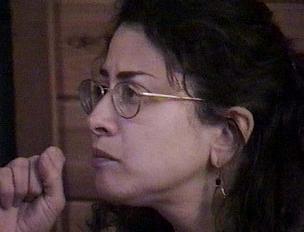 I used to make up my tags for my license plate.
I couldn't, of course, license my vehicle, so on the computer,
I would do my tags.
I made my registration stickers for my license plates,
and of course, I'd drive very, very carefully.
I used to make up my tags for my license plate.
I couldn't, of course, license my vehicle, so on the computer,
I would do my tags.
I made my registration stickers for my license plates,
and of course, I'd drive very, very carefully.
When Jos went to work for me and I loaned him my truck, I told him that he as well had to drive, very, very carefully. I said to him, if you get pulled over, we might both go to jail. He did a pretty good job.
He decided he had to take a history course at the University of Alaska. One night, a Saturday night, he was late for class, so in a hurry he parked in a handicapped parking zone on the University. But not just any handicapped parking zone, he parked directly in front of the university police station.
A couple hours later he comes out of class and there is not just one but two cops leaning against my truck. They didn't care about him. They wanted to know where I was. Jos says, "He's out of town." He quickly ran into some bathroom and disposed of all his business cards, threw away stuff with my address and went back out to talk to them again. And they said, we're going to have to tow this vehicle. He got a ride home. He was just panicked.
I said, "Don't worry about it, this was going to come to a head at some point or another." But he was really bummed out. The truck was impounded.
Just a few days before this, I had actually engaged the services of an attorney to straighten all this stuff out because it had been hanging over my head and I wanted to deal with it.
[...Long story. Dave mistakenly goes to the police station to turn himself in on a Saturday before a long holiday... put in the drunk tank for four days .. handcuffed to some murderers...]
I got out for seven days to put my affairs in order.
Jos worked with me.
You have never seen anybody feel so guilty in your life.
I told him that was
the one time in his life that he did something really stupid;
he parked in a handicap zone in front of a police station.
He had no idea of what the consequences would be.
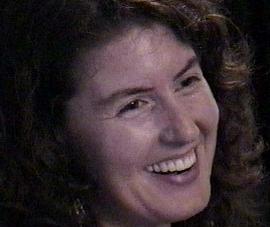 Eventually, I got to do my time (45 days) in a half-way house.
Jos is making regular deliveries to me in the half-way house,
this to do, that to do, ads and articles.
We kept the magazine going. Made our deadlines.
He really was contrite.
He worked his ass off to make up for it.
Caused Sue a few headaches as well.
Eventually, I got to do my time (45 days) in a half-way house.
Jos is making regular deliveries to me in the half-way house,
this to do, that to do, ads and articles.
We kept the magazine going. Made our deadlines.
He really was contrite.
He worked his ass off to make up for it.
Caused Sue a few headaches as well.
He was an amazing person. He's what some of our circle would call a can-do person, not the kind of person who'd say, "No, I can't do that." He was the kind of person who would say, "Yeah, we can do that," and he'd figure out a way to do it. He was just a very positive person. You'd throw up an idea for him and if he wanted to tackle it, he would make it happen. That's what happened when he worked for me. He was a lot of fun. We disagreed on a lot of things; we had a lot of great arguments but we always had a lot of fun. Always. We miss him.
They ended up at Great Alaska Bush Company. It's the most famous strip club here in Alaska. Of course the clubs up here, if they choose to do so, are totally nude, and the Bush Company is the best of those kinds of places. They ended up going out and this kid Eric who was helping Jos celebrate his birthday did quite a bit more celebrating than Jos did.
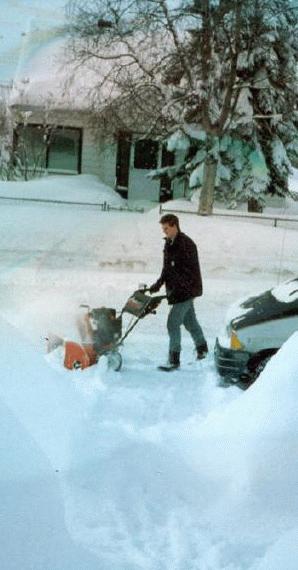 They ended up coming back to my place.
I wasn't around for this.
I heard about it all after the fact.
But apparantly after they came home, Eric decided to go back out.
He hadn't had enough for the night and he got locked out.
He was a big kid.
Makes me look like a dwarf, maybe about 280 pounds.
He didn't have any keys to get back in,
so he just decided to come in the back door the hard way.
He took the whole thing right off,
not just took the door off the hinges,
but the frame around the door, he took completely out of the wall.
They ended up coming back to my place.
I wasn't around for this.
I heard about it all after the fact.
But apparantly after they came home, Eric decided to go back out.
He hadn't had enough for the night and he got locked out.
He was a big kid.
Makes me look like a dwarf, maybe about 280 pounds.
He didn't have any keys to get back in,
so he just decided to come in the back door the hard way.
He took the whole thing right off,
not just took the door off the hinges,
but the frame around the door, he took completely out of the wall.
That of course woke Jos up. Jos confronted him and Eric wasn't too concerned about the whole thing; he just proceeded to go to sleep on the couch. Jos was very upset about the whole thing and proceeded to call the police. After a couple hours when the police hadn't come, he called them back again. They said, "Listen kid, we got better things to do than worry about drunks coming home late at night and tearing the door off the wall." So I guess Jos just kind of propped the door up against the wall and went upstairs and went to bed himself. I guess the next day when Eric had sobered up, he and Jos fixed the whole thing, put it back in there. I guess they kissed and made up or they weren't mad at each other any more and they went back to work at McCarthy.
The unfortunate part about that whole story, I just heard, is that this kid Eric, who was maybe a couple years older than Jos, but certainly a much better candidate for a heart attack, actually died of a heart attack not that long ago.
Something in the air up here, or in the water at my house, but two fine young men succombed early on to heart disease. We are really sorry to see them both pass, particularly Jos. He had a lot to offer to all of us and to the rest of the world. We miss him very, very dearly.
Sorry I didn't get as many people together as I wanted to. Sorry I didn't get all the others to do stories... --Dave
Below are some story fragments from mother and father.
Other Jos Alaska links: Fishing diary. Big fish. Audio tape diary. Election campaign. American Country Magazine. Mine guiding. Home video.
To hear that I had made a significant difference in Jos's life meant much to me. He certainly made a big difference in my own. Although my passion (and some would say life's work), my political involvement and the electoral campaigns in particular have taken a toll on me, my family and my friends. Your expressions helped me remember that there are far more positive benefits that come out of these efforts, that make them truly worthwhile -- regardless of the costs involved.
After your call, I couldn't help but spend the next several days remembering back to 1994 and my time with Jos. After receiving your email, I perused Jos's memorial web site, amazed at the paths he had taken. I laughed until I cried reading his account of our campaign stop before the Americans for the Constitution group. As I'm sure he recounted to you, Alaskan politics are like none other. The size of Alaska makes running a statewide campaign to reach a half million people scattered like seeds in tall grass -- an enormous undertaking.

I had spent years studying economics and political science, trying to find a key to unlock our stagnated political system. Over the years I had heard Alaskans say that many of our industries were owned by Outsiders. As I began to more closely follow the money in our congressional races, the answers to my questions about why we were so stuck became painfully obvious. Our powerful congressional delegation received most of their campaign money from big money interests somewhere else. That big money had more influence in determining the outcome of our elections than Alaskans did.
With a willing attorney, we began to carefully strategize how we might stir the pot here in Alaska. At the time, conventional political advisors said campaign finance reform was certain death for candidates, the issues too complex for voters. I counted on the fact that many Alaskans are constitutionally minded.
In the spring of 1994 I filed a Federal class action suit against the Federal Election Commission, our Congressman Don Young, the Democratic contender Tony Smith, and their respective campaign committees, challenging the constitutionality of out-of-state campaign contributions in congressional races (Whitmore et al. v. FEC, et al.). I alleged that they had violated our constitutional rights to equal protection and political association within what is supposed to be our representative democracy.
Having been trained in public speaking and debate, I was able to communicate and stay on this message during the campaign. The media cooperated, giving us regular statewide television, newspaper and radio coverage with each step of the way. Eventually, even National Public Radio covered the suit, catching Alaska's two gubernatorial candidates in Washington, D.C. at fundraisers, and putting them on the spot about what they thought of it all.
Almost overnight, my campaign as a third party congressional candidate took off, as the message made sense to residents here. Don and Tony, like many politicians, literally had their hands tied, reluctant to say much of anything about their specific positions, and the contrast in our statements and styles became ever more noticeable -- to the delight of the public. By that summer, we had developed a network of supporters around Alaska, and had a small statewide coordinating office in Anchorage.
I had begun my campaign the previous year based in Homer, where I live and work, and had a small office here. As the public response grew, we began preparing for statewide travel, and I geared up to move to Anchorage for the duration of the effort. It was about that time that I began getting phone messages from Jos, persistently trying to reach me about volunteering.

Joni Whitmore ran for Alaska's only
seat in the U.S. Congress and launched a statewide effort toward
campaign finance reform.
(more background -- start at the beginning)
Jos had heard a radio interview of mine and relayed he had been encouraged by others to help us. He was very curious about the politics and 10 Key Values of the Green Party, and had lots of good questions for me. He pleaded ignorance to much about politics and the process at large, but expressed his eagerness and willingness to be of any assistance he could. In fact, his natural sense for situations and people helped carry him easily through the tough spots.
During our interview and upon reviewing his resume, I teased him a bit
about his excessive humility -- clearly, he had many talents and skills
to offer. He blushed a deep dark red, but nodded quietly. I was shocked
to discover his age [20]
-- from his mature demeanor I assumed him to be much
older. He seemed to have no hesitation about getting involved
(despite my warnings of the dangers associated with these efforts,
not to mention Don Young's
reputed campaign tactics),
nor had he any fear about public speaking.
He was delighted we had interest in him -- and I was
ecstatic to have competent help. Unlike our other Homer volunteers
(with families and regular jobs), Jos had a wide open schedule -- and we
soon designated him Coordinator for the Homer office. We became close
friends and compatriots in the process.
Off on the campaign trail, I received regular and often hilarious messages and updates from Jos, who took on the enormous effort with gusto. He never missed an opportunity to put in a positive word, stayed upbeat under the load, and got along well with everybody. As the summer progressed, our statewide Coordinator Betty Wood (who had been equally impressed by Jos's abilities), called to say a family emergency would require her return to New York. She had already spoken to Jos, and the two had decided he would take over in the Anchorage office through the duration of the campaign.
Betty had begun working with a class of Anchorage area gifted and talented student volunteers, who looked to her for daily guidance and interpretation of the process and issues. Upon getting settled in Anchorage, Jos's was quick to confide in me that he was no Betty, but that he was excited and delighted we trusted him to take over for her, that it was an opportunity he simply couldn't refuse. Then he got very quiet, and consternated -- one of the only times I remember seeing him that way. I asked him what was wrong, and he confessed he was worried how he would comport himself with these young, intelligent and very attractive volunteers! I laughed (assuming he was kidding) and he looked surprised, and reiterated the seriousness of his concern, remarking in a very tiny Jos voice "but Joni, they're sooooo cute"! It was the one of the few moments in my time with Jos that he actually acted his age! I smiled and gently reminded him that he was a mature and reasonable man that had the self discipline to constrain himself (at least with our volunteers), and encouraged him to find other outlets for his energy if necessary. He seemed relieved to have it off his chest, and agreed that he could handle himself appropriately.
The workload of a campaign is endless, and my scheduled appointments, interviews and deadlines nonstop. Jos took the lead in coordinating all of it, using his capabilities to the fullest and loving every minute of it. He took to sleeping on the couch in the office due to the load. By the time he had finished the work from one day, there were but a few hours left until the next would begin the process all over again. He never complained, except to plead with me that he was afraid he didn't have the experience to do the job adequately! When he would return to worrying about something, I would remind him that worrying was like praying for what he didn't want, and to avoid going there if possible. It was the effort forward that would make a difference.
We sought advice from leaders in their respective fields of expertise, to ensure the campaign reflected the most pro-active and cutting 'edge' positions I might dare to take. I remarked to Jos early on that those on the edge are said to be better able to see both sides, and suggested perhaps that might be an important perspective and part of helping to move society forward. It was one of many occasions Jos froze, almost in shock, mouth dropped open as he stared at me. I made a point to regularly spur him to think beyond where he was -- and he loved that too.
 His spirit throughout remained undaunted by the load. He was a
positive influence on all of us, and exuded continuous love and great
cheer, which in and of itself made a phenomenal difference -- especially
toward the general election, when the stress and load often consumes the
most seasoned veterans... He expressed his love, admiration and respect
to Betty, to my husband Benn, and especially toward our two year old son
Freeman, whom he had extraordinary delight in entertaining. The two of
them were a delightful sight walking along together -- the tall and the
short of it, almost instantly fast friends. And he watched out for me
with great concern, slipping me nutritional drinks on the side whenever
he could as he knew my schedule allowed scarce time for eating and
recuperating.
His spirit throughout remained undaunted by the load. He was a
positive influence on all of us, and exuded continuous love and great
cheer, which in and of itself made a phenomenal difference -- especially
toward the general election, when the stress and load often consumes the
most seasoned veterans... He expressed his love, admiration and respect
to Betty, to my husband Benn, and especially toward our two year old son
Freeman, whom he had extraordinary delight in entertaining. The two of
them were a delightful sight walking along together -- the tall and the
short of it, almost instantly fast friends. And he watched out for me
with great concern, slipping me nutritional drinks on the side whenever
he could as he knew my schedule allowed scarce time for eating and
recuperating.
Just prior to the general election, Tony, Don and I had our final live televised debate, to be broadcast statewide. In hindsight, I think Jos was as nervous as I was. Jos and Freeman camped out to watch "Momma" in action, while Benn escorted me to the station and back. Upon our return, Jos was as excited as I'd ever seen him, and nearly tackled me with his joy. The debate had gone extremely well. All our hard work had paid off. Funniest of all, Jos had to report, that upon watching me leave, he had instructed Freeman to keep an eye on the television, that soon they would watch Momma debate the big boys. When we appeared on the set, Jos reported that Freeman's eyes got wider and wider, and turning to Jos he said "but Jos, how did Momma get inside the t.v.?".
Jos proved himself an extraordinary individual that summer. He loved the challenge, the pace, and that his limits were stretched farther than even he dreamed possible. Over the last five years he contacted me periodically to let me know of his progress. "You'll never believe what I'm doing now, Joni" he'd start with pride. I always believed him and was always cheered to hear of his progress. I have to confess I did feel guilty about the influence I had had on him when he told me of his work studying the political right-wing...
He kept tabs on me, and called me election night in 1996 and 1998, as he simultaneously used the Internet to monitor my very tight races as the Democratic Party nominee against the Republican Speaker of Alaska's State House. "You'll never guess who this is", he'd start, but I knew, as his wonderfully deep and caring voice always gave him away. "Jos!", I would cry. "Joni!", he would cry in return -- immediately transporting both of us back to the summer of 1994, when that was our regular rallying cry and greeting to each other.
Though far away from one another, we remained close in spirit. During your recent phone call to me, I felt trills of energy vibrating through me, as I have this weekend while attempting to compose these precious memories. I know he's not far, and I know he's still doing great work.
And now at last as I conclude this can I too cry for our loss of this great man, Jos!
Other Jos Alaska links: Fishing diary. Big fish. Audio tape diary. Election campaign. American Country Magazine. Mine guiding. Home video.
Jos Claerbout (deceased) assembled a web site entitled "Culture Wars 101". It is the Web's first (and only?) objective tour of America's political and cultural battles over abortion, homosexuality, and the separation of church and state.
He began this work at Pomona College in 1995 and continued it after his graduation until the fall of 1997. Even during his life, he was seeking someone to help him maintain it. Since then, it has fallen far out of date, yet it remains an inspiration to many. Readership is rising steadily. Almost 2000 people came to read Culture Wars 101 in the first quarter of year 2000. Currently about 22 people per day come to read its most popular page. We have found and identified seven external sites that recommend Jos's Culture Wars site and the numbers are growing as the web expands.
This printing, assembled by his father, does what Jos did not want to do; it concatenates his material into linear print form (for temporary use only). As with many web publications, Jos's creation achieves much of its zest by the helter-skelter of outward links to the protagonists, to the news media, to the court cases, to the references, and to the humor. Readers of the print media will be largely unaware of these vital links as well as missing color in text, images, and background. Only a small portion is included here.
 Truth is not partisan.
|
Culture Wars 101 |
 Religion and Politics in the Culture Wars
This roundtable discussion, moderated by James Davison Hunter serves as a good introduction to some of the concepts in the American Culture War.
| Abortion |
Opinionated Overviews
Abortion in the Bible
Organizations That Deal With Abortion
Abortion Links
News Archives
|
I can't resist a few comments here. The links below give the impression of a bipolar America, split down the middle on abortion. Don't believe it. The issue of abortion, we can all agree, is incredibly complex. And just as you would imagine, the opinion of the American people is complex as well; far more so than a simple "pro-life" or "pro-choice" name tag. In fact, many of the polls you will read on these links will reach their conclusions (that America is definitely Pro-Life or decidedly Pro-Choice) by defining their terms differently. In truth, the percentage of the population who think that abortion should be either legal or illegal in absolutely all cases is no more than 10-15% on either side. The rest of us (a sizable 75% majority) try to deal with the issue the best we can. For more information on finding common ground in the abortion debate, I strongly recommend visiting The Common Ground Network for Life and ChoiceOne other thing - on nomenclature: In this page, I use the terms "Pro-Life" and "Pro Choice". This is an attempt to be nonpartisan. Others claim that "Pro-Choice" and "Anti-Abortion" are more accurate, and that may be true. Regardless, either is an improvement over Pro-Choicers' tendency to label their opponents as "Anti-Choice" (yes, technically, I suppose it's true) and Pro-Lifers' habit of labeling their opponents as pro-death. Heck, why not just dispense with the pleasantries and just go by "Pro-Genocide" and "Anti-Woman"?
 Opinionated Overviews
Personhood, the Bible, and the Abortion Debate
Abortion Perspectives
Abortion in the Bible
Opinionated Overviews
Personhood, the Bible, and the Abortion Debate
Abortion Perspectives
Abortion in the Bible
The Bible has nothing EXPLICITLY to say about abortion (i.e., nowhere is there a passage saying that it is wrong to abort a fetus before its birth). Of course there are many things the bible doesn't cover (somewhat hard to believe for those who have read Leviticus). Essentially, explicit silence doesn't mean that the Bible is not loaded with either implicit commandments or potentially inspiring words on this controversial subject. The inquisitive reader will never want for people offering their own interpretations of scripture. I have posted what I consider to be the better ones available here. Just because I label these perspectives as 'liberal' or 'conservative' does not mean that that they are not interesting and potentially valid biblical commentary; it just means that I want the reader to be aware of this as the page is read.
The Theology of Abortion (U.S. News and World Report 3/9/92)
What does the Bible say about abortion?
Slight Liberal slant.
Abortion is Biblical
Strong Liberal slant
Abortion is not a sin
Pro-Life and Pro-Choice Organizations
The National Abortion Federation
National Abortion Rights Action League
National Right to Life
Operation Rescue
Stop Fetal Tissue Research!
Religious Organizations
Additional Abortion Links & Pages
Friends of Choice for Men
Do you think that fatherhood should be voluntary?
First Church of Christ, Abortionist
Don't say I didn't warn you.
Medical Students for Choice
Our Bodies, Our Souls A fine essay.
Pro-Life Alliance of Gays and Lesbians (and you thought *you* didn't fit in?)
Feminists For Life
Don't doubt for a second that a feminist can be Pro-Life.
LeftOut
The Ultimate Pro-Life Resource List They live up to the name.
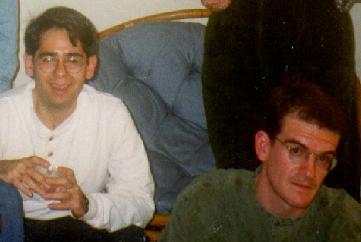 Jos had decided (insisted, really) to accompany me back to my home so that
he could formally meet my parents, Jose and Maria. He wanted, he said, to
sit down and simply trade some stories with them -- get to know them better.
Jos had decided (insisted, really) to accompany me back to my home so that
he could formally meet my parents, Jose and Maria. He wanted, he said, to
sit down and simply trade some stories with them -- get to know them better.
Why Jos wanted to spend a prime Friday evening in this way was beyond me, as many of Jos's ideas always seemed to be. But this is what he wanted to do, and as I always enjoyed the pleasure of my friend's company and could see no harm in it, we loaded my laundry into my car (laundry was the primary reason I was returning home that evening) and headed into the city.
But as I was pulling into the driveway of my home, I began to have second doubts about having Jos meet my parents. In my narcissistic way, it occurred to me that Jos and my parents would have absolutely nothing to talk about save me. How could they? Jos and my parents were worlds apart educationally, culturally, and "generationally".
These thoughts continued to plague me as I opened up the front door.
But they disappeared the moment Jos walked into my home as if it were his own.
"Madre, Padre!" he screamed out as he marched into the front hall, leaving me to lug in my laundry on my own. "The son you never had, nor wanted is here."
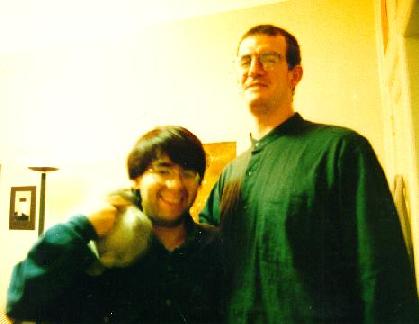 I can't imagine what went through my poor mother's head when she saw this
tall, white, maniacally grinning stranger suddenly stride into her kitchen,
and begin rapidly babbling at her in Spanish. I can only tell you that when
she heard me scream from the hall that I had brought home a friend from
college, I could hear an audible sigh of relief emanate from the kitchen.
I can't imagine what went through my poor mother's head when she saw this
tall, white, maniacally grinning stranger suddenly stride into her kitchen,
and begin rapidly babbling at her in Spanish. I can only tell you that when
she heard me scream from the hall that I had brought home a friend from
college, I could hear an audible sigh of relief emanate from the kitchen.
I can also tell you that by the time I had put down my laundry in my room and walked into the kitchen myself, Jos was already comfortably chatting it up with my mom and was helping her with her tortillas.
"Mom," I said. "Meet Jos."
"Si," she replied. "Es muy lindo." (Yes, he's very lovely).
Inwardly I marveled at Jos and his gift to connect with people. I had met many of my friend's parents and with a few exceptions the experience always felt to me very stilted and forced; we'd exchange polite banter on all the usual subjects (life at Pomona College, the weather, how I had met their offspring) and then simply shake hands and go our separate ways.
But here was my friend talking to my mother on the benefits of hitchhiking in South America.
My father, at this point wheelchair bound, rolled into the kitchen to see what the commotion was. I introduced him to Jos and then left the room to begin the process of getting my laundry done.
When I returned, my father -- who was in great pain during this period -- was laughing aloud, slapping the kitchen table top like an excited little boy. Jos had brought him under his spell as well.
I can't recall what Jos and my father were talking about -- possibly my father's habit of trying to learn Yiddish, though he's Mexican-American and a fallen away Catholic -- but I know that they were both enjoying their conversation.
I finished helping my mom with her tortillas and then lingered around a bit
to observe my friend interact with my father. I enjoyed watching the two of
them banter.
And then came a pause in the conversation. All conversations have them, these quiet periods where each side looks for the next island of talk to explore.
But it occurred to me that I had never seen Jos experience this silence before. He was all talk, all the time. At that point, I started leaving the room lest in the silence my observation of them be observed. But as I left I heard Jos recover and say, "Now I bet you don't know what's so important about this little item."
Probably pointing to one of his rings, I thought as I walked to the laundry room to get my clothes.
But Jos had not been talking about one of his many rings that often adorned his fingers.
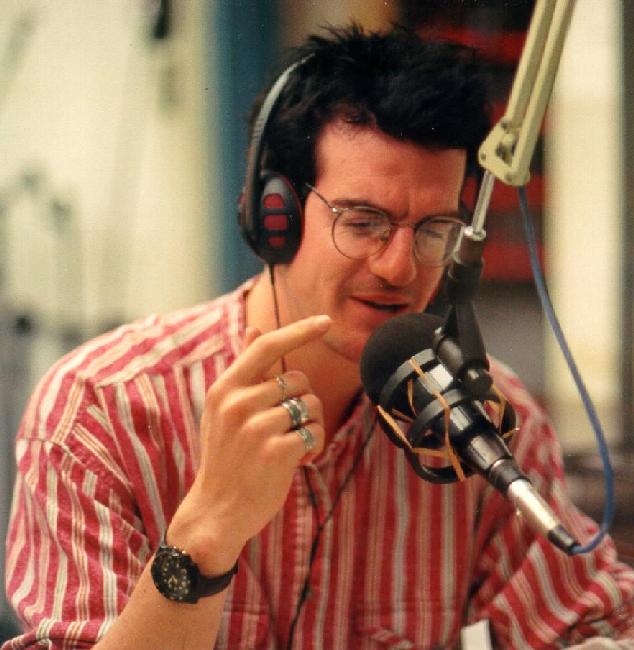 No -- he was talking about a cake mix box. Specifically, a Duncan Hines,
Moist and Fresh cake mix box. How do I know this? I know this because while
I was gone, Jos had spun this large tale to my father about how my nickname
at school was actually "Moist and Fresh".
No -- he was talking about a cake mix box. Specifically, a Duncan Hines,
Moist and Fresh cake mix box. How do I know this? I know this because while
I was gone, Jos had spun this large tale to my father about how my nickname
at school was actually "Moist and Fresh".
I don't know the exact mythos Jos created and how much fake background he gave my dad, but I do know that my father -- a man who I would never describe as gullible in any way -- asked me when I returned why I had never told him that my name was "Moist and Fresh."
I thought he had lost his mind.
"Dad," I said. "YOU named me Alejandro and my nickname is the Mayan King, not 'Moist and Fresh'."
"That's not true," he insisted. "Jos just finished telling me all about it."
Jos, clever lad that he was, had already disappeared into the backyard to help my mother water her plants.
I stared at my father for a bit, realizing that my dad not only did not believe me but was taking the word of a man who he had only known for only an hour or so as gospel. I said nothing, grinned, and walked into the backyard to grab Jos before he started telling my mother other comparable tales.
I told my friend to say his goodbyes, packed up my clothes, loaded the car and headed back to Pomona College -- where for a week, I suffered being called Moist and Fresh by Jos.
I will go to Washington, DC. The realization was daunting, particularly at 10,000 feet. The descent into San Francisco Airport last August was both a physical and spiritual homecoming. My self-imposed year of Alaskan exile had ended, and I was on my way back to college. Plummeting through the clouds at 300 miles an hour, I reflected on the lessons I had learned during the previous 16 months: never accept a job with a fishing boat captain who just "happens" to be looking for a full crew; never go ice climbing in tennis shoes; and never resign yourself to silence. Perhaps appropriately, it is on the last lesson that I wish to elaborate.
The last six months of my life have been fired by an hour and a half I spent in stunned silence almost eighteen months ago. It was October. It was in Alaska. In Anchorage. In a Denny's restaurant on a Thursday night. As her campaign coordinator, I had accompanied Joni Whitmore, the Alaskan Green Party candidate for US congress, to a speaking arrangement at this chunk of 24 hour Americana. Joni was to address an intimate group named the "Americans For The Constitution Club". An advocate for "returning power to the states", Joni hit it off great with this anti-Washington bunch.
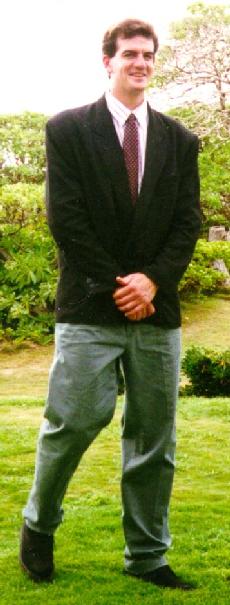 Unfortunately, a fear of the United Nations
and a hatred of bureaucrats were not their only concerns. Some time after I had
finished my microwaved plate of resilient nachos, the leader of the gathering
dropped an innocuous little bomb:
Unfortunately, a fear of the United Nations
and a hatred of bureaucrats were not their only concerns. Some time after I had
finished my microwaved plate of resilient nachos, the leader of the gathering
dropped an innocuous little bomb:
The first question had to do with homosexuals in the military; it was all downhill from there. Smiles turned to frowns; croutons dropped half eaten from mouths agape when my candidate outlined her views on abortion; a pleading voice from the audience asked at one point, "Not even school prayer?"
It wasn't a pretty sight. To Joni's credit, she stood there and answered every query. Gagged by ignorance of the Christian Coalition, their agenda, or even the Bible itself, I was frozen in my seat, unable to say a word. In the months that followed, I often thought of that night: my ignorance of both the Bible and the Constitution; the conflict of "my" politics and "Christian Politics"; and of my utter inability to help a "good" politician. Rather than drop the issue, however, I became intrigued. A lifelong curiosity about the Bible finally yielded to an actual reading of it. In so doing, I found that none of my former fears need be realized. Ignorance is easily remedied and many of "my" politics were indeed "Christian" politics. Such a realization meant that at least on this one issue, I never again needed to stand by helpless while a good person was being skewered for her views. This final realization has helped guide my direction after returning to Pomona. I enrolled in Biblical Heritage my first semester back and am now in the midst of an intense independent study with Professor Menefee-Libey focusing on Christianity and American Politics.
The time I have spent reading the Bible has been enlightening. Each hour I have devoted to the study of faith and politics has been instructive. But there is a limit. As Michael Uhlmann has noted, this country may again be heading toward a religious revival, one which would no doubt have a great influence on its politics. Without a comprehensive understanding of both American faith and its relation to government, I could spend these upcoming years inactive once again, watching a country be torn apart by the extremities of religion rather than brought together by its potentially unifying message. To work toward this latter end, I must acquire political skills that, I believe, can only be gained in Washington, working with organizations already committed to this cause. One such group is the Interfaith Alliance. The education that began over a plate of nachos the October before last will not be complete after time in Washington, but would suffer without it.
Epilog I: Read about "Sinners".
Epilog II: Disillusionment.
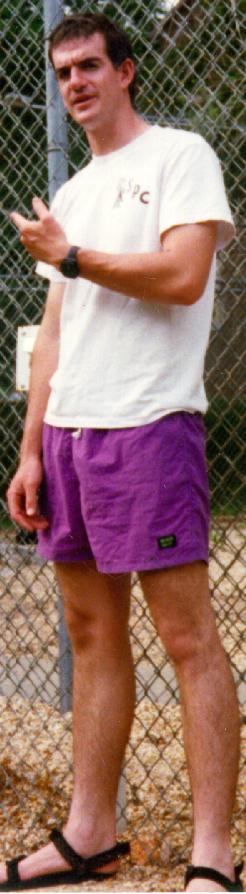
He didn't exactly walk into the room, as much as he swept in, arms outstretched with a car-salesman smile firmly plastered on his face. It was his way.
"Amigito," Jos began, "I have a wonderful idea that you would be a fool not to want to be a part of."
I eyed him warily.
It was the summer of 1996. Jos and I had met in college and were now living together with another friend in a cramped two bedroom apartment in Washington, DC. Having not joined Jos on his Alaskan adventure the year before, I had already graduated from Pomona and was working in the city. With one academic semester left to go, Jos was there on a semester abroad program.
Having known him for four years at that point, I was used to Jos's ideas. They came to him often and were a mixture of folly and genius, sprinkled with enough entertainment value that they always seemed to loop in his friends.
For example, there was the time that he decided to head up Collaborative Productions, Pomona's on-campus film studio, and convinced me that I would be perfect for the role of executive producer for all projects. I initially tried to defer, telling my friend that:
But to that, he simply waved his hand in the air and marched off, shouting behind him as he went: "Minor details friend. I'll see you tonight at the first staff meeting. It's at 8pm. Ciao."
In the end, I did serve as executive producer. To this day, I'm still not exactly sure what my role was. I can tell you that it was time consuming, at times trying, but certainly fun.
And there he was again, standing in my room, with a devilish grin on his face and another idea in his head just waiting to tumble out.
"I have three words for you," Jos said. "Are you ready for them? Because once you hear these three words, your life -- and the lives of everyone who hears them -- will be changed forever."
"I'm as ready for them as I'm ever going to be," I sighed.
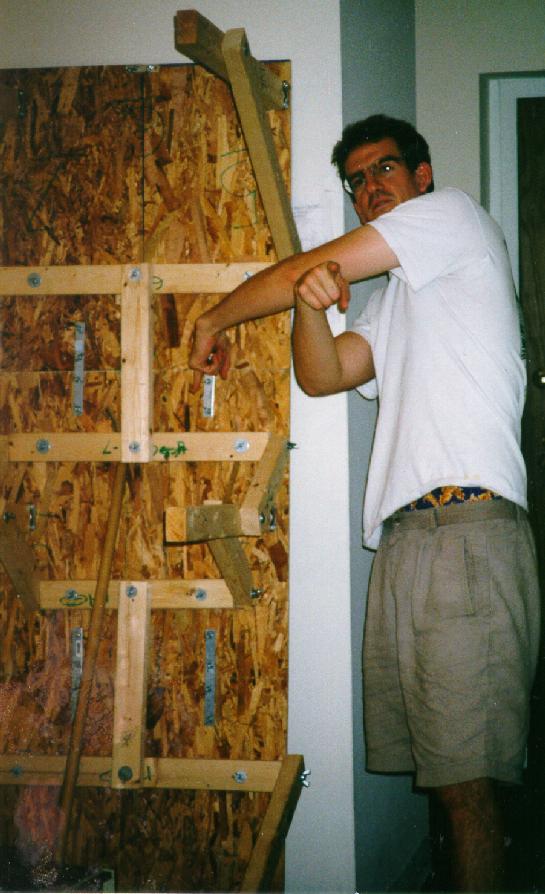 "Okay," he said. "Here they are: .. portable .. massage .. table."
"Portable massage table?"
"Yes," he said.
"Jos," I said with the patience I hope to someday have for my own children. "What are you talking about?"
And he proceeded to tell me.
He wanted to construct -- from scratch -- a massage table. But not just any old massage table would do. No. Jos wanted to make a table that would fold in on itself, ultimately forming into something resembling an oversized briefcase. Complete with handle.
What would one do with such a table, I wondered aloud.
And to that -- like many other questions I posed to him throughout the years -- Jos had a ready answer.
"I'd travel the world, bringing people pleasure and relaxation, of course. My card would read: 'Have table. Will travel'."
"And what, pray tell," I said. "Will my role be in all this?"
"Just wait," he answered with that smirk/smile of his that was all too familiar.
And so Jos began construction of his portable massage table. First he made a very scientific sketch of the whole thing, a crude pencil drawing on scratch paper that a gifted second grader might have identified as a cow with a broken leg wearing a ski mask.
Next he went out to the local hardware store and purchased all the tools he needed for the job: a screwdriver, a hammer, a saw, nuts, bolts, and lots and lots of wood.
Then he setup a workshop -- in our kitchen. He worked on his table like a man possessed, sawing here, pounding there, a flurry of action was he.
And after two weeks of constant work on the damn thing, he was done. Though I had seen the table progress in stages over the course of several days, I hadn't exactly seen the finished product as he was constructing it in pieces. So, at the end of week two, there was a great unveiling of the unit as a whole.
And I must say, once he yanked the bedspread that covered the table away, I found myself speechless.
For there, standing (and I use that term liberally) before me was something that looked less like a table and more like a cow with a broken leg wearing a ski-mask -- made completely of wood.
Jos simply stood there, smiling lovingly at his creation.
The fact that the whole thing swayed madly when Jos yanked the bedspread off of it filled me with dread. For I realized then, before he even said a word, what my role would be in this little project of his: I was to be the first on the table.
 "Jump on," he invited.
"I'd rather not," I said. "In fact, I'd rather not anyone do any jumping around that thing. Maybe not even breathe."
"This thing is solid," he replied, firmly tapping the air 2 inches above the table. "Trust me."
And like so many other times in the past, I did trust Jos. I got on the table, distinctly hearing each creak and wooden groan, feeling each support buckle underneath me as it adjusted to my weight. And once I was fully stretched out, I realized with some wonderment that the damn thing worked.
Sort of.
You see, in the end, the table didn't so much as fold in on itself as it needed to be deconstructed with a screwdriver and mallet, a process that took about 10 minutes total to exercise.
And unlike the original design he had in mind, it wasn't exactly portable. The table, being constructed entirely out of wood, weighed -- I'd guess -- about 55 lbs. Further, once fully in "travel mode" (as Jos described the table once deconstructed) it took up quite an amount of space, about the size of a 27" television. And so rather than simply picking it up by the handle, he needed to lug it around with the help of a dolly.
But as my friend had said before: These were minor details.
The real point to be made here is that Jos built the table. Others would simply talked about it, but never done anything. Or they would have began construction, and given up half way through. And a scant few may even have built one, but not be satisfied with what they had wrought.
But not Jos. Jos saw the table for what it was: it was a dream that he could make a reality. And he set about to do just that. And it though it didn't live up to his exact vision, he could at least say that he did it -- and that is more than what most can say in this world about their own dreams, their own "tables".
That is what I will miss most about my friend. He inspired in me a determination to pursue throughout my life my own dreams.
It was his way.
Opposition to the Portable Massage Table by Jos's dad.
In favor of the Portable Massage Table by Jessica B.

Popster: Long before Jos showed his web engineering skills, we all thought Washington DC was where Jos would be happy and thrive. I [Jos's dad] was alarmed at all the time he was spending on his portable massage table and deeply disappointed he was not taking advantage of all DC has to offer. I wrote him a serious letter about it.
I didn't know whether to blame him or to blame The Interfaith Alliance (TIA) or to blame Claremont Colleges.
Can a dead man slander anyone? Jos said he found that TIA was labor union money to prop up the Democratic Party (against the Christian Right) and that TIA's manager was a poor manager, guarding her own turf, with only a weak committment to the goals of TIA. Some will say, "That's Washington." Anyway, that wasn't for Jos. I still feel there was a niche for him in DC, but his college didn't propel him into it, instead, they let him go his own way, and that just didn't turn out the way he thought it would.
Jessica B:
 As his friend, I admired the dedication which Jos put into that massage
table so much. I think it was his seriousness and devotion to the task.
One of the things which I found so special about Jos was that he took
everything, and everyone, so seriously. He had no qualms about admitting to
himself what he wanted to do, no matter how quirky, and approaching it with
the same sincerity and earnestness as he would anything else. I think my
admiration, when it came to the massage table, also stemmed from my own
aspirations in carpentry, which I never give myself the time to fully
explore. The massage table, or "Table," as it was called, was a dream for
Jos, and watching it become a reality was just as exciting as debating with
him about a discussion in Professor Uhlman's 1st Amendment Law class.
As his friend, I admired the dedication which Jos put into that massage
table so much. I think it was his seriousness and devotion to the task.
One of the things which I found so special about Jos was that he took
everything, and everyone, so seriously. He had no qualms about admitting to
himself what he wanted to do, no matter how quirky, and approaching it with
the same sincerity and earnestness as he would anything else. I think my
admiration, when it came to the massage table, also stemmed from my own
aspirations in carpentry, which I never give myself the time to fully
explore. The massage table, or "Table," as it was called, was a dream for
Jos, and watching it become a reality was just as exciting as debating with
him about a discussion in Professor Uhlman's 1st Amendment Law class.
Table also reminds me of another thing which Jos, Jano and I all pushed each other to do during that semester in the Capital--to learn all of DC, not just the politicking and what was going on on the Hill, but where we could find good thrift stores, get a good fresh loaf of bread, buy flowers to put in the windows, buy wood for Table....where we could catch a free concert, how to find the hidden movie theatre in Georgetown where the broken seats didn't bother you because second run art films were half-price...to not just meet people on the hill, but to befriend the doorman and the CVS checkout woman and the girl who worked at the bookstore. I would have been interested in all of this, but I wouldn't have found it all, or enjoyed it so much, without the three of us all looking for it together.
It is hard for me to entirely characterize Jos' frustration with our DC semester, largely because of my own inability to see it while we were there together. My DC semester was a turning point in my own life, and I loved my internship at a small Latin America-policy think tank as well as our courses in 1st Amendment Law and Electoral Politics. As Jos' frustration grew, I was having a wonderful experience, and it was difficult for us to relate our respective frustration and enjoyment, although we had countless conversations about it.
One of the largest issues was Jos' disappointment with his internship. Their disorganization, which kept them from executing their mission, frustrated him tremendously. They did not really have enough for him to do to keep him occupied full time, and so he spent a lot of his last month plus coming home early working on his final project (I, on the other hand, was working 60 + hours at my internship, and rarely found the weekend time to work on my project). The program itself presented other problems--The CMC DC program is highly touted, with a vigorous application process. However, it is one of those programs where, once you're there, the work just plain isn't that challenging. I think the lack of intense academic coursework also frustrated him. Jos' pleasures increasingly came from outside endeavors, discovering the city, making new friends, rather than our program itself.
Which is not to say he did not contribute tremendously. Jos raised the bar in all of our class discussions--we all would have learned so much less without him. He forced us all to think so much harder, and I will always cherish that.
8-22-96, Washington D.C.
Allow me to pass on an interesting story. Walking into my apartment the other day, our doorman, James ("No, James, hold my calls tonight, I'll be staying in") asked me if I spoke French. My answer, quick on the lips should be obvious to you,
|
"Hey, I'm not a racist, but I hate the French."If you wouldn't consider it immodest, my accent was perfect.
James, hearing my immortally flawless command of the Frog tongue, then turns me to a young African boy by his side, looking somewhat confused. (All right, an old African boy, at age 13.) Nevertheless, he is from the Ivory Coast. He speaks little English. I try to explain that my prejudice is not against French speakers, per se but rather those who live in France. As an African, I bear him no ill will. He seems confused, but keep on slapping him on the back 'till he smiles. See, I always knew my future was in diplomacy.
So... today, several days later, I run into him again, hanging out with James in the lobby. James explains that Freddy has been in the U.S. 4 days now, and only seen the sixth floor of the building. I was headed out to Catholic University and offered to take him with me; first asking James if he was religious.
"Of course! He speaks French! They're always killing each other over something over there."
Helpful as always. So I took him to the National Air and Space Museum. Tops on his list were aircraft carriers, Skylab and Missiles. The word for missiles, apparently, is similar in our languages. We had several conversations like the following:
"Ooh, missiles!"
"Yes, missiles"
"Uhmm...missiles."
And to think that people imply that the races have nothing in common.
And then we bought popsicles and went to see the White House. It was still there. I mention this because in our walk along Constitution Ave., I learned that most of the popsicle vendors were from Sierra Leone. I take special pride in the fact that, as an American, I realized that both Sierra Leone and Côte d'Ivoire were African countries rather than vegetarian entrees, I learned about the Leonese descent of the fellow selling me my lemon bomb pop when I asked:
"Excuse me, do you speak French?"
"No, my country was colonized by English speakers."
"Really? Mine too."
So, a day of cultural exchange was had by all.
Love, Jos
|
| 666 |
|
A man also or woman that hath a familiar spirit,
or that is a wizard,
shall surely be put to death:
they shall stone them with stones:
their blood shall be upon them.
Leviticus 20:27
|
"Natural" Disasters
Smog
Greenhouse effect
Nuclear weapons
Teenage Pregnancy
Dropping SAT Scores
Dick Armey
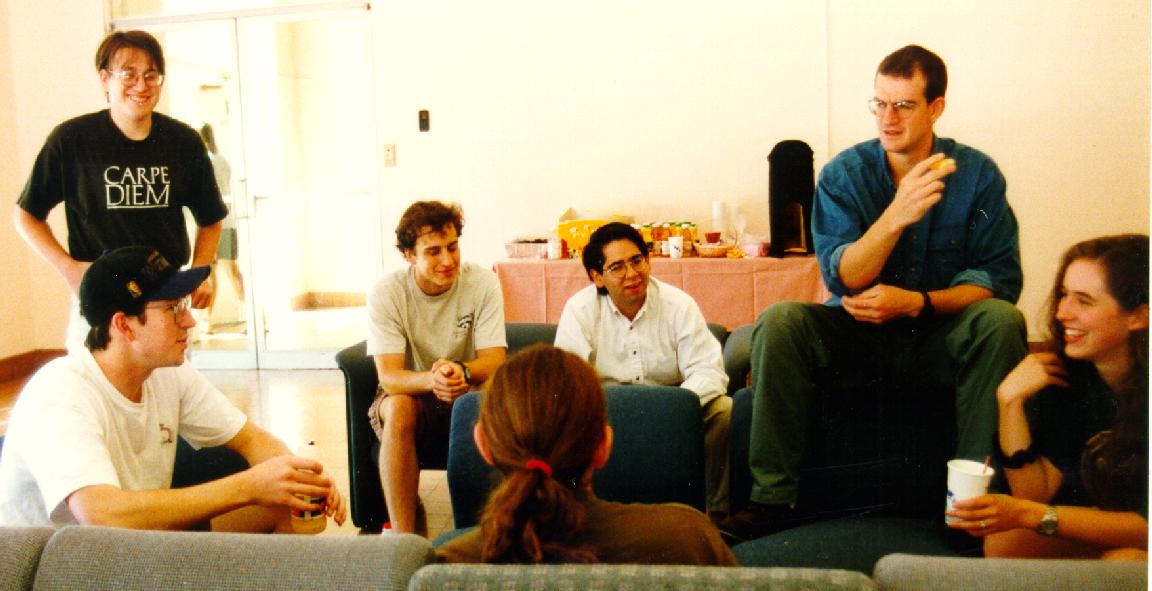
|
Dax writes: Yes, I remember the scene in the photo of Alex`s Antichrist trial very well. It was even published in the Pomona College newspaper. Although Jos defended Alex passionately, in the end, even he had to agree with my arguments in favor of Alex being the Antichrist. These included photos showing Alex`s ability to change into a cow, the ominious similarity of the initials A.C., and a complex mathematical equation from Catamount Mayhugh showing that the numerical value of Alex`s name was 666. Jos helped the rest of us try to throw Alex into the Frary Fountain (which we had recently learned was filled with holy water) as a final test, but knowing that this would destroy him, Alex managed to slip out of our grasp. It was a great day in the battle of good and evil. But today we see where Alex currently works and who falls under his devious influence. I, for one, do not sleep easily at night...
Jessica B:
In my experience, CMC did a lot more handholding in the DC program than I
was used to at Pomona. They were very worried about the stresses of the
program, and that we might not be able to handle it. In the Capitol, they
retained the services of a Physician and a Psychologist for the program
students. They worried we might need to seek counseling at some point
during our semester but that we would be afraid to seek it out. In order to
remove the stigma, they invited the program psychologist and two program
alumni to come to an evening session and talk to us about the program
stresses.
Now, none of us were really having problems. So the psychologist and two alumni introduced themselves, and talked a little about things we might find stressful. None of us responded (none of us had problems). We sat silently for one of those minutes that feels like five, and then the psychologist started making more suggestions about problems we might be having. She said something like this:
For example, sometimes new roomates have little disagreements that they can't work out, like who showers first, people being too loud, who is going to clean the bathroom, who cl--
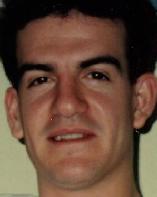 Jos bellowed out:
Someone has to clean the bathroom ?!?!?
All eyes turned to me [Jessica]. In truth, we had no bathroom cleaning problem. Jos was just trying to cut the tension. The psychologist didn't get it. She came up to me later and said, "Is everything okay with your bathroom? Is that really a problem?" In this great 'I understand your troubles' sort of voice. To make matters even funnier, I bumped into the two alumni who had been there, both within the week, and both of them asked me about my bathroom too. Oh Jos...
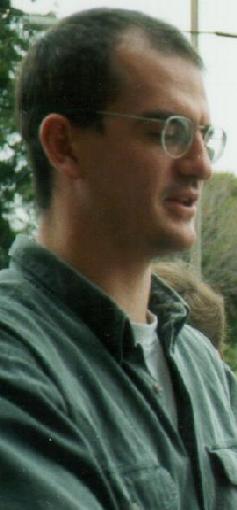
 May the Force be with you!
Although Jos had not finished building his game,
it was far enough along
that you can enjoy
being a Rebel fighter pilot
trying to repair your fighter
with help from Luke Skywalker.
May the Force be with you!
Although Jos had not finished building his game,
it was far enough along
that you can enjoy
being a Rebel fighter pilot
trying to repair your fighter
with help from Luke Skywalker.
[You may encounter a few little bugs unless you are using a current version of Netscape. Jos used 1999 cutting-edge technology.]
 Free toys for all children!
He didn't name the game, but kept it in a file entitled
"galoob", the name of the toy manufacturer.
One angle was to sell the game to the Galoob company
to use as advertising for their toys.
Children would first play freely with the toy pictures
and then would want the real thing.
There were other angles such as CD-ROM.
Free toys for all children!
He didn't name the game, but kept it in a file entitled
"galoob", the name of the toy manufacturer.
One angle was to sell the game to the Galoob company
to use as advertising for their toys.
Children would first play freely with the toy pictures
and then would want the real thing.
There were other angles such as CD-ROM.
He dreamed himself in the career of making free internet imagineering toys for all the world's children.
 So many things to do today! So much fun!
The Galoob game was mostly built in the summer of '97
and he worked on it only occasionally after that,
perhaps because to prepare a small adventure
So many things to do today! So much fun!
The Galoob game was mostly built in the summer of '97
and he worked on it only occasionally after that,
perhaps because to prepare a small adventure
 requires a lot of sets and picture taking and programming.
Meanwhile, he kept discovering so many new fun things to do.
requires a lot of sets and picture taking and programming.
Meanwhile, he kept discovering so many new fun things to do.
Fun to learn foreign languages! As an echo of the Galoob game, in the last month of his life, Jos looked into putting together speech recognition technology with adventure games to make it fun to learn foreign languages.

 Jos
was inspired by
Matthias Schwab
to learn about OOP
(Object Oriented Programming)
and Java.
The first thing Jos did with Java was to
write a
manual in his own inimitable style:
Jos
was inspired by
Matthias Schwab
to learn about OOP
(Object Oriented Programming)
and Java.
The first thing Jos did with Java was to
write a
manual in his own inimitable style:
Jos met Matthias in the summer of '97. "Matt was helping Jos learn Java, but it must be said that they spent a good deal of time discussing 'Life, the Universe and Everything' as well. Both were well read and literate, and both enjoyed proving it," recalls Andrew Long. Matthias tells us much more.
About a hundred
Oop readers per day
come
from many places.
Here are
some commentaries.
Here are some cyber thanks from students:
[1,
2,
3,
4,
].
If you still aren't convinced how great this is, here are
a bunch of sites with links back to here.

-or-
A java tutorial that shows you why Coding Java (or any other object-oriented
programming) is just like writing a trashy Western novel.
-or-
How to understand Java by looking at pretty colors.
|
The analogy of this tutorial is simple: think of a java programmer as a writer, composing a stock novel. All of the characters and settings are "off-the-shelf", and need be only modified slightly to fit into a new book. All that's left to write a bestseller is to come up with a plot that pulls all those pre-existing elements together. That, in a nutshell, is java programming. Think of it as Dean Koontz for smart people. Now, that might be all you want to know. If so, thanks for stopping by! If things still could use some clearing up (perhaps by way of a couple dozen pages of examples), then read on! |
|
When I first started learning how to program Java, I was left totally confused about this whole "object-oriented" thing. What books I had explained the concept poorly, and then went straight on to advanced programming tips. I felt frustrated and lost. Not being particularly math-oriented, I needed a good analogy to help me understand the nature of Java. I have created this brief tutorial not in order to be an exhaustive Java resource, but rather to introduce readers to the concepts of object oriented programming in a way that is non-threatening. If all goes well, we'll have you all in pocket protectors before the end of the hour. There are three different levels of this tutorial, coded by color. Green is for those readers who want the most basic introduction. It is targeted at those who are unsure what object-oriented programming is, and could use a good analogy to make things clearer. Yellow is for those who want to be able to understand object-oriented programming just enough to be able to read and follow it, but are not yet ready to learn the intricacies of coding Java. And finally, the third level, red, is for you daredevils who want to be able to program in Java, but just want to ease into it slowly. In short, the green text gives a "plain English" version of the code that would be necessary, the yellow uses that English in a way that more closely resembles the format of code, and the red is the actual code that would be necessary for the program to work. Readers of all levels are encouraged to skip between the colors to deepen their understanding. Finally, although this tutorial operates mostly through analogy, innuendo, and intrigue, those words that appear in boldface are the actual terms used by Java programmers (ooooh!), so try to remember them as you go along. |

|

|
© Copyright 1998 Johannes Claerbout
Johannes Claerbout 1974-1999


This past year has not been one of my best. In fact, it had some downright miserable moments. Which is not to say that there weren't some wonderful times as well. I deepened some relations, broke others off, and even made some new ones. But overall, it was a period of disappointment and disillusionment. Looking back, I now see these as necessary emotions, as they have led me to a spot at which I arrived yesterday. It's a good place, and I had to work out a lot to get there, so since you are Jos's Official Sanity Watch, you get to trudge through his latest revelation.
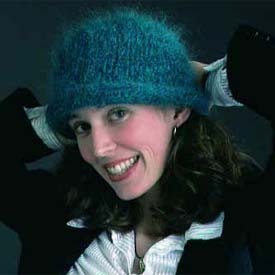 Today's revelation concerns the utility of belief.
This is the rod around which we will wrap the different threads
of my new job,
my conception of my future,
It's all related, and in a strange way, it's all good.
Today's revelation concerns the utility of belief.
This is the rod around which we will wrap the different threads
of my new job,
my conception of my future,
It's all related, and in a strange way, it's all good.
Let's see if we can start with disillusionment. Up until I was 16, I thought I was going to be a doctor. More than that, I was sure that I was going to be a doctor. Until (and I remember the moment clearly) my AP Bio class started discussing (or rather, the professor started lecturing about) the partial diffusion of sodium chloride across the loop of Henle in the nephron, the operational unit of the kidney. It was at that point, at that exact moment in time, that I realized that I had absolutely no interest in kidneys, and didn't think that I would at any point in the forseeable future.
At around this same time, some seven years ago, I got in an argument with a friend, the significance of which I didn't fully appreciate until earlier this afternoon. Since I had decided that the medical profession wasn't for me, I was relishing Not Having a Plan. I scoffed at those who were already planning ahead to graduate school "What are the chances," I asked, "that what they think interest them at 16 will actually hold them when they are 24?"
"It doesn't matter responded Relly, "It's just important that you have a plan!"
And such was the crux of the debate. It's foolish to schedule your life around the things that probably won't occur, I figured. And not being able to figure out what I wanted to do, I went through life fastidiously avoiding any real long term plans. I decide to try it all out and see what I liked. And so, for the past seven years, I have tried out a lot of things. I have lived in a lot of places. There are a lot of jobs on my resume (around 17 of them). I have dated a lot of women (about the same number, actually.) And through each of these experiences, I have carried the conviction that, "this won't last". Of course it couldn't last. If it were to last, I would find myself in some sort of future which I had insisted really couldn't happen, because I hadn't yet planned what was to happen (if you're not aware of my rather strong desire to have things go the way that I want them to go, ask me about a previous revelation, sometime last year). So I found myself in a sort of temporary world.
Now, the problem with the temporary world is that it had only one thing going for it. Novelty. Novelty wears off pretty quick, and leaves one with only the desire to seek more novelty. This, I think explains a good part of my unhappiness with Washington D.C. I fell in love with the idea of DC, and the novelty of the whole thing captivated me, but once there, the novelty wore off pretty quick. It didn't meet my romanticized notions (which will be dealt with in a later revelation [never found -Popster]), and left me wanting to get out and do something, anything.
This started to crescendo this past Winter when I hatched the plan for The Center For Worldwide Shennanigans. The logic of this was that, since I would inevitably grow bored with any one locale, the trick would just be to keep moving as frequently as possible, perhaps every three or four months. The Center was essentially an institutionalization of the idea of temporary living. Since I had convinced myself that I could never have a satisfying job, relationship, or living situation, the only other choice would be to move so frequently that all of that would be a foregone conclusion.
And that is probably where I would be now were it not for the unwitting intervention of my sponsor of yore, Paul M a r i z, who now works for Microsoft in Redmond. A day or two before my graduation from college, I had a lengthy discussion with Paul about what he did. I won't lie to you, much of the conversation (at least on my end) focused on the obscene figure he was getting paid. I was not totally computer illiterate, knowing quite a bit about HTML. However, despite Paul's encouragement, I found it impossible to get a job. My interest had been ignited, however, and I spent the first two and a half months of summer working on computers, learning a little bit about perl, about java, and refining my HTML, learning some graphics arts programs, the whole bit. With the web, I discovered a medium that not only allowed me to limitlessly express myself and try out new ideas; but the scope of the technology meant that there was always something more to learn. It was almost impossible to get bored. For the first time in a long time, quite possibly since my junior year of high school, I had a concrete idea of what I wanted to do, not only in the immediate future, but in the long term.
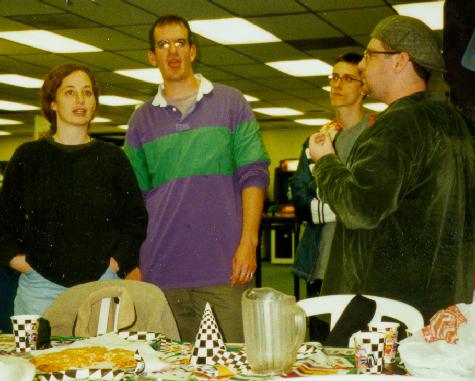 Unfortunately, I wasn't able to convince anyone to hire me to do this.
Until last week,
when I got my first job in the business, temping in the
Customer Service department at WebTV.
Now, WebTV, even though it has just been acquired by Microsoft for 425
million dollars, still embodies much of the quirkiness of Silicon Valley.
There is unlimited free Odwalla juice for the employees in a well
stocked kitchen that includes cereal, frozen burritos, and an expresso machine.
There are four pet birds in the building,
a cockatiel, a cockatoo, an African Grey and something else. It's green.
Everyone there is under 35. Most of them well under 30.
The environment is very relaxed, the hours flexible,
and the conversation is intelligent.
Unfortunately, I wasn't able to convince anyone to hire me to do this.
Until last week,
when I got my first job in the business, temping in the
Customer Service department at WebTV.
Now, WebTV, even though it has just been acquired by Microsoft for 425
million dollars, still embodies much of the quirkiness of Silicon Valley.
There is unlimited free Odwalla juice for the employees in a well
stocked kitchen that includes cereal, frozen burritos, and an expresso machine.
There are four pet birds in the building,
a cockatiel, a cockatoo, an African Grey and something else. It's green.
Everyone there is under 35. Most of them well under 30.
The environment is very relaxed, the hours flexible,
and the conversation is intelligent.
The job, however, was meaningless. On my first day, I was told just to kick back and familiarize myself with the WebTV box, a VCR shaped thing (a little smaller) that allows customers to surf the web from their TV. Okay, kinda cool, now I'm bored. So they decide to take me off the box early and start training me on how to become an emailer. This is a job where 1,700 people a day write in to WebTV with their problem, anything from "My internet is broken, fix it!" to "Why won't this porn site work?" to "How do I turn on my television?". You read the email, scroll through the list of stock responses, pick the one that best fits, then slap your name on it and send it out.
The people in the department have been doing this for months. An average emailer averages 8 questions an hour, a good one 11, and a superlative one about 13. It is not a very demanding job. They figure they'll start me answering questions by the end of the week. Jano, of course, once gave me (okay, there were a bunch of us) a great piece of job advice for breaking into work in DC. Your employer will always start you out on the copier, to see how you do. You have to tell yourself that you are going to become the best damn copier that the place ever saw.
I start answering questions Tuesday afternoon. I don't notice how many I do. I do a full day Wednesday. I average 10 an hour. On Thursday, I average just under fifteen. On Friday, my fifth day on the job, I only work six hours. I do 137 emails [23/hour], nearly doubling the best hourly output of the longterm employees. I figure that I will do this another month or two and then maybe move on to Austin, or maybe Memphis. I am still living with a temporary mindset.
 Then at four o'clock Friday afternoon, WebTV throws a party to celebrate its
acquisition by Microsoft
(and the pleasant stock options that brings).
They give us beer.
They give us champagne.
They give us a lot of food.
The CEO of the company, who looks like he's about 30,
gives a talk where he demonstrates the next generation of equipment.
I am floored.
This stuff is going to revolutionize television and the web.
And it's coming out in fewer than two months.
Steve, the CEO of the company, holds up the prototype
next generation machine.
They are going to ship them out to the beta testers this weekend.
Then at four o'clock Friday afternoon, WebTV throws a party to celebrate its
acquisition by Microsoft
(and the pleasant stock options that brings).
They give us beer.
They give us champagne.
They give us a lot of food.
The CEO of the company, who looks like he's about 30,
gives a talk where he demonstrates the next generation of equipment.
I am floored.
This stuff is going to revolutionize television and the web.
And it's coming out in fewer than two months.
Steve, the CEO of the company, holds up the prototype
next generation machine.
They are going to ship them out to the beta testers this weekend.
 When I return to the office,
I run into several of the team leaders.
My team leader,
a nice girl with an uncanny resemblance to Chelsea Clinton,
asks what they're going to do with me.
Word of my speed in emails has gotten out.
Mike, the team leader for the telephone support,
asks me if I would like to work phones in customer service.
I politely demur
(That's a lie. I outright laughed at the very suggestion.)
Kyle,
(a girl with blue hair) asks if then I would like to do tech support for the
new machine that's going to be coming out.
I ponder my career, and my friends who have been doing emails for five months
and respond yes, yes, I think that would be very nice.
One week, and I had been promoted.
When I return to the office,
I run into several of the team leaders.
My team leader,
a nice girl with an uncanny resemblance to Chelsea Clinton,
asks what they're going to do with me.
Word of my speed in emails has gotten out.
Mike, the team leader for the telephone support,
asks me if I would like to work phones in customer service.
I politely demur
(That's a lie. I outright laughed at the very suggestion.)
Kyle,
(a girl with blue hair) asks if then I would like to do tech support for the
new machine that's going to be coming out.
I ponder my career, and my friends who have been doing emails for five months
and respond yes, yes, I think that would be very nice.
One week, and I had been promoted.
I have reflected on this quite a bit today (it all happened yesterday), and I see that for the first time in a long time, I am moving away from the temporary mindset. Here is a company with good people who treat their people well, who treat me well, who are putting me in a challenging, interesting job. Why put a time limit on it? It is leading me down the path I wish to go, so why not just ride it out?
Jos called his father "Popster". That's me.
Jos loved his work at WebTV because
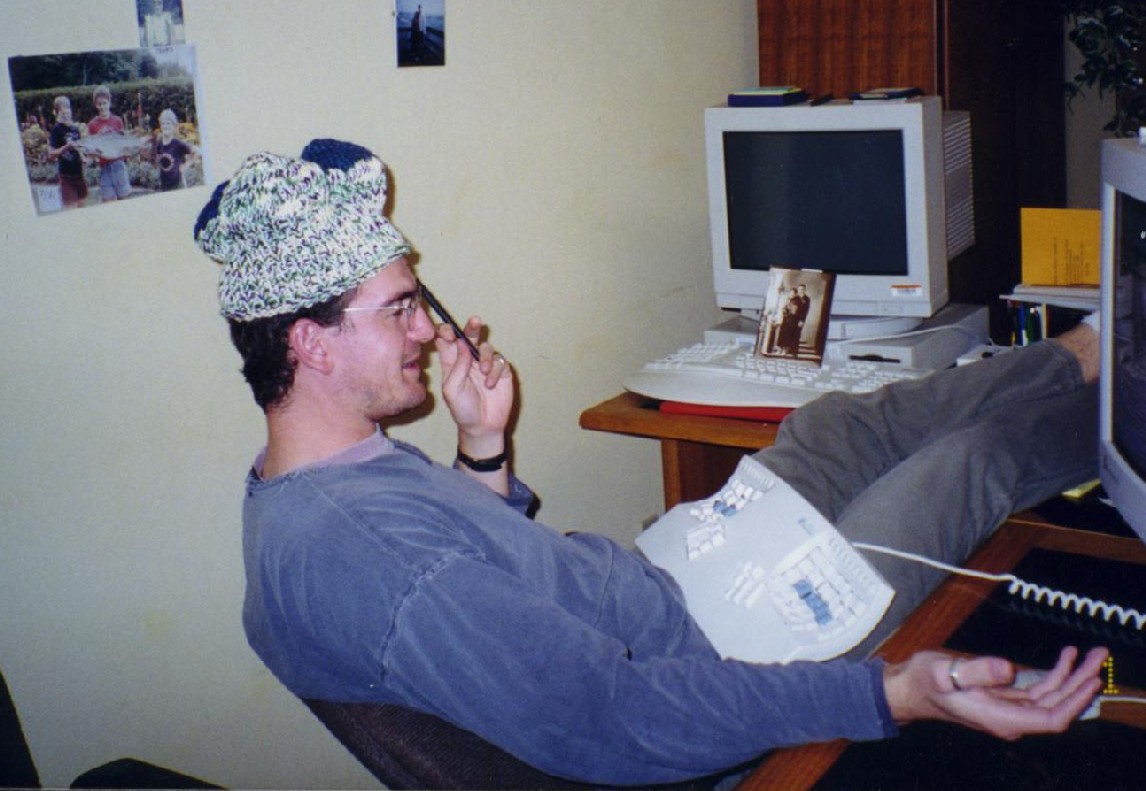 I think the
Galoob game
was a pivitol project in Jos's life.
Inventing this game was
the
transitional step for Jos
from html to javascript,
from being a text formatter to being a programmer,
from a liberal artie to a techie.
The Galoob game never turned into the product he imagined
but it gave him the Javascript skill
which
got him promoted from the WebTV
"Customer Care" department to the job(s) he wanted next,
"preview testing the next product (the WebTV plus)".
Later things got even better as he became the link
between customer care and engineering,
and better still when he became a
tech writer
with a license to run around the company learning things
and then writing about them.
Mumsie says he was in heaven then.
I think the
Galoob game
was a pivitol project in Jos's life.
Inventing this game was
the
transitional step for Jos
from html to javascript,
from being a text formatter to being a programmer,
from a liberal artie to a techie.
The Galoob game never turned into the product he imagined
but it gave him the Javascript skill
which
got him promoted from the WebTV
"Customer Care" department to the job(s) he wanted next,
"preview testing the next product (the WebTV plus)".
Later things got even better as he became the link
between customer care and engineering,
and better still when he became a
tech writer
with a license to run around the company learning things
and then writing about them.
Mumsie says he was in heaven then.
 I don't know if this is the place to say it
(or if it should be said at all)
but Jos's pay nearly quadrupled in the two years
he was at WebTV
(with more on the way).
I mention this not to brag about my son's prospective wealth,
but to illustrate that he really did find himself:
Two years earlier,
he had been living with his parents,
unable to get an $8/hour webmaster job,
and planning a bizarre life style,
maybe working in a pulp mill in Eureka
[I refused to cosign his lease],
or being a masseur in Memphis or New Orleans
[Mumsie hated this plan].
Now,
not only was he enormously happy,
but his income began to allow him
to think realistically of
having a family and a home in Silicon Valley
-- though he didn't say that.
He had only just turned 25
and had no regular girlfriend yet.
His Mumalum and Popalop thought they'd almost made it to heaven then too.
I don't know if this is the place to say it
(or if it should be said at all)
but Jos's pay nearly quadrupled in the two years
he was at WebTV
(with more on the way).
I mention this not to brag about my son's prospective wealth,
but to illustrate that he really did find himself:
Two years earlier,
he had been living with his parents,
unable to get an $8/hour webmaster job,
and planning a bizarre life style,
maybe working in a pulp mill in Eureka
[I refused to cosign his lease],
or being a masseur in Memphis or New Orleans
[Mumsie hated this plan].
Now,
not only was he enormously happy,
but his income began to allow him
to think realistically of
having a family and a home in Silicon Valley
-- though he didn't say that.
He had only just turned 25
and had no regular girlfriend yet.
His Mumalum and Popalop thought they'd almost made it to heaven then too.

Over the past six months I have gotten to know and work with some of the most competent and talented people I have ever known. In my time at WebTV, I was always pleasantly surprised to find exceptional people in all sorts of jobs; even jobs which left no outlet for their considerable faculty. I have learned a great deal from those with whom I have worked; programming languages, communicative skills, technical know-how. What I was never able to emulate was their forbearance.
Because of the esteem in which I hold my fellow WebTV employees, I would have liked to have stayed with the company after I felt my time in Previews had come to a close. Unfortunately, once this opportunity was conspicuously removed, I felt I had little choice but to depart from a company to which I felt I still had much to contribute. My decision to resign has been neither easy nor readily made, but I feel that it is now my turn to dictate the future of my career. That career now leads me away from WebTV. I will miss it.

Jos researched and wrote articles and guides at the WebTV developer site. He loved this work. Mumsie (his mother) says he was in heaven there. One of his many projects was organizing and designing the general appearance of the site.

|
Visit the site as it was shortly after he died there. |

|
Visit the site as it is today. |
What could be more fun than swimming around in WebTV, meeting all the wonderful people there, learning what they are up to, and writing about it? This job gave Jos a license to go wherever there was a problem (or an opportunity!) and work on it.
And they paid him too! And the pay kept going up. "The heist goes on!", he liked to say.
 On his business card he gives himself the title of
Migrant Worker.
It sounds like having your employer pay you to go to college!
How could such a fun job exist?
On his business card he gives himself the title of
Migrant Worker.
It sounds like having your employer pay you to go to college!
How could such a fun job exist?
A big problem faced by the WebTV company is that the market was (and is) dominated by two giants, Netscape and Microsoft's Internet Explorer. The WebTV box could do a pretty good job of mimicing those giants on a household TV, but unfortunately, there are many important web sites in the world that do not look good on a WebTV. They could look good on a WebTV; but they do not because their author/developers were thinking about computers, not about television viewers; and most authors are unaware of the limitations of television.
It was the job of the WebTV developer site to teach authors to organize their sites so that they would be acceptable on a television screen. Jos was to be a teacher and an evangelist.
One of Mumsie's favorite photos is the one she took of Jos and his Popster working together on a Sunday night on Jos's color picker tool. Popster could explain this tool, but Joster's explanation is better (and more fun).
You could go to the WebTV site and try out his patented color picker tool, or you could stay right here and try out the much niftier color picker that he was developing. It's fun. It's easy. Give it a try!
Jos found his color picker to be a real challange. Beyond the product development challenges, the American color television standard itself (NTSC) is a hodgepodge of engineering compromises. Even at the end, we see him casting about for help to best resolve fundamental engineering issues. He was not one to sweep problems under a rug.
He really did enjoy getting to the bottom of things. That's a side of his personality that I came to understand more fully in the last year of his life. Without an adequate math background, he did his best to understand Fourier transforms -- he needed them to explain television and color. When he "engaged himself" to WebTV 18 months earlier I had told him not to get his expectations too high, that WebTV was full of engineers with four year engineering degrees. He proved my fears unwarranted. I recall my surprise and delight and his enthusiasm when he came to explain Huffman coding to me -- and he explained it magnificently. When he learned that "object coding" was possible in Javascript he immediately began modifying his colorpicker to introduce it.

 Jos enjoyed doing a good job.
Not only in writing good articles,
but also in supporting
the company's product and its market position.
In a memo found in Popster's computer we see
how he envisioned
building his team.
His boss Heather
says that Jos and she and Joel had many long discussions
about how they could more effectively handle developer relations
with limited resources.
Jos enjoyed doing a good job.
Not only in writing good articles,
but also in supporting
the company's product and its market position.
In a memo found in Popster's computer we see
how he envisioned
building his team.
His boss Heather
says that Jos and she and Joel had many long discussions
about how they could more effectively handle developer relations
with limited resources.

A Bug is "Active" if it is in any of the following states: Pending, Open, Investigate, Fixed, Built, Staged. A bug is "Not Active" if it is in any of the following states: Closed, Duplicate, Unsolved, WillNotFix, or NAB: Not A Bug. Example-- "There are frames on the developer site!" This is a design decision, not a bug. Hence, this bug would be NAB'ed. A request to remove the frames from developer.webtv.net is really a "feature request".

| What is the Resolution of a TV Screen? |
The first in a prospective series on the far technical side of "Internet on TV", also my first article that required dedicated research. Read as an example of:
|
| The Gentle Deceit of HTTP Response Headers |
This column was my first for Developer. Read it as an example of:
|
| Don't Fear The Oop! |
I created this Web site after studying Java for three weeks. Read it as an example of:
|
Yossel's Toessels | Read for examples of copywriting. The best examples are in the "Models" section. |
Today marks the end of my second year as a Web developer. I use the term very loosely, as the first six months were spent building one of those "My Big Link Page" sites on Geocities, and even today I can't seem to build a simple JavaScript form validator without consulting Dejanews extensively first.
Why do I call myself a "Web Developer", then? First, it looks much more credible on a business card than "International Man of Mystery", and second, like The Jamaican Bobsled Team, I just love doing it. When I mentioned this to a friend at work, he cynically retorted, "Really, are you sure you're not just drawn to it because of some warped sense of co-dependency?
 I laughed this off at first, of course. But then, as I found myself back
in my cubicle, miserably punching my fist in the air and screaming
incomprehensibly at a Perl program
riddled with fatal logical flaws, I thought to myself "Hey, eating
deoderant lollipops would be more fun than this."
I laughed this off at first, of course. But then, as I found myself back
in my cubicle, miserably punching my fist in the air and screaming
incomprehensibly at a Perl program
riddled with fatal logical flaws, I thought to myself "Hey, eating
deoderant lollipops would be more fun than this."
Just as I was about to give up and go do something fun with the rest of my existence, my little program sputtered back to life. It didn't actually work, mind you, it had just decided to spit out a tiny nugget of hope. I was immediately glued back to my seat, nursing and cajoling my code, exploding every once in a while with a defiant declaration of "There is no reason for this not to work!", then crumbling back into my role as prostrate supplicant, begging my computer to show me the love it once did.
I'd like to think that this frustration is just a result of trying more complex things, and in a way that's true. But I remembered the exact weekend I started learning HTML, and the two hours it took me to learn how to make my links change color. That tells me it wasn't easy in the beginning. And whenever I browse Internet newsgroups, I come across people tearing their hair out over stopping conversion of a number to a string in a scalar context, so I know it's not going to get any easier in the future.
Why then, in the name of Tim Berners-Lee, am I
doing this? I can't help but think that my cynical friend was right.
Like the fifteen year old girl calling Loveline about her
married, cheating 32 year-old boyfriend, I somehow need days filled
with hours of frustration and seconds of unfiltered bliss.
The satisfaction of a working Web program is one thing, but knowing
that the satisfaction is ephemeral, and soon to be eclipsed by an
unimaginable frustration, makes one savor it all the more.
Return to the Life of Jos Claerbout
 Some of these stories are second hand or third hand.
If you saw them first hand,
please help us get the story straight.
Some of these stories are second hand or third hand.
If you saw them first hand,
please help us get the story straight.
In one of these articles (which can no longer be traced) he gave a link to a place known as "jail house girls". This place was for real. There were ladies in jail who were looking for pen pals. They had lists and tables of their vital statistics, including why they were in jail and how much time they had left, as well as photos. Being Jos's father, I sometimes went back to look at his older articles, to look for bugs, to suggest a change here and there. One day I got quite a shock. Jail house girls had changed. Their front page let it all hang out(!) I advised Jos to take another look, to see if he still wanted to preserve his link from the company web site to jail-house girls. He didn't.
In writing this story I tried to go back to the jail house girls pen-pal site. I couldn't find them. I'm afraid the dear ladies must have run afoul of officialdom.
You should have looked at http://www.jailbabes.com/.

When I first met Jos, he immediately nicknamed me "Frinkster". But after we went as a company to see the new Star Wars movie, he surprised me by suddenly naming me "Jar Jar Frinks" based on the digitally animated character Jar Jar Binks in the movie. Most people would not have been bold enough to tease me in such a way (not that I don't have a sense of humor but that I can sometimes seem too busy to be approached). Only Jos would have reached out in such a silly way to make me feel "one of the gang". And only Jos could have gotten away with it!
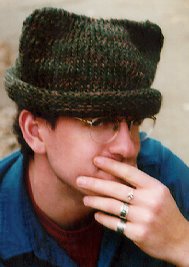 Joster's opinion of the Men's Room at WebTV was that it
was pretty embarassing.
There you would be, standing at the urinal, and your boss
(or one of the company founders)
would walk up beside you.
Well, what are you supposed to do ...
Joster's opinion of the Men's Room at WebTV was that it
was pretty embarassing.
There you would be, standing at the urinal, and your boss
(or one of the company founders)
would walk up beside you.
Well, what are you supposed to do ...
To Jos, the solution to this dilemma was immediately clear. You need something to concentrate on, something on the wall to read. But what? Obviously, a newspaper clipping of about the length as a pee. But which newspaper?
Those people like me, stuck with telling this story, have spent a lifetime avoiding such newspapers as The National Enquirer and The Weekly World News with headlines like "Princess Diana secretly engaged to Elvis on Mars."
But, from an early age, Jos's mind was open to everything. In middle school (8th grade), Jos and his friend Tyler Dierks wrote their own parody of this genre, The Sleaze Weekly.
Back at WebTV, from time to time, somebody important might walk in just when you are posting the clipping. Then you say:
Jos was buried three days after he died, before any news announcement of his funeral. Never-the-less, the funeral home was overflowing with more than 300 people, many of them his friends and acquaintances from work. All arrived to find the benches decorated with copies of covers of the Weekly World News. It might seem a sacrilege, but they knew that Jos would cheer. He would want everyone to smile. If anyone caught them posting those covers on the pews, they could say,
This spectacular bit of tomfoolery was cooked up
by Jos Claerbout with a little help from his friend Andy Bates.
Jos noticed that the WWW exhibits a massive volume of bad grammar, and he also noticed that zillions of examples of bad grammar are readily found using any search engine such as Lycos or Alta Vista.
He cooked up a perl script that would use Lycos to find pages with a specified grammatical error and also to look for a "mailto" on the offending page. During the testing, Jos did not quite dare automate everything for fear that he might have made a blunder and for even greater fear of a barrage of hostile return mail. To prevent this, the perl script brings up a couple lines of the page with the error for verification by the schemers. Then at the push of a button, a letter would be sent. He could check and send up to about a dozen emails a minute.
His first letter was for people with pages that failed to correctly distinguish between "loses" and "looses". Here it is:
Hey there, I just wanted to let you know about a typo in
your page. It appears that you've spelled the word "loses"
incorrectly, spelling it "looses" instead:

:::

"Looses" is not the same as "loses," and when used as a
verb means "to let loose," or "to free from restraint."
Granted, "loses" does rhyme with "chooses," which does have
two "o"s, but such inconsistency is the price we pay for
not speaking Esperanto.

On the Web though, the word most often appears as a typo.
Unless, of course, by "Spammer Looses Case in Court," you
mean that the spammer actually threw a suitcase at the
judge, or let loose a serious case of the sniffles. Such
things are possible, I suppose, just not very likely.

You may be saying "But what does it matter?" As you can
tell from my name, such a question strikes deep into my
heart. Grammar is my very soul. And it's in yours as well,
when you think of what truly separates us from the apes.
Some would argue opera, but I would heartily disagree.
Almost anyone can play a French horn, but it takes a
species of true breeding to differentiate "that" from
"which" and to make such clever use of apostrophes.

Join me in this battle. Elevate our kind.

Eternally vigilant,

The Internet Grammarbot
Responses of non-native English speakers were generally thankful and humble. Native speakers, on the other hand, tended to write long letters disagreeing about what separates man from the apes.

He still feared that wholesale use of his grammarbot might evoke a deluge of hostile responses (along with the appreciative ones.) Not wanting to cause any trouble for his friends (or employer) who loaned him resources, he was very careful. If he was going to automate the sending of zillions of emails correcting people's grammar, he thought he might need to hide his identity. He had to learn the tricks that spammers know. He arranged to have all return mail sent to a place known as "ragemail". Then he was ready for his next audacious bit of grammar correcting, the word "get's" with an apostrophe.
The letter below leaves me speechless. He had already sent out his first trial mailing. Would he have the audacity to mass mail it? Unknown to all of us, time was running out. Here is what he had prepared for the "get's" sinners:
Hi there!

I just wanted to let you know about a typo on your page.
Grammatical mistakes make it difficult for people to
understand you, and may cause your site to lose credibility
with its readers.

:::

The error I'm talking about is the use of the word "get's."
"Gets" means to "to gain possession of," or "achieve." It
never, never, never has an apostrophe. I know, apostrophes
frequently seem to come before the letter "s," but not
always.

Apostrophes are a lot like pubic hair: appreciated and
helpful when placed correctly, surprising and distressing
when found somewhere unexpected. An apostrophe in the word
"gets" is akin to finding a patch of curly hair on the
inside of your knee.

So when should you use apostrophes? There are three
appropriate uses. One is to denote possession: "These crabs
are not mine; they are Laura's!" Another appropriate use of
apostrophes is to indicate that the word is a contraction
(a combination of two words), and thus some letters are
missing: "I'll (I will) never use those sheets again."
Finally, apostrophes can be used (very rarely) to indicate
that a noun is a plural. This is used most frequently for
letters and numbers: "I don't care how many A's she got on
her report card, this is just gross." Whenever you use an
apostrophe, think about why you're doing so. Don't just
toss them in for flavor.

If all of this seems somewhat silly to you, please
disregard this letter with my apologies. As a lowly
grammarbot, I can be somewhat single-minded. However, if
you care at all about how people evaluate your
intelligence, then please, please, heed my words and
correct your site. All of humanity will thank you.

My life's goal is to make sure that you're communicating as
effectively as possible. If that's a crime, then I'm guilty,
guilty as a mangy hound!

Yours in grammar,

The Internet Grammarbot


P.S. - I thought you might appreciate my list of the
swankest grammar sites on the Web:

http://webster.commnet.edu/HP/pages/darling/
http://www.grammarlady.com
http://www.m-w.com
OK, OK, so you think this is all a made up story? You don't believe the grammarbot is real, and you'd like me to prove it works? Or you wonder what the world thinks of having its grammar corrected? I'm not sure exactly how you do it, but I think all you need is the perl script. Maybe you'd like to see his working directory too. It should be all here. It looks like about a dozen "get's" sinners did get a letter from the grammarbot before his time ran out.
One more thing: If you plan on sending many letters, and want to peruse the replies, you might want to learn more about "ragemail" and get your own account there. Too bad we can't find the replies that Jos collected.
We'll just need to find a reader out there on the WWW to pick up
where Jos left off. How about you?
-Popster
 As so often happens in Silicon Valley, Jos made an invention
that his employer was not prepared to put into production.
On the other hand, Jos really could not run with it on his own
because it was so intimately related to the company product.
As so often happens in Silicon Valley, Jos made an invention
that his employer was not prepared to put into production.
On the other hand, Jos really could not run with it on his own
because it was so intimately related to the company product.
His invention was a method by which ordinary people accessing the web with their television and WebTV units would be able to assemble a scrap book of images they would find on the web. This was not simply a gathering of the links, but a gathering of the images themselves. Although people with computers in 1999 could do this, it required specialized skills. Jos brought it to the masses. In the future we can expect this functionality to be widely available, but when Jos invented his webscissors, he said his employer was not willing to accept the responsibility for customer service of it.
Want to try it? It is easy. Go to WebScissors.
You should have been able to grab the images off this page. If you are browsing from a WebTV box, the images should now be in your personal scrapbook. (Otherwise, you'll get a "file not found".)
Andrew Levin writes about the early history of Web Scissors. He adds a history of email that illustrates
Emily Wilska writes about how they intended to help users over this difficult period, and how,
"Despite Jos's insistence on keeping the authorship of the site anonymous, it has his name all over it:PageBuilder is probably a registered trademark of WebTV Networks, Inc. WebTV Networks neither provides nor endorses this site. Use at your own risk. Do not look directly into the light.Even those who never knew him will surely smile at his disclaimer."
 The term "transloader" sounds awfully techie so they chose the term
"Image grabber."
Jos says,
"Well, I'd pull for "Image groper",
but I guess I can live with "grabber"."
The term "transloader" sounds awfully techie so they chose the term
"Image grabber."
Jos says,
"Well, I'd pull for "Image groper",
but I guess I can live with "grabber"."
Noel Morrison fills us in on more details telling us that
Jos registered webscissors at his parent's address. The bills for the web hosting provider were going to his personal credit card.
Jos and his colleagues were chagrined but amused at the way many WebTV users were using the web in general, and his Webscissors tool in particular. He interpreted his logs to mean
andAnd, as a special treat, here are the last 200 pages "scissored": I particularly like the fellow who went from trying "godslove.com" to "illegal teens. com".
Popster hates to cast doubt, but the logs left in his files are actually ambiguous. Two very different users could be using Webscissors at the same time; and the "access" logs would interleave them. The "referer" logs were not found in his files, but he might have seen them; he might have been right for the right reasons.Oh, God's in the log. Right next to "teen whores. com" and "teen sluts. com", you'll find "http://www.whatsaiththescripture.com" And you know what's funny? The scriptures saith NOTHING about "pink teens. com".

To get webscissors up and running outside of WebTV, Jos set up an account with a web hosting provider. The provider, James Ownbey writes:
The weekly total hit count was 65 thousand in January 2000. The home page accesses (plotted nearby) are about half of that. These are not people browsing; these are people extracting useful services, about 35,000 services per week.

If each of those users contributed a dime to Jos's charity it would amount to $3,500/week.
Many have remarked that they'd like to live their lives more the way Jos did, but they don't know how to begin. They might begin by reading some email from Jos to James and Jasmine.
The originals of these of his webscissors files are dated his last afternoon before he died.
When he died his webscissors email box had been emptied (and it immediately began refilling). His webscissors page looked beautiful. After our shock receded (despair undiminished) we removed his mail drop and added a dedication to his memory. Ray Hill, Andrew Levin, and another, have offered to guide me in keeping webscissors alive while it remains useful to WebTV users.
 After announcement to the user community,
many kudos
appeared on the pagebuilder community newsgroup.
SecretAdmirer "Beth" gave
a welcome gift to the community.
After announcement to the user community,
many kudos
appeared on the pagebuilder community newsgroup.
SecretAdmirer "Beth" gave
a welcome gift to the community.
Almost two years later, she writes
Every morning I get to play "Jos" by logging into the Hotmail [webscissors queries] account. When I press the "login" button I get an adrenaline rush. I remember my promise to think like Jos as I read the e-mails and I try to answer the e-mails with humor and compassion. I'm truly the better for it because sometimes my "Jos" personality stays with me after I sign out and I get to have a better day with a great attitude. XO, Beth
 Visitors began appearing here from
Roxy's home page (signatures) where we found this lovely commemorative gif.
Visitors began appearing here from
Roxy's home page (signatures) where we found this lovely commemorative gif.
Newsgroups: alt.pagebuilder.help
Subject: All - Please Read <-------------
Date: Wed, 22 Dec 1999 13:32:04 -0500 (EST)
From: SecretAdmirer Please read this: http://sepwww.stanford.edu/data/media/public/sep/jon/family/jos/webscissors/ In grief, Beth
From: catandgeo How very tragic!! I am in the process of collecting for my pages and have used Webscissors 99% of the time. I always wondered who came up with the idea. It is so simple even I can use it. It is such a waste that such talent was cut down so soon. As the book says "Why do bad things happen to good people?" Is there an email address so that we may express our condolences to the family?
From: fourthrok This is tragic news....my heart aches with sorrow. Deepest condolences to his friends and family....and to us all, his "WebTV family". Farewell, Jos....
From: MissShygal (protege) This is very sad for us all. He had such a gift, and shared it with all of us. Webscissors--the best!! God Bless him. I'm truly sad. Shy
From: Vkfr (V K) The Loss of Jos Claerbout A bright light extinguished too soon, a promise not yet realized. Our condolences to the family, friends and co-workers of this talented young man. Their loss is felt keenly by us all. Vicki K
From: aydelott (Steve and Ruth) When Jos died, Webtv mentioned it in "Club WebTv" and that was that. Now that we all know that Webscissors was his baby, here's Webtv's chance to express how much they valued Jos, and to keep his memory alive: WebTv should officially "adopt" Webscissors and make it an "official" Pagebuilder tool. We learned today that Jos was paying for Webscissors out of his own pocket. Surely, no one expects his parents to keep up the payments on this valuable resource. Surely, no one want Webscissors to disappear. What a golden opportunity for WebTv to Do Something Good and give us "Jos' Tool". Steve and Ruth
From: angelorbrat (blue eyed angel/brat) ditto Steve and Ruth... he gave us a great tool to extract images.. unselfishly and at his own expense... his memory should live on.. even if we didn't know him personally he will be missed by all.. . ditto the rest too :( I know this is especially hard for those like Beth who knew him
From: WtvW (alliance: "Web Tv Watchers" WTvW) The loss of "Jos" was tragic but the gift he left with us of his works and present friends who do not forget to remember those who've shared and cared is a blessing that honors his still ever present great worths. Respectfully, WTvW
From: elcabasagrande (BigHead) This is so sad. I had the oppurtunity to correspond with Jos (aka A-Hyphen) on several occasions; and he always treated my questions and suggestions with kindness and graciousness.
From: Hrbsparky (Harry R. Bellerby) god speed my friend your memory lives on through our pages. our "community" would not be possible without you........................Sparky :(
From: hipdelbert (Dale) If his work says anything it was that he was someone that really cared about Webbies. We shall not see his like again.
From: MONKEYMANN (gary mann) The world is full of silent, kind, giving people that most of us have never met nor will we ever get the opportunity to know. But they all have something in common. By their example, they make the rest of us all want to be better, kinder, and more giving people. Society gains much from what these silent heros teach us. We have lost a great teacher.
From: Angelaruth49 (Angela Olson) What a nice person! He really took a risk in helping us. It's a sad loss. Sincerely, Angela
From: mauironnie (mauironnie) His work lives on, as will what we all do here. A reminder to all of us, to enjoy each other, we're all in this together. Thanks Jos, for Webscissors. aloha.
From: imp-1 (greenmonk) I've never used Webscissors, but after reading about Jos, I feel as though I've lost a friend. My thoughts and prayers to his family. greenmonk
From: TDBLEDSOE11 (LISA) this is a sad loss. web scissors was a great idea and people like Jos will truly be missed. lisa
From: CRGrady (Cg) This is very sad news. Hopefully WebTV will pick up webscissors.com so that all Jos' work will not have been in vain. Condonlences to all his friends and family. Cg
From: inetdou Thank you Jos, for all you have done for us and everyone that has yet to experience your fine art on this canvas. Thank you from us all!
From: us_131 (SwampRat) This is crushing news. I am without words (for a change). I know how I feel. His talent shared so freely, what a tremendous contribution he made. I can only imagine the grief his family must feel. I have used and told others about Webscissors so often, I feel I should give tribute to him on my humble page.
From: THE-PLUMMER A great lost in our webtv world it was simply the easiest to use, even I could use it.And it always worked.
From: DIRTY98 My sympathy to everyone JOS has left behind. I want to say that through his pages and the letters to his parents that his memory will last and thanks for sharing them in your grief. Words fail to tell what the heart feels.
From: cando99 Just read the pages about JOS and wish I had known him! For the parents and friends of such a outstanding young man I can feel your grief and express my deepest sympathy for your loss.
From: onestranger My condolences in the passing of Jos. I know that webtv is a better place for him having been here.
From: JANETofOS (JAN) My deepest sympathy to Jos family and friends. He made his life here on earth really count! Sincerely, Jan
From: ProfMarvel (The Great Marvello) Jos will be greatly missed. Back in July, some friends and I got together and made: http://www.mimes.com/s In August, when WebScissors was posted in this newsgroup, my good friend made contact with Jos by telephone. The conversation was on linking, and a few other various topics. From what my friend told me, Jos was a webtver who was extremely knowledgable. We had no idea he worked for WebTV. I have been reading the Developer pages for a very long time. Jos`s input will be greatly missed. I agree, WebTV should adopt WebScissors. Happy Holdays to all. Professor Marvel
From: echristian (Elizabeth Christian) I just found out about Websissors last week....had been out of the country when the pagebuilder appeared. This is a wonder tribute and explanation of what has been going on behind the scenes. I appreciate the unselfishness of such a man. Is there a way we can get Webtv to make this part of the regular sitebuilder ? Elizabeth
From: READ_THIS- I am not good with expressing my feelings but i think this is a fitting poem for Jos's family and friends. griefnet.org/library.dir/guardian.html
From: ginngerndinghy (Ginnger *) Such a great loss! Words can't express the sense of loss here!
From: hipsis (Hipsis) To Jos Family: I know what your going through at the lost of your son. Back in July of this year after my brother and I had been on line with Webtv just for a few weeks we lost our grandfather. Your Son's site was a wonderful tool and it should be adopted by Webtv Networks and make a part of the pagebuilder scrapbook file manager. May you keep his memory alive in your hearts.
From: SecretAdmirer Your posts have been a great comfort to Jos parents. One of their greatest fears was that he would be forgotten outside of his family. Now they know this to not be true. No one will be able to use WebScissors without smiling and remembering a very funny guy with a huge heart, a humanitarian who was loved greatly and only knew how to act like he was raised- with love and respect. If you get a chance, check out his home page: http://sepwww.stanford.edu/data/media/public/sep/jon/family/jos/ You will roar at his "toessel" page and "he could of got fired for this" page linked lovingly by his parents. We grieve for our loss and sympathize with his parents, but we can also laugh like he wanted us to. I've enjoyed reading your posts and am just so darn proud to know you all. As a group we always come together and as a group we face a road we know we are not travelling alone. I look forward to the future as a member of a group destined to define humanity on the internet. with love from, Beth
From: Slizzy (Big Daddy) Here is the Club WebTV article from September. http://www.webtv.net/corp/clubwebtv/cwtv0999/founders.html I might be wrong but I remember http://community.webtv.net/DataBrain/PageBuilder/ being the first PB-uploader. Who also went by the name Jos, and was very active APH. His WebTV pages were last updated 8-20-99.
From: SandyFromTX (~Sandy2~) To Beth and the family and friends of Jos. The candle burns brightly, then flickers and is snuffed out. Such was the life of a vibrant and brilliant young man named Jos. He was a true tribute to mankind and will always touch others through his concern for others. Thanks Jos for your webscissors...a memorial that will carry your memory on. My deepest sympathy to all who knew and loved him. Sandy2
From: Queeneebee (Queeneebee) I am constantly astounded at the generosity to be found on the Web. May Jos know peace and happiness in his new life beyond this earthly one. QB
From: zenzan (Zan) Thank you Beth for making Jos known to us. Somewhere it was said that the purpose of life is to Love Life ... passion for what brings you joy and assist humanity. It seems, from reading is pages and tributes, that Jos accomplished this in a short period of time... and evolved. Even though I didn't know him, I loved what he created. Thanks for enlightening us!
From: flamenco4u (Jeffrey) I have WebScissors on my F2 key........I am totally agreeing with the adoption of WebScissors by webtv------it is simply, a cool site to use........my heart felt sympathy goes to Jos family and friends........but i think that the site should be renamed as---->JosWebScissors WHEN ANGELS WEEP
From: TomGreene101 (tomasito deVerde) Beth, I have been in this NG about 3 hours in all this week, the last hour reading these posts. I grew up in Virginia stomping the halls of Thomas Jefferson and Patrick Henry and the like and I could quote them with deep understanding way beyond my years. Now I don't know what to say. I knew when I saw "Dianovich", I was about to learn about a character. Jos lives!

|
"Renée, what color convertible are you going to get?"
|

Commerce would never be the same if Jos could just get micropayments to work. "Micropayments would solve the problem of SPAM; just charge everyone a nickel for every piece of email they send you."

Jos had been shopping his Cube Town idea around to various friends and contacts. He lamented the fact that he just hadn't found the right person yet to run with his idea. So one day he told me, "I've been convinced that I must go to business school and launch this idea myself." Apparently, he had talked to someone who led him to conclude that he, Jos, would have to get an MBA.
I thought it strange that Jos had been pursuaded by someone to do something; it was usually Jos who did the pursuading! I had a whole stack of GMAT books at home, so I told him I'd lend them to him. "That's great!" he exclaimed. "We'll be study partners."
I wasn't exactly looking for a study partner, but I knew Jos wouldn't be an ordinary study partner, so I agreed. "OK," I said. "But I can't start for a while because I'm really busy."
"No problem," Jos replied. "I'll review the books this week, then we'll get started next week." Then he walked away, grinning as though studying for the GMAT would be some great adventure.
I guess it wasn't. The next Monday, Jos brought that big stack of GMAT books back to me, packed in a box. It made a thud as he set it down.
"What's that?" I asked, pointing to the box.
"Oh, no," Jos insisted, as though he were in the middle of a different conversation. "Somebody else is going to have to go to business school." Then he walked away, grinning as he thought of his next idea!
by Jos's dad
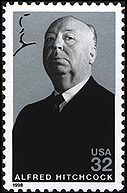 Rear Cubicle
is a 10 minute video homage of
Alfred Hitchcock's classic 1954 movie
Rear Window in which
a wheelchair bound photographer
spies on his neighbors from his apartment window
and becomes convinced one of them has committed murder.
Rear Cubicle
is a 10 minute video homage of
Alfred Hitchcock's classic 1954 movie
Rear Window in which
a wheelchair bound photographer
spies on his neighbors from his apartment window
and becomes convinced one of them has committed murder.
Jos was the writer and producer
(writer, organizer and promoter) and
his friend
Yun Shin was the director
(shoots and edits the film).
[internet movie data base]
Jos wrote and produced this video to test the boundaries of the internet as a new video distribution medium (rather than say, the usual theatre or film festival route). He felt that the internet could be a much more democratic means of distributing one's work.
Not making the mistake he made on his earlier movies, Jos got signed releases from all his actors that would allow him full distribution rights. One of the reasons for making this video now, was that he needed a movie to demonstrate "pop-up" technology (balloon overlays). He got permission to shoot Rear Cubicle at WebTV. The justification he offered (and he felt) was that he needed a movie that he had the all the required rights to experiment publicly with WebTV's potential technologies. This movie had no financial underwriting. They did it for the joy of it.
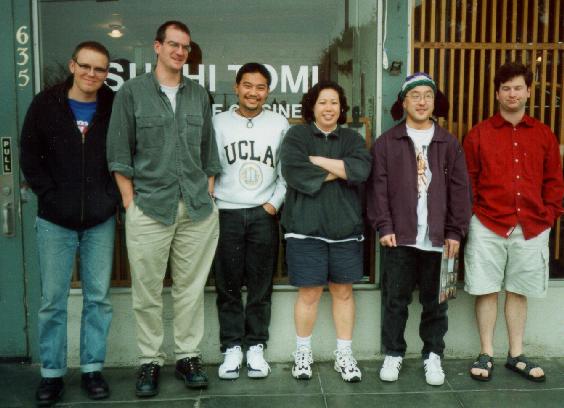 As a result of Jos's foresight getting signed releases from actors and all,
you are now free to view his movie over the internet.
It is available at two locations:
(1)
Jos's friends at WebTV,
and (2)
Jos's college friend, Padgett,
who founded Chucklehound with him.
If the technology on your desktop is not quite up to it,
make yourself a note to return at a later date.
You'll be glad you did.
As a result of Jos's foresight getting signed releases from actors and all,
you are now free to view his movie over the internet.
It is available at two locations:
(1)
Jos's friends at WebTV,
and (2)
Jos's college friend, Padgett,
who founded Chucklehound with him.
If the technology on your desktop is not quite up to it,
make yourself a note to return at a later date.
You'll be glad you did.
Alongside we see Jos pointing his finger at his film director Yun Shin. From left to right are Paul R y b i c k i, Jos, J e t Villavicencio, Lisa, Yun Shin, and Neal T u c k e r.
As Alfred Hitchcock often did, Jos plays a cameo role (at the beginning of the movie). We see him again in a short clip after the end in a mood of joy and exuberance. That clip was all too brief.
In the video capture below he experiments with the microphone while saying,
"What do we have to look forward to today? There are a lot of things we have to look forward to today. We're just having a lot of fun."
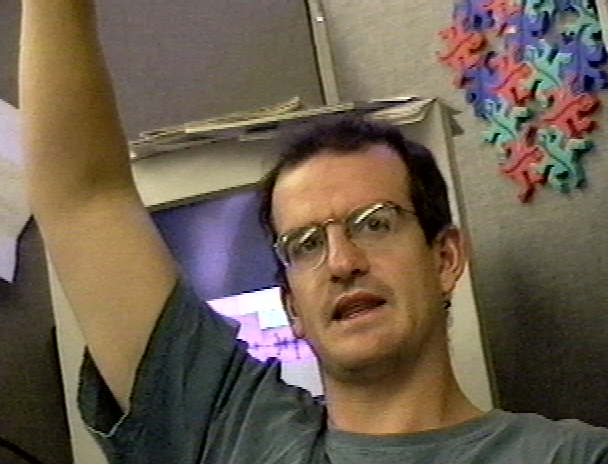 Jos died before Yun finished editing the video so he never saw the final result.
He did, however, live about four days after the shooting
during which he sent
a cheery email to his grandfather
and made a joyful telephone call to his Mumalum and Popalop.
Jos died before Yun finished editing the video so he never saw the final result.
He did, however, live about four days after the shooting
during which he sent
a cheery email to his grandfather
and made a joyful telephone call to his Mumalum and Popalop.
Here are the photo props that Jos had prepared for Rear Cubicle.
In the week following Jos's death, Yun Shin made a short video honoring Jos, Fear of a Black Toessel.
Here are some frame grabs from Jos in his last days.
In the last week of his life, Jos and Yun Shin shot and produced
a movie short that Jos had written,
Rear Cubicle.
Here we have his props for that movie.

Jos used Michael Wu and Julie Lee's cube for Samuel/Fred's cube, and Jet and Bobby Joe's cube for Terry/Thomas's cube. Most of the props were his except the Boba Fett, which was borrowed from my cube.In the 'Fear of a Black Toessel' video, most of the shots of Jos expounding on one thing or another are audio tests taken late into the night on August 13th. He and Yun doing the audio tests, testing one microphone or another. The shot of him talking about Ric Mommer and Parappa were taken at my desk.


"What do we have to look forward to today?
There are a lot of things we have to look forward to today.
We're just having a lot of fun."
See these pictures at full resolution (double size).
Fear Of A Black Hat (1993)
is an amusing satirical look at the rap music industry.
It was one of Jos's favorite movies.
Roger Ebert says:

The world of rap music is so ripe for a satirical bashing that
perhaps only Political Correctness delayed one for so long.
"Fear of a Black Hat," which treats rap with the same droll
dubiousness that "This is Spinal Tap" provided for heavy metal,
is not as fearless and sharp-edged as it could be -- but it
provides a lot of laughs, and barbecues a few sacred cows.
The movie is so similar in approach to "Spinal Tap" it could
almost be considered homage. It pretends to be a documentary
about a rap group named "NWH" (Niggaz With Hats).
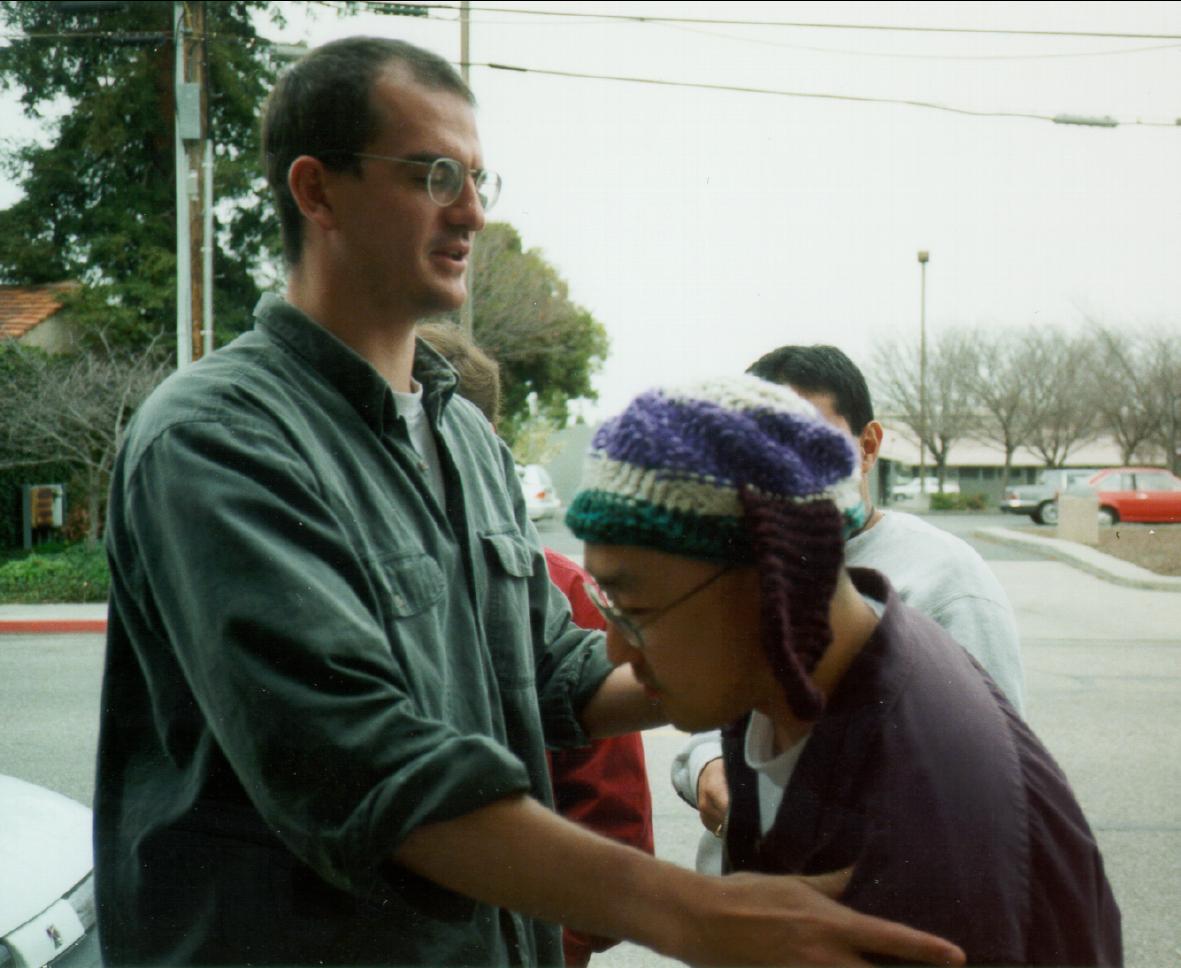 Fear of a Black Toessel (1999)
is an 8 minute video memory of Jos,
made by his friend, Yun Shin.
Fear of a Black Toessel (1999)
is an 8 minute video memory of Jos,
made by his friend, Yun Shin.
Jos and Yun had finished shooting another ten-minute video,
Rear Cubicle, the weekend before Jos died.
To produce
Fear Of A Black Toessel,
Yun alternates
microphone test video of Jos
shot during
Rear Cubicle production,
with video and photos from WebTV,
with family photos;
and he accompanies it by the music that they enjoyed.
Both videos can be viewed at the Claerbout home
or homes of many of Jos's friends who have received copies.
You might also be able to see it streaming over the web.
Try it!
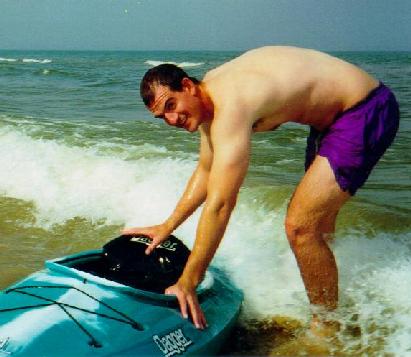
He left the gym, bicycled to work, had breakfast, greeted his coworkers in his usual exuberant way, and sat down to read his email. Some minutes later he suffered a cardiac arrest, gasped, and died. Paramedics arriving within 4 minutes could raise no vital signs.
He seemed to be in perfect health. He had no vices, a vegetarian who drank not even coffee, cholesterol 123, was alert to health issues, knew what he was eating, a blood donor, and even brushed his teeth three times a day. Three of his grandparents were alive, his paternal grandfather having died at age 84.
We could not anticipate it.
Causes of sudden death in young athletes.
Visit the amazing Life of Jos Claerbout
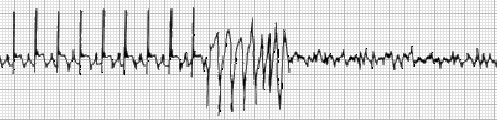
Our son Johannes died of sudden, inexplicable cardiac arrest. He appeared in excellent health, was without vices, and was alert to health issues.
Could we have prevented it? Probably not. There were, however, two faint foreshadows:
Cardiac arrest, while rare in young people, does occur, and is particularly studied in athletes. In hindsight it is easy to say the condition might have been screened for and identified in time. Jos belonged to Gold's Gym, and came from it in the half hour preceding his death. Perhaps such health and exercise clubs could provide a treadmill test to direct their patrons to a cardiologist?
See Causes of sudden death in young athletes.
Best predictor of sudden cardiac death
In 2002 we learn that the best noninvasive predictor of sudden cardiac death in young men is exercise-related fainting.
Although the direct medical costs of sudden cardiac death are much less than for lingering illnesses, its economic and social impacts are huge. Sudden death is cheap for the HMO, leading the layman to suspect that public policies and practices may be unwise to include so little cardiac screening. Perhaps also health clubs with their treadmills could provide some self-administered screening?
Among young athletes, about 1 in 200,000/year die from unexpected, sudden cardiac arrest. Of 10,000 male students at my university, this happens only about once every 20 years. All but one of 20,000 youths would pass from age 18 to age 28. The number of days Jos should have had remaining in his life is about 20,000. Thus, any test or preventive action that would require more than about a day is not economically defensible, while simpler measures should be.
Although Jos was a lifelong member of expensive HMO's, we believe he never had an electrocardiogram (ECG) -- a test performed by a technician in five minutes. Since five minutes is less than a day, we believe it is irresponsible for our HMO not to routinely take ECGs. Yet we know they do not, even for older people. As for "reading" the ECG, that would be best done at a national lab, or by a computer program supplied by experts in statistics and signal processing because physicians commonly fail to recognize the symptoms. And the ECG is an imperfect test producing perhaps 2000 false positives for each real positive. (Those false positives go on to other exams.)
What happens: A rapid and/or chaotic activity of the heart (ventricular tachycardia or fibrillation) often leads to cardiac arrest.
Why it happens: The cardiac community seems divided in two camps, the mechanical and the electrical (the plumbers and the electricians). Most health practitioners are of the mechanical group (regard the root cause as congenital cardiovascular structural abnormalities) although death is generally electrical (fibrillation). Although the electrical side is not well understood, we do know that the heart can often be fixed by the thousand volt shock of a defibrillator (which is akin to rebooting a computer). First we'll look at the medical practitioner side and then we'll return to the electrical side.
The American Family Physician (1998) says congenital cardiovascular disease is the leading cause of nontraumatic sudden death in young athletes. Screening athletes for disorders capable of provoking sudden death is a challenge because of the low prevalence of disease, and the cost and limitations of available screening tests.
An editorial in The New England Journal of Medicine (August 10, 1995 -- Vol. 333, No. 6) says, "We know little or nothing about the pathophysiologic mechanisms that trigger sudden death, effective screening techniques, or preventive strategies."
Barry J. Maron, MD, frequently publishes on the topic. Two quotes from him:
Researchers (as contrasted to clinicians) work in a variety of fields, pharmacology, biophysics, electrical engineering, electrophysiology, and applied mathematics. They view heart attack as an electrical process akin to wave theory. I have written a simplified introduction to Spiral Waves. After my introduction, you might like to see the technical literature. Some of it is clearly written (because it is proposals for funding). You could do a search on cardiac spiral waves. Here are some characteristic links: (1), (2), (3).
I am suggesting that fibrillation might perhaps be predicted more reliably by electrical measurements than by imaging. And presumably, electrical measurements could be made in conjunction with exercise at a health club. Modern electronics should allow much more extensive measurements to be taken unobtrusively.
Search on interpretation of Holter Monitor, search on ambulatory electrocardiography. Cardiovascular annotated bibliography
 Why did Jos die?
If the HMO had given Jos an ECG, he might have had some warning. He was a very prudent person and would have taken practical steps to fend it off (such as reducing heavy exercise and stress). The ECG does not always provide a warning, and even if warned, defensive steps are not always effective.
Adding it all up, however, the HMOs were negligent because the cost of an ECG is five minutes compared the much greater loss of a 20,000 day life with probability 1/20,000. The cost effectiveness is five minutes of prevention for one day saved.
The medical records of my son are not today centralized in any web-based data base. Consequently, records of his health and death are virtually inaccessible to researchers.

My cardiac summary page sums the view of cardiac clinicians. Here we touch the the view of cardiac researchers, namely, biophysicists, mathematicians, engineers, electrophysiologists, and pharmacologists. Their view is based in the mechanics of wave phenomena. Being a teacher, and being one who deals professionally with seismic waves, I present a summary of their view here. For a more technical and professional view, I suggest you do a web search on the words cardiac spiral waves.
There are many kinds of waves: acoustic, light, radio, seismic, ocean, and more. From a mathematical perspective, all these waves are solutions to the same family of differential equations. Mathematics can unify disparate physical phenomena. What might seem like a mere analogy has a deeper basis. Once you scale everything properly, the different wave types behave the same way.
In most situations, waves lose energy as they propagate. Sometimes, however, waves amplify as they propagate. This rather rare circumstance is said to be "negative viscosity" or "active media". Live heart muscle widely understood an example of active media.
A more simply understandable active media is the earth's atmosphere on a hot summer afternoon. Air at ground level is hot and ready to rise. It cannot rise everywhere at once. Somewhere the air must come down. It will rise first at some local hot spot which forms a virtual chimney drawing hot air in from the sides at the bottom. In-rushing air carries a certain angular momentum. The angular momentum is the product of the angular velocity times the distance from the chimney. The in-rushing air conserves this angular momentum. As inrushing air approaches the chimney center, its radial distance to the chimney decreases. Angular momentum conservation thus requires that the rotational velocity increase inversely with the radius. This produces a "dust devil" (or a tornado). [Conservation of angular momentum causes the accelerating rotation often observed as professional ice skaters pull their arms close in to their torso.]
The center of the tornado or dust devil meanders from place to place. If it were to sit in one place too long, it would use up all the energy available in that place.
A sheet of heart muscle is thought likewise to be an active medium with negative viscosity. Instead of wind, there are ion flows. These flows relate to the way the heart uses energy.
There is a mathematical theory for waves in negative viscosity media. This theory predicts spiraling waves. Spiral waves have been demonstrated experimentally in a variety of biological and nonbiological systems (heart, brain, retina, various social amoeba, and autocatalytic chemical reactions). In heart muscle, it is not the muscle itself moving; it is the electrical pattern of the ion flows.
If you saw the dust devil from above, you might see something like the spiraling wave in a sheet of heart muscle. Using voltage-sensitive dyes, these spiral waves have been observed in mammalian heart muscle. I'm not sure if the spiral waves have been observed in human heart tissue. I'm not sure if the spiral waves can be observed in living animals. Once the spiraling begins, the center of rotation, like that of the dust devil, can meander from place to place. When the center collides with obstacles, it may split into multiple spirals. In heart muscle, the spiral rotates at a rate of about ten complete circumnavigations per second.
The heart muscle is actually three-dimensional. The waves in 3-D are said to be "scroll waves." An epileptic attack may be another form of spiral waves.
Here are some pictures of spiral waves in sheep's heart muscle. Here are some numerical experimental spiral waves. Here is a nice tutorial. Search on cardiac spiral wave movies.
Fibrillation does not seem to be exactly the same thing as spiral waves. I'm not sure about what the difference is, but heart attack seems to have three stages.
This hypothesis cries out for equipment for continuous monitoring, to see the "foreshocks", to identify hearts at risk, and to measure the efficacy of drugs to stabilize it. With the modern electronics revolution, we might come to see it.
At present there is a heart monitor called a Holter monitor that records a continuous electrocardiogram. Since the Holter measurements are all outside the body, however, they may be too remote to detect the spiral waves which are on the heart itself.
As more and more professionals become web aware, we quickly find new things, such as the Society of Pacing and Electrocardiology who are having a big meeting including a session on "Correlation of Surface ECG with Intracardiac Electrograms".
| to my son Jos |
|
to Death in Young Athletes |

On what would have been Jos's 26th birthday, a newly planted tree was dedicated, "The Toessel Tree" on the new WebTV/Microsoft campus (near the southeast end of La Avenida, Mountain View, CA). About a hundred people were in attendence.


John Matheny, head of engineering, read the citation of the award:
I'm honored to present the first annual "Jos" award, which is given in memory of Jos Claerbout on his birthday to someone on my team for their outstanding creativity in solving problems, their dedication to our customers and our products, and their enthusiastic team spirit. Although there were many candidates, this year's award goes to Arnold de Leon for his tireless efforts to improve the connection issues that plagued many of our customers. Please join me in thanking Arnold for his inspiring leadership, dedication, enthusiasm, and teamwork.
Arnold de Leon was not present, but it was stated that he would be receiving $1000 and his name on a plaque. Several gave their ideas of the meaning of the award:

About a dozen people spoke impromptu. Those speakers and others are invited to send us their words and thoughts.
Words arriving from afar from Beth Candy (SecretAdmirer), Webscissors tester, advocate, and good cyber friend.
Zonker Harris' photos.

Popster was given a box of Jos's business cards. We understand that this box of cards had been confiscated from Jos after he had chosen a job title and telephone number that were unsuitable to a larger, more formal company. Happily now, these cards are no longer in short supply.
The prose on the program below was adapted from Thoreau's Walden by Jos' friend Emily Wilska [1, 2, 3].


Photos were taken by Zonker Harris
Jos's death was so sudden, inexplicable, and devastating that it suggested gifts to the Heart Association.
 Jos's life suggests to us another charity.
He loved bicycles; he loved associating with Spanish peoples; and he recycled.
This suggests
Pedals for Progress (P4P)
a charitable organization that gives
used bicycles to third world countries, mostly Spanish speaking countries.
Jos's life suggests to us another charity.
He loved bicycles; he loved associating with Spanish peoples; and he recycled.
This suggests
Pedals for Progress (P4P)
a charitable organization that gives
used bicycles to third world countries, mostly Spanish speaking countries.
The photo shows Jos wearing a bicycle tee shirt between two sweet-looking Ecuadorian misses. Click on the photo.
College buddy Jano Cabrera writes,
"The People's Guide to Mexico," Carl Franz's definitive and irreverant tome on traveling through my home country, Jos let me borrow this guide the first year we met in college. His lending it to me is one of my earliest memories of him.He didn't so much as lend it as much as he pitched it, preached about it, proselytized.
I remember reading through it and thinking, even with what little I knew of him then, that it was almost as if he had written it himself. It had a certain flair, a different way of looking at life.
I remember Jos's environmental outlook when it came to really all things, but specifically how it manifested itself with the plastic eating utensils used in the WebTV cafe.While the rest of the employees would throw away their plastic forks and knives with each meal, Jos would carefully clean his and place them in a Ziploc bag for safe keeping until his next meal. I happened to be eating with him the day the knife finally gave out. While sawing through a particularly tough hunk of something or other, it snapped in half. The look on Jos' face can only be defined as incredulous. He was crestfallen, but true to Jos' nature, not defeated. He grabbed the half knife, (the sharper half naturally) and continued to fight to cut his food.
I do recall he did throw the broken half away after the meal but the point was made. Jos got a few months use out of one plastic knife, keeping the landfills of the earth just that much less abused.
Thank you for thinking of taking the time to write.
It is never too late to send us your memories.
Do not feel the need to write eloquent prose nor extravagant praise.
We are delighted to receive simple memories of events,
recollections of conversations, jokes, or nicknames.
In our home we have a family memory book for condolences and intimate memories of our son. On this web site are the memories that you intend to share.
If you send us email we will segregate your public memories of Jos from your condolences and private memories (for the family memory book). Your public memories will be loaded on the web in a place where only you can see them. Upon our receiving your approval, we will link them to this public Jos site. Here is our privacy policy.
We also appreciate your sympathies, condolences, and wise philosophies of life, but we don't put them on the web, except for a few ( 1, 2, 3, 4, 5 ).
Jon and Diane Claerbout
            claerbout @ stanford . edu
            dclaer @ hotmail.com
      899 Allardice Way
      Stanford, CA 94305
650-493-1393
Where from: this month, recent newcomers, non-computer, Searches, .
After an initial high of 2700 hits per month,
the index page of
this site celebrating his life quickly dropped to around
1000 per month where it remains around the end of the second year.
Total text page hits/week runs about 4000.
Besides his family, friends, and coworkers,
we see the knitters,
the webscissors/pagebuilders,
the Java programmers,
the college applicants,
and the Culture Wars people.
Here are
longstanding known
links to His Life.
Here is how many times specific files
were sent out from here:
What this month,
What lately.
Previous:
1999:
Dec. 2000:
Jan.
Feb.
Mar.
Apr.
May.
June.
July.
Aug.
Sept.
Oct.
Nov.
Dec.
2001.
Jan.
Feb.
Mar.
Apr.
May.
June.
July.
Aug.
Sept.
Oct.
Nov.
Dec.
2002.
Jan.
Feb.
Mar.
Apr.
May.
Jun.
Jul.
Aug.
Sep.
Oct.
Nov.
Dec.

Joel Black said it this way:
If Jos was able to do this, the first thing he'd say is, "Look at all you beautiful people," because he always said that. Then he'd probably hug every one of you, and he'd touch every one of you, and he'd say something to every one of you, because he did that all the time. It's like he let everyone know that he loved everyone, first thing.And then, we'd start talking, and then the ideas would be flowing, and this is like the second piece of Jos. These ideas are flowing back and forth, and we're just running around with ideas -- and he'd originate; he'd bounce back ideas. It was just a great thing -- he's a great man.
I guess I've been thinking for days and this is what Jos is about. He loved everyone and he shared ideas all the time. That's what he'd be doing right now if he could.

Nearly every picture on this web site is a link. Try them!
Welcome! Thank you for coming back. Anything new with you?
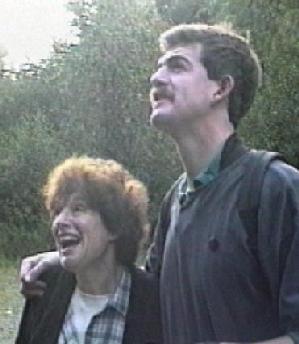
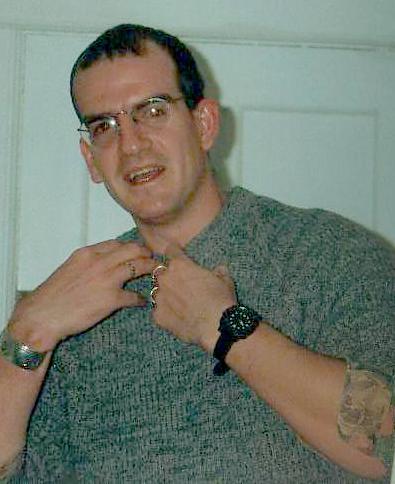 New picture of namesake baby
Johanna Speckhardt-Gomes.
More!
New picture of namesake baby
Johanna Speckhardt-Gomes.
More!
"KYOOOOOOOOOOOOO"
"PEEEEEEEEEEEEEEEE".
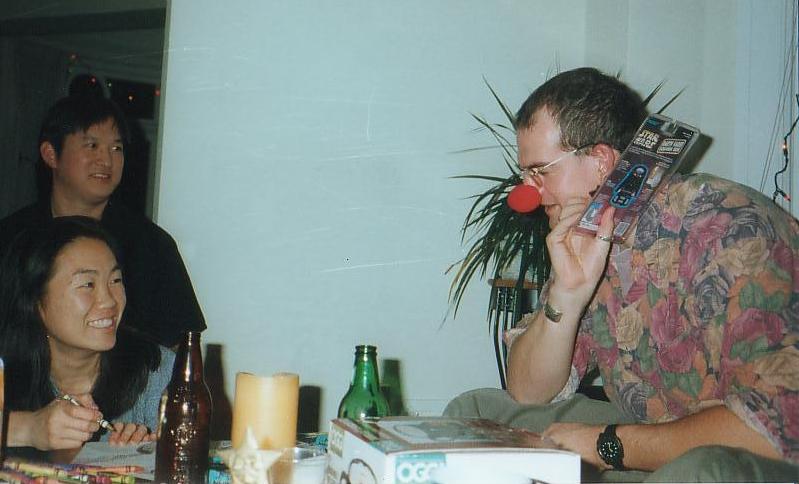 We celebrate Jos's birthday with
a new water fountain
on Stevens Creek Trail.
We celebrate Jos's birthday with
a new water fountain
on Stevens Creek Trail.
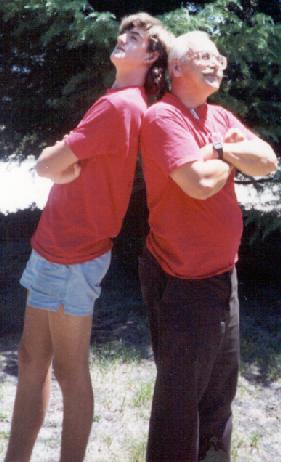 "He literally gave me the shirt off his back,"
Andrew Long
adds to his memories.
"He literally gave me the shirt off his back,"
Andrew Long
adds to his memories.
 If its a boy we'll be naming him Johannes after Jos,''
writes Roy Speckhardt,
``I know Jos told me about the origins of the She's Alive! but ...''
If its a boy we'll be naming him Johannes after Jos,''
writes Roy Speckhardt,
``I know Jos told me about the origins of the She's Alive! but ...''
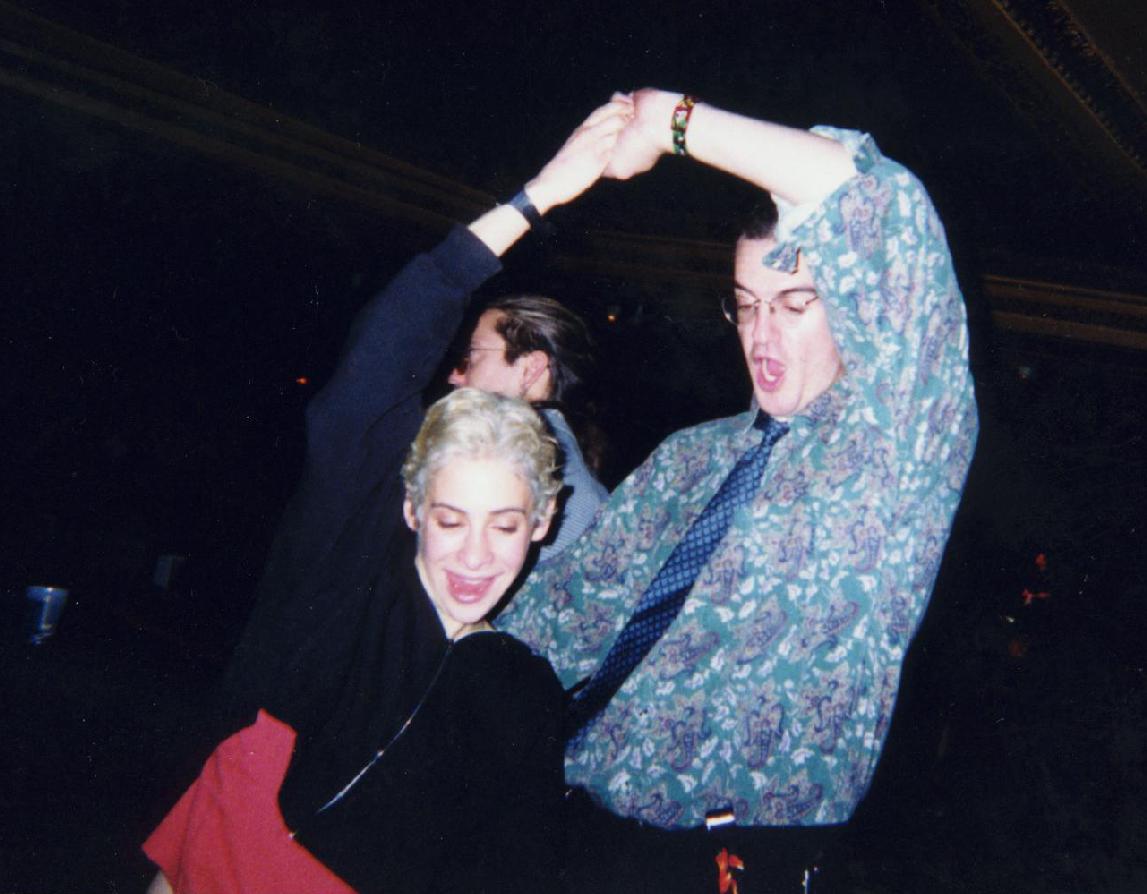 Jos with an unknown young lady (thought to be from Pomona College)
at a WebTV party.
If you know who she is, please send email to claerbout @ stanford . edu
To enlarge the pic, click on it.
Jos with an unknown young lady (thought to be from Pomona College)
at a WebTV party.
If you know who she is, please send email to claerbout @ stanford . edu
To enlarge the pic, click on it.
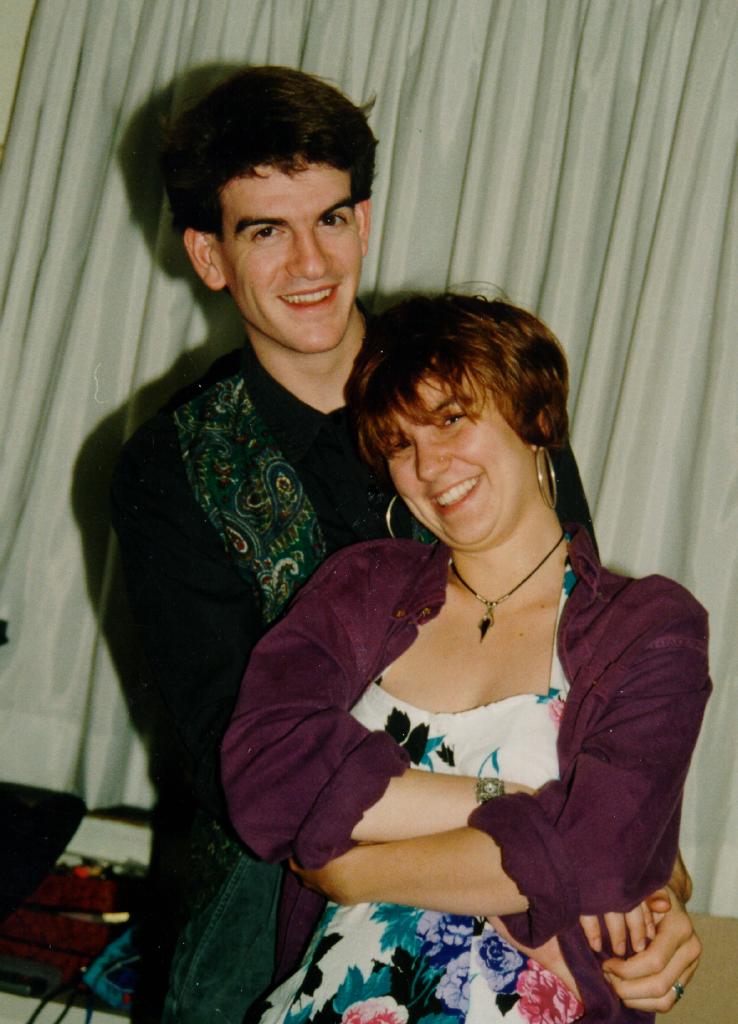

"It took a young Rastafarian on Telegraph Avenue in Berkeley to teach me the error of my ways. This man, Roosevelt by name, had a new deal of his own: he could sell hand-crafted hats for only ten dollars - because he could make one in only a half hour. Watching his skilled hand work faster than I could think, I was intrigued."

Return to the Life of Jos Claerbout
On Friday, August 20th, the WebTV family lost one of its friendliest and most creative members. Jos Claerbout had been with us for two years when a sudden, inexplicable heart attack took his life. Like many people do when they lose someone they love, we find ourselves asking why. Why did a healthy, active 25-year-old die in such a way? Why Jos? Why now?
We haven't come up with any answers that can lessen the pain of losing him, haven't found any explanations that can stop us from shaking our heads in wonder. We haven't been able to completely let go of the pain, anger, and awful, intense sadness that have filled us in the wake of his death.
What we have been able to do, though, is remember how much Jos meant to all of us, how deeply he touched our lives, how much he lit up our little corner of the world. Although his life was short -- far, far too short -- he made every moment of it count. His greatest gift to those around him was teaching us to do the same.
Jos came to WebTV in the summer of 1997 to answer email for Customer Care. Although he eventually moved to other departments, he spent his entire time here working to make the WebTV experience as enjoyable as it could be for our subscribers.
He spent time in the Previews Department helping to test new upgrades before we released them to the public. When he joined the Quality Assurance team, he acted as a bridge between Customer Care folks and engineers to make sure that we fixed the problems our subscribers reported. His most recent post was with our Publications group, where he helped Web site developers create pages that are WebTV-friendly.
Although Jos loved what he did at work and spent hours in front of his computer, his day didn't end at 5. In his free time, he rode his bike, made films with his friends, wrote screenplays, created Web sites, and knit. Yup, you read that correctly: he taught himself to knit; made crazy, colorful hats (called toessels); and sold them online (www.toessel.com). The price of a custom-knit toessel? Two dozen Styrofoam heads, or "a really cool and enormous custom-built hat rack," or artwork, or whatever else you might be able to offer in trade.
Because it wasn't the money that mattered to Jos. His favorite source for clothing was a funky secondhand shop called Ragtime, and his mode of transportation, more often than not, was a bike with no gears. What he cared about were the adventures that life had to offer -- from meeting new people to working on a fishing boat in Alaska to dreaming up new inventions. His life was a journey, and he was always willing to invite others along for the ride.
We are struggling to come to grips with the fact that Jos -- fabulous, funny, brilliant Jos -- is gone. But as painful and difficult as this struggle is, we're trying to keep our chins up, knowing that, above all, Jos never wanted anyone to be sad.
As someone once said, the death of one dream does not mean the end of dreaming. I think Jos would agree. So as we try to understand his death, as we start to heal, we're remembering how wonderful his dreams were, and how he encouraged us to make our own come true. We will think of Jos when we do what we love, when we take advantage of the adventures that pop up every day, when we allow ourselves to dream. And that, I think, is the greatest tribute we can pay.
Thanks for everything, Jos. You will be missed.

|
Funeral Service August 23, 1999 |
[Rabbi Patricia Karlin-Neuman][Hebrew; Psalm 24:1-6]
The earth is God's and all its fullness.
The world is God's and all its inhabitants.
God founded the world upon the seas
And set it firm upon the flowing waters.
The way Jos died was unspeakably tragic. It was premature by decades, before the rich, full promise that he exhibited could be fully realized. And it was such an ineffably sudden death. Here one minute was an energetic young man, pulsating with life and aspirations and laughter. And here an instant later he journeyed from this reality.
How can we fathom such a premature and inexplicable transition? The Talmud tells us that the boundary between being and non-being, between life and death, is as thin as a hair's breath.
[Hebrew]Who may ascend the mountain of the eternal?
Who may stand in God's holy place?
One who has clean hands and a pure heart
Who takes not God's name in vain.
One will receive a blessing from the eternal
A just reward from the God of deliverance.
Such is the generation of those who seek the Eternal One
Who, like Jacob, long for God's presence.
Fear not, for I am with you.[pause]
Be not dismayed, for I am your God.
I will strengthen you; I will help you.
I will sustain you from my power, says God.
"We are born," says Samuel Beckett, "astride a grave. The light gleams an instant, then it is night once more."
Jos's death reminds us how frail are the foundations of our existence and therefore how much we must strive to cherish and protect it. As a moralist once said:
One broken dream is not the end of dreaming.[pause]
One shattered hope is not the end of hoping.
Beyond the storm and the tempest, stars are gleaming.
Still build your castles though your castles fall.
Though many dreams come tumbling down in disaster,
And pain and heartache move you down in years,
Still keep you faith and dare your hopes to master.
And never cry that you have ceased to dream.
In the rising of the sun and in its going down,
We will remember him.In the blowing of the wind and in the chill of winter,
We will remember him.In the opening of buds and in the rebirth of spring,
We will remember him.At the blueness of the skies and in the warmth of summer,
We will remember him.In the rustling of leaves and in the beauty of autumn,
We will remember him.At the begining of the year and when it ends,
We will remember him.When we are weary and in need of strength,
We will remember him.When we are lost and sick at heart,
We will remember him.When we have decisions that are difficult to make,
We will remember him.
When we have joys we yearn to share,
We will remember him.When we have achievements that are based on his,
We will remember him.So long as we live, he, too, shall live.
For he is now a part of us,
As we remember him.[pause]
A poem by Shukmis Yellin:
I will say "yes" to life[Hebrew; Psalm 23]
and meet him in the market place,
openly,
between the stalls where all can see us
consorting.
Tasting avidly
from all the baskets and the many sacks
Of condiments and breadstuffs and rich
late summer's fare.
I will say "Yes," and join with him
the dancers in the public square and tap out their rhythms,
gay and joyously articulate of now.With such a partner and in such a place, 'mid so much fullness,
My gnawed-off heels will know new balance and support,
My hips will lightly bear the burden of my heart,
And shoulders entertain the sway and flow of fingers
From my outstretched hands.Let the tambourines ripple out their music,
Let the market women point, and loosely flap their red-lipped tongues.
I have learned a rhyme to blind their evil eye.
And if it works? What bounty!
And if it fails? There has still been the journey to the fair!God is my shepherd, I shall not want.[pause]
God makes me lie down in green pastures,
Leads me beside still waters, and restores my soul.You lead me in right paths for the sake of Your Name.
Even when I walk in the valley of the shadow of death,
I shall fear no evil, for You are with me.
Your rod and your staff, they comfort me.You have set a table before me in the presence of my enemies.
You have anointed my head with oil. My cup overflows.
Surely goodness and mercy shall follow me all the days of my life
And I will dwell in the house of God forever.Diane and Jon, you have now experienced a parents' worst nightmare. And as a way to move through this moment, I'd like to invite you to take the hands of others who have been through this valley into the darkness. I'd like to offer a reflection written by Leonard Fein -- a writer who, like you, had to bury his child. This offering has some ease in it: an ease I hope you'll find amidst all these people who are here to offer their love.
No drunken driver.[pause]No drive-by shooter.
Not by fire or by water or by sword or by beast or by any of the decrees of the tradition.
Instead, by fluke. By sudden lethal shadow without warning, a random event with no moral or social meaning. Hence, no sense of issue of justice or unfairness, no opportunity for anger or for outrage. Only sorrow and pain, and irretrieveable loss.
No words can or should stand between this father and his extinguished son; No tongue can mediate the event or the void that is its aftermath. Poetry brings no comfort, music no solace, nor language any understanding. He was alive, alive for 25 years and now for always, he is dead. And we, his parents, and brothers are forever bereaved.
No earthly power can change that. For us, for always, there will be the presence of an absence, the irrevocable presence of an infinite absence. And just now that absence crowds out most everything else. ...
And so whatever blessing memory itself provides, there is also the rich blessing that the curse begets: the embrace of a comforting community. That embrace, which changes nothing, means everything.
Is there a sorrow greater than this?
[Hebrew]
Let our silence reach out to the bereaved family and friends of Jos. Let their tears fall on us, let their anger break against us, let our love and our deeds speak for us.
In the presence of boundless grief, the poet said: [Hebrew].
"There is no longer a prayer on my lips."Yet we must pray, just as we must weep, because we can do no other.
Oh, God. Be now with the stricken family of Jos. Help them to draw near to one another in their need for love and strength. Teach us to place our arms about them and to sorrow with them. Be with mourners in their grief until hope breaks through like a bud in a dark corner of the earth.I'd like to invite those friends and family who have been asked to speak, to symbolically place their arms around the family by offering their words of reflection.
Joel Black
Jano Cabrera
Camilo Viniegra
Renée Gentry
Emily Wilska
William Beaver
Jos was my friend. And I know he was your friend also.
Last Friday was just about the saddest thing that I ever expect to experience. This was not supposed to have happened. I mean, it's lunchtime right now and I'm thinking that if Jos was able to say these things, this is what he'd be saying at lunchtime:
He look out there at all of you folks, and the first thing he'd say is, "Look at all those beautiful people," because he always said that. Then he'd probably hug every one of you, and he'd touch every one of you, and he'd say something to every one of you, because he did that all the time. It's like he let everyone know that he loved everyone, first thing.
And then, we'd sit down and start talking, and then the ideas would be flowing, and this is like the second piece of Jos. These ideas are flowing back and forth, and we're just running around with ideas--and he'd originate; he'd bounce back ideas. It was just a great thing--he's a great man.
I guess I've been thinking for days and this is what Jos is about. He loved everyone and he shared ideas all the time. That's what he'd be doing right now if he could. I'll miss him so terribly that I can't even imagine it, especially since I've known him such a short time. But I know that you'll all miss him also. I'll just say goodbye.
What I'll miss most about Jos will be his stories. Jos always had a story. They were typically very funny--about the things he had done or the people he had met, and they usually would carry with them a lesson, a lesson he had learned. So with that in mind, I'd like to share with you all a story about Jos and a lesson that he taught me.
Jos and I lived together in Washington, D.C., in 1996. One day he walked into my room in a way that only Jos could walk into a room--with his arms outstretched, a big smile on his face--and he said, "Friend, I have an idea that you would be a fool not to want to be a part of."
I had known Jos for four years at that point, and I knew his ideas were a mixture of pure genius and sheer lunacy. But I was curious so I said, "Tell me about your idea."
And he said, "I have three words for you...that will change your life...and the life of everyone else who hears them."
"Portable."
"Massage."
"Table."
And with the patience I hope to one day have for my own children, I looked at him and said, "What are you talking about?"
Jos had a vision of creating a table--a massage table--but not just any old massage table. He wanted it to collapse in on its own to such a degree that it would be the size of a small briefcase. His grand vision was to take this massage table from place to place, set it up in a matter of seconds, and tell people to, "Jump on!" And he would give them a massage.
Having known Jos I knew that if he was going to come up with ideas and share them with us, he'd have a specific role in mind for his friends, so I said, "What's my role gonna be?"
He said, "Just wait."
And so, over the course of the next few weeks, Jos began construction on this massage table. Turning an already more than cramped kitchen into his workshop, he built a massage table.
Two weeks later--now I had seen this come together in bits and pieces--two weeks later, he had a grand unveiling of the finished product. He brought me into the living room, sat me down, and there underneath a table cloth, was something.
And he yanked it [the table cloth] back, and standing there next to Jos was the ugliest looking table I had ever seen in my life. It had six legs, and by lightly yanking off the table cloth, it looked ready to collapse in on itself. And not by design.
And so I looked at this and with dying horror I realized what my role would be. And he looked at me and said, "Jump on!"
And I said, "No, Jos, I don't think anyone should be jumping around this table."
He said, "No, no. This is a firm table." And he proceeded to tap the air about two inches above the table to prove his point.
Well, I did jump on, and I did trust Jos, and the table didn't collapse. But it wasn't exactly how he originally envisioned it. It wasn't so much collapsible as much as it had to be taken apart by mallet and a hammer. And it wasn't exactly portable; being constructed entirely out of wood, it weighed about 55 pounds and was the size of a 27-inch television set. And rather than having a handle, he had to lug it around with a dolly. But as Jos often told me, "These, friend, are but minor points."
Jos built a table.
There are many others here who have their own version of the table. Some of you only think of it, some of you start it but don't finish, and some of you finish, but never appreciate what you've done. Jos recognized the table for what it was: a dream that he made a reality.
And that was the lesson that he taught me: Life is so precious, and in the time that you have, you have to take what your dreams are and make them real. That was the lesson that Jos taught me.
[impromptu...]Like most people here, I met Jos at work. And in the first month I worked with him I suggested in a joke that we should get a couch. Of course, Jos took me very seriously and started working his magic to convince the manager that we had to get a couch.
So we went out to the Goodwill and almost immediately he spotted exactly what he wanted. It was an old, bright orange couch, and he loved it.
He sat down just for one second; he sat down and waited. And I watched him for about a half hour negotiate with all the workers there, in Spanish, to try to get it down from the eight dollars that they were asking. It would be unheard of to pay the full price!
So we brought it back to work, and we sat down, fully satisfied. And he turned to me and he said, "I'll bet, we'd make good roommates."
And I've been living with him for the past--almost two years--and it's been great. He's the best roommate.
I can always rely on coming home and finding a happy Jos. And from the moment I walked in I could hear him singing my name to the Simpson's theme song. He would always ask, "Who's my favorite Camilo?" And I would never know how to respond to that.
It was really wonderful living with him. He saw the good in almost everything. He just wanted to spread joy and I think he managed to do that for everyone. And I'll miss him. I'll miss seeing him in front of the TV knitting his toessels, telling me about his next crazy idea that he was going to make a reality. I'll miss him. I'll especially miss him when I'm home alone and realize that he's just not coming home. But I'm glad that I met him and I'm better off having known him.
Like many people, I had the pleasure of knowing Jos, unfortunately, only for a short time. But many, many stories will I cherish in my heart. And I'll always somehow keep in mind the intonation and the larger-than-life expressions that Jos carried with him, just by nature--just as a simple part of who he was.
One of the things that he always used to ask me--that would always throw me for a loop until I remembered it was Jos talking to me--he'd say,
"Renée, what color convertible are you going to get?"I don't even like convertibles!
"Jos, why would I want a convertible?""To carry all of the gold bars that my ideas are going to bring you!"
It wasn't just an ordinary armored car, it was a convertible. And that was Jos.
[pause]
I'm afraid I won't be able to keep my composure to actually tell you a lot of the stories I would love to share with you. But I would like to leave you with this single thought:
What color convertible are you going to need--it will certainly be one that is larger than life--to carry away the memories, to cherish and hold them--that Jos has so graciously given to every single one of us?
The first thing--whenever he saw me, he, being twice my size [Jos was 6'3"], would always engulf me in a big hug, leaving me about up to his belly button. But it was always fantastic and made me feel so good.
The second being that he was a constant provider of sheer wackiness, from his autoresponders to our previewers, to his crazy Web sites, to his toessels, to his phone number 614-STAG.
And the very final thing is that Jos never, ever wanted anyone to be sad. It's sort of hard to remember right now and sort of hard to deal with, but once we get through this--think what he would be saying if he were standing here, and remember that he wanted to bring us nothing more than joy. Thank you, Jos.
Well, I'm a bit older than the other folks. But the Claerbouts and the Beavers go back a very long way. Our children and their children grew up together, and our son David grew up with all three of the Claerbout boys. And it's been such a joy.
Two instances come to mind--first, of course, is Jos's sense of humor. And you can imagine with a last name like Beaver, and a sense of humor like Jos's, there was just an unlimited opportunity! And some evenings Jos would come over unexpectedly when we were having a glass of wine with the Claerbouts.
"Oh! It's the Beavers. The Beavers are here!"
And things would just go on with him in a routine.
And at other times we were fortunate enough to share the birthdays--Jon and Diane's birthdays--with the rest of the Claerbout family. And we would bring these silly little gifts over and Jos would just make over these gifts--we just felt like these gifts, you know, like we had just made the Claerbout's lives.
So, in addition, much deeper than the sense of humor, Jos was a bridge builder when it came to working with other people. And this world needs, and has benefited from, the bridge building. And it's just been a pleasure to know him. Thank you very much.
[Rabbi Patricia Karlin-Neumann]Unlike you, I didn't have the pleasure of knowing Jos. But as I sat with his family and heard stories of his life, surrounded by his writing, his pictures, and his hats, the vitality and creativity with which he lived his life was palpable. How dark it is to gather and to say goodbye to one who lived so briefly and yet with so much celebration and life. There are no right words. No answers to "why?" No easy equanimity to be found.
Jos's death brings together so many of you who loved him, who planned to share more adventures with him, who expected to be surprised and delighted by his next new project or passion. The radiance of his life and energy had no bounds. Jos's joy and irreverence touched so many people--those closest to him, and those whom he'd encountered for brief moments. Professionally and spiritually, Jos created webs. And like a spider's web--glorious, intricate, carefully wrought, but evanescent--so Jos's life was glorious but evanescent.
A spider spins in circles, building ever outward, and so it was with Jos. His rootedness in his family, his connection to the family, was always an anchor in his home. However far his adventures took him--Alaska, Ecuador, Mexico, Washington--he came home to share the bounty of his experiences with his family.
He was loving and playful in the family. Diane remembers that his first word was, "Mine!" And indeed, they were all his. They delighted in his antics and appreciated his infectious enthusiasm. He understood and played to the romantic young girl in his mom. He always knew if she had bought a new dress or changed her hairstyle, even after he no longer lived at home.
Affirming Andrew's assertion that Jos loved women, Jon described a recent visit with his mom, Jos's grandmother. She was sitting on his lap and he was knitting her one of his famous hats.
He reassured his grandmother that she would enjoy wearing his hat so much, that she would look so beautiful in this hat.
And as he spoke, and knit, she became more girlish and more beautiful, in appreciation of the gift of attention he had already given her, and in anticipation of the hat he was yet to finish.
And when Diane was preparing pictures for Andrew and Amy in anticipation of their wedding, Jos perused the photos and on the spot came up with limerick captions to show that they were fated to find one another.
His easy banter calmed many stressful situations, and he taught his family over and over how important it is to be playful.
Secure in his family, spreading his wings with their curiosity and encouragement, Jos wove another circle of connection. He learned in the world of work that more than information and skills are required. Friendships, life experience, generosity of time and ideals characterized his work. One of his college essays describes his forays into working in a bike shop in Alaska. Having claimed he could do anything with a bike, his interview consisted of a box being thrust at him with a dismantled bike inside. "Here, build this."
Twenty-seven hours later, Jos had the bike built, and the beginnings of an enduring friendship with the shop owner--an iconoclastic independent thinker, who challenged Jos and brought him pleasure arguing about ideas.
In that essay, Jos didn't say much about bikes, but he said a great deal about friendship, the value of life experience, and the richness that results from conversations about ideas.
More recently at WebTV, he worked as a web engineer, but what he really did was weave webs of relationships with his coworkers. As those of you who have spoken have attested to, he encouraged his friends to pursue their dreams, and his. To go to Venezuela, to push past shyness, to try new things. He loved his work, and he loved his coworkers. And he was appreciated in return.
Work stopped at his death, his friends accompanying him loyally and lovingly through the transition from life to death -- from vibrant life into silent death. And these same dear friends to whom Jos was a teacher about life, he became a teacher about death. These same dear friends are planning both a memorial in his honor and a month-long celebration of his life.
And what a life it was! Jos taught himself to be a web engineer and he taught himself to knit. His writing was amusing and effortless. He taught English in Ecuador, he worked for Habitat for Humanity, he did political lobbying in Washington, he worked on a fishing boat in Alaska, he worked as a farm worker in Mexico. He set up a web site for his hats and another for educating people about political issues. It seems as if there was nothing he couldn't do.
In time this turned out to be untrue. Despite assistance from Andrew, he couldn't build a bedframe--and, it sounds like, a portable massage table! And he never did master Icelandic. But in the realm of building relationships, and in the attempt to understand and master situations, he was peerless.
Even the outer reaches of his web was lavished with energy, humor, and pleasure. Even one-time encounters with Jos were memorable. A befuddled salesperson might be told by Jos, "Yes, madam, the particular wares you're selling look particularly fetching."
Or a cashier would be teased and flattered if Jos was there. Jos would put on a Broadway production to ask a stranger for the time. He developed a special banter with the hostess at his favorite Thai restaurant, sharing intelligence about Buddhist monks. He discussed music with cab drivers in Mazatlan. His sense of play brought pleasure to strangers. There was no one he wouldn't talk to, no inhibitions to constrain him.
He dressed as Buffy the Vampire Slayer and costumed in his imaginative hats. He boldly invited public awareness of the hats he knitted, untroubled that young men are not known to knit. And the hats themselves suggested zany associations like Cadillacs and dreadlocks. A comic once said,
"Remember that angels can fly because they take themselves lightly."Jos took himself lightly and was an angel to so many--both those who knew him intimately and those who met him briefly. He flew through his life with ease and grace. Diane said that Jos had a perfect life, that his life was heaven. As we honor him and reflect on his life, we can find a glimmer of solace in knowing how much life he packed in such a short time. How many lives he knit together in his too few years.
Today, the web Jos wove gathers to comfort one another, to share his short but beautiful life. To say goodbye, but also to say thank you. To pledge to live more fully in the shadow of his death.
Jos's heart failed him only once, mechanically. Spiritually, emotionally, it was a finely tuned instrument, open and reaching out, and inviting others to be open to wonder, to laughter, to adventure.
The Kaddish, the traditional Jewish prayer recited in memory of those we have loved and lost, was originally recited after studying the Talmud and in the name of one who has died. It was intended to attribute the teaching to the loved one. The Torah of Jos's life, which comes to mind, is a line from the book of Psalms:
[Hebrew]
Teach us to treasure each day.Jos's heart was open to wisdom. He knew to treasure each day. Let us all learn this Torah from Jos, treasuring each other, opening our hearts to all that he was, and all that he loved, and all that he created.
Teach us to treasure each day.
So we may open our hearts to wisdom,
Teach us to treasure each day.[Hebrew]
May Jos's memory always be with us a blessing.
[pause]
The traditional prayer that asks that one we love be sheltered in the shadow of God's wings is called El Malei Rachamin. And I'd like you to rise as I read it first in English, and then translate it to Hebrew.
Oh God, exhalted and full of compassion, Grant perfect peace in your shelter and presence among the holy and the pure To the soul of Jos Claerbout, Who has gone to his eternal home.[Hebrew; chanted]Master of Mercy, we beseech you, Remember all the worthy and righteous deeds he performed In the land of the living.
May his soul be bound up in the bond of life. The Eternal One is his portion. May he rest in peace. Let us say, "Amen."
Amen.
Read René Gentry's complete unabridged funeral.
Threnody: Jos
I've got the platitudes and the cliches.
Day One:
There was no doubt he was there.
People thought his name was a typo for mine.
Insta-nickname, he hadda million of em.
But he was a giant moving into the room,
Some people, most people, people who are that smart and that quick, get disillusioned real fast. Get cynical. Being able to instantly understand interconnections can be inspiring, but most people are overwhelmed by it, and disappointed with the eventual results.
Unheard of.
I can't help but want to tear things apart,
bring them down,
set them on fire,
whatever.
The pure joy of the idea. And he had to be so funny, too.
Baby, you were one of the good ones.
But just knowing that such an ugly thought
would've never even occurred to you,
There was just too much of you, I guess.
Please visit The Life of Jos Claerbout. Copyright 1995-1999,
Photos added by Jos's father. |
The grave of Jos Claerbout is in the Alta Mesa Cemetery in Palo Alto, California. It is across the street from Gunn High School on Arastradero Road at the junction with Foothill Expressway.
Enter the cemetery. After about 100 yards you pass an office on your left. If these verbal directions fail you, you can return to this office to get a map. While continuing to follow the main road generally straight ahead, carefully keep the large masoleums on your right.
Suddenly the road makes an abrupt 90-degree left turn. Park your car here. Instead of turning left to follow the road, turn right (exactly 90 degrees) and walk up slope on the grass for 11 rows, about 100 feet from the corner.
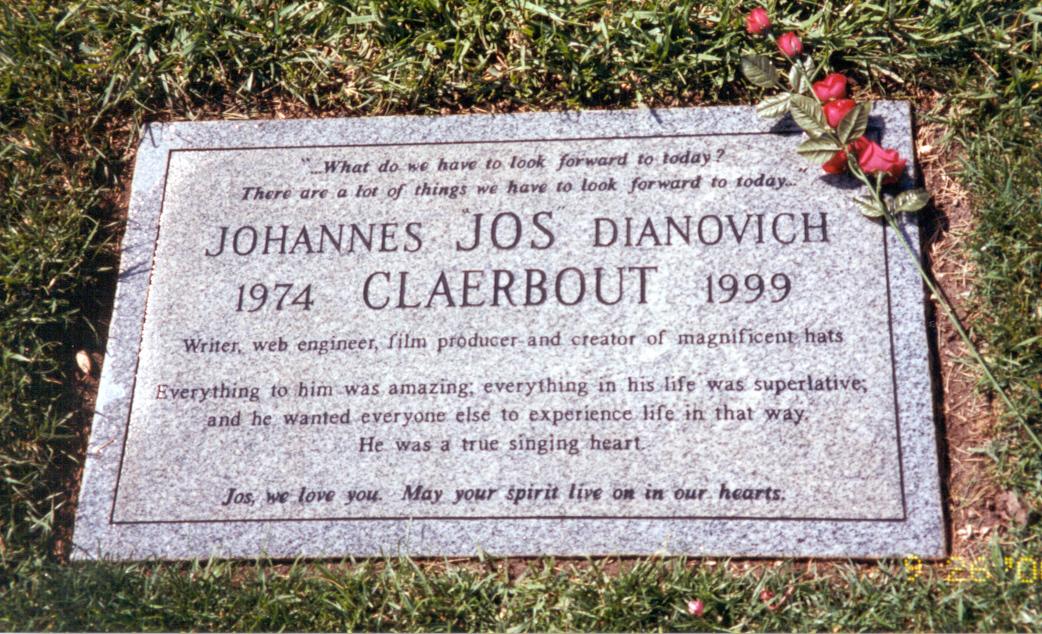
One photo of happy Jos (which his mother and father do not like to see) is Jos on the company's Napa valley vineyard excursion where he lies on the garden wall.
A year after his passing, family and eleven friends attend the unveiling of his gravestone.
His mother read
|
You, my delight, my loving child who filled my days and embellished my dreams You, in whom I rested so many of my hopes and ambitions (continues ....) |
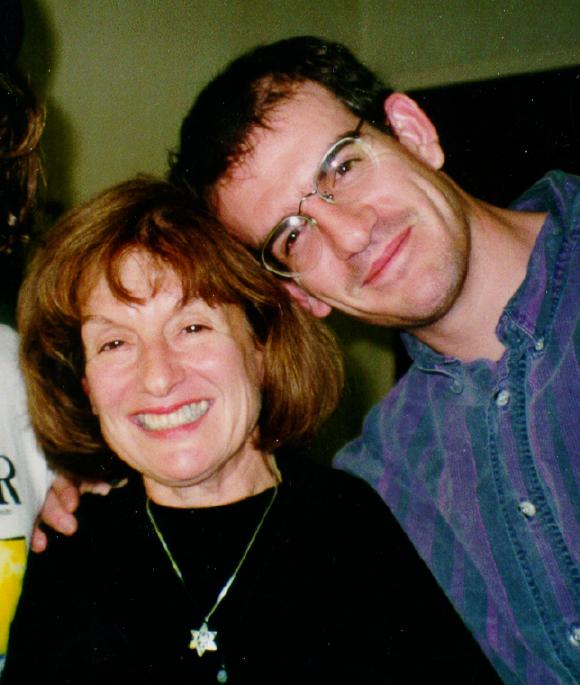
|

|
"From the Jos web site I read to you
the voices of a few who are not here today,
starting from his own."
"As for my Personal Philosophy,....." |
|
From college best friend Jano,
words from afar.
|
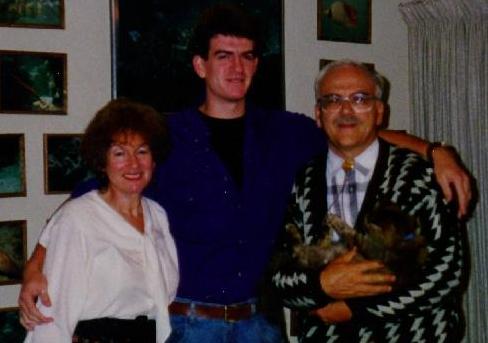
|
From: "Jano C"
To: jon
Date: Sat, 19 Aug 2000 19:36:49 GMT
Dearest Jon and Diane,
Jos was one of my closest friends. I miss him dearly. To this day, I still have Jos moments, periods of the day when something joyous or funny will happen and my first instinct is to mentally file that moment away so I can tell Jos about it.
But obviously I can't.
What I can do however is gather all of the positive memories I have of Jos and focus on them.
Message to my lost son |
|
Peace be to the memory of your pure soul,
You, my delight, my loving child who filled my days
and embellished my dreams,
You, in whom I rested so many of my hopes and ambitions -- my plans and visions.
You were entrusted to me by fate and I welcomed the obligation.
But fate has once again intervened in my life,
and taken you from me.
Oh, how beloved were your words to me.
Your name, your remembrance, were the delight of my soul.
But, then you came and then you vanished.
I called to you but you gave me no answer.
I searched for you but I found you not.
I held you but you did not respond.
You were entrusted to me for a certain time and I cherished your time with me.
I felt blessed to have been your mother, dear Jos.
You came forth like a flower, blossoming in the morning,
and promising precious fruits.
You were beautiful on the outside and beautiful on the inside.
But how untimely, how early in life have you been blasted by a scorching sun,
and crushed by a tempestuous storm,
Like a flower that is cut down in the morning,
withered and scattered!
I, a sadly bereaved mother come therefore to the valley of weeping
to remember you...to cry for you...to mourn you.
May I find comfort and quietude in reflection of your many gifts,
and how blessed I was to share in them.
May the photographs of you that I take out and look at serve to
help me heal the loss of you.
How grateful I am to have had you for the brief time you were here.
I think back upon the joy I experienced
as I witnessed your growth and achievements.
Can the fact that you are no longer here remove those memories?
No. They are with me always...
The happiness I felt, the pleasure you gave me,
the many moments of satisfaction.
Nothing can diminish that.
Truly, I wish it could have continued for many, many more years.
No parent should have to bury a child; rather life's order dictates the other way around.
This I know. Life has its own beat. It marches as it will.
No one can control what fate has determined.
Having done my best, having given my all, I can only stand aside and grieve.
I take solace in the fact that for whatever time you were here on earth,
you were given the best I had to give.
You had my love;
you had my concern; you had my care.
And now, you have my sadness and my grief at your death.
Your memory will be with me always.
When I awake and when I lie down, I think of you.
As the seasons change and the years pass, I think of you.
In the million and one things that take up my day
and remind me of you, I remember,
always I will remember---and always, I will love you, my heart, my Jos.
Thank you for giving me joy. Thank you for giving me happiness.
I was blessed to have had you with me for the time that fate gave us.
Return to the Life of Jos Claerbout


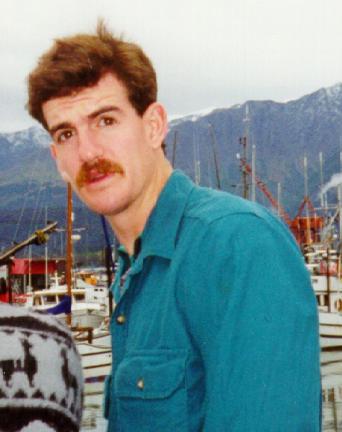
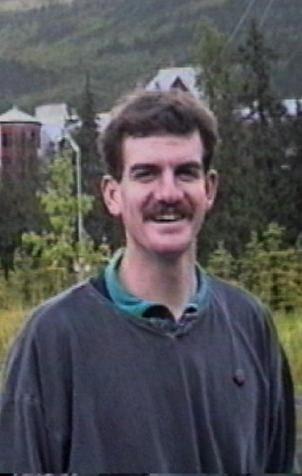
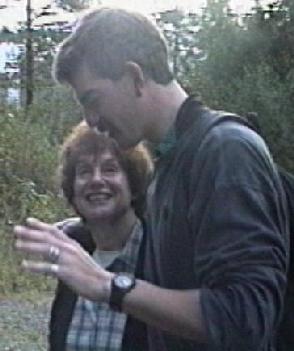


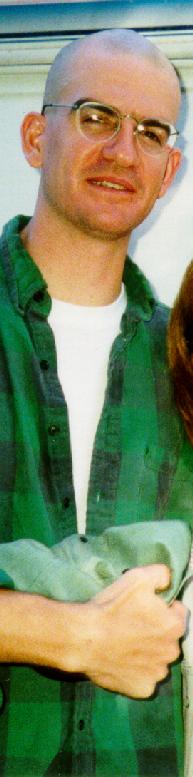 Unwieldy, overlong.
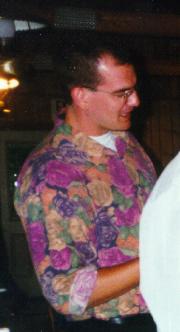 More hand jewelry than I was accustomed to.
A collision of colors you didn't see on a regular basis.
More hand jewelry than I was accustomed to.
A collision of colors you didn't see on a regular basis.