![[pdf]](icons/pdf.png)
|
|
|
|
| Wave-equation migration velocity analysis by residual moveout fitting | |
|
 ) with respect to slowness (
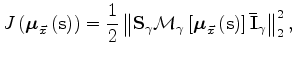 )
)
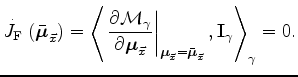
The evaluation of the derivatives of the moveout parameters with respect to slowness takes advantage of the fact that we need to evaluate the derivatives only at maxima for the objective function in equation 5. At the maxima, the objective function is stationary and thus its derivatives with respect to the moveout parameters are zero, and we can write:
 and the image element share the same
spatial coordinate.
Consequently, for each
and the image element share the same
spatial coordinate.
Consequently, for each
 there is only one
  for which the inner products above are different from zero.
Equation 12 can thus be simplified into:
for which the inner products above are different from zero.
Equation 12 can thus be simplified into:
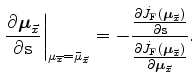
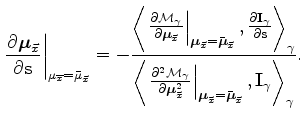
Using the rule for differentiating implicit functions, and taking advantage of the fact that the fitting problems are all independent from each other (i.e. the cross derivatives with respect to the moveout parameters are all zero), we can formally write:
From equation 13 and 14, the derivative of the local moveout parameters with respect to slowness is:
Appendix A presents the development for the expressions
to compute the terms
 (A-3),
and
(A-3),
and
 (A-5).
Combining the derivatives
in equation 15
with the derivatives in
equations 10-11
we can easily compute the gradient of the objective
function 4 with respect to slowness
that can be written, when
 ,
as:
,
as:
.
This scalar multiplies the image for each physical location
after it has been differentiated in depth and scaled by
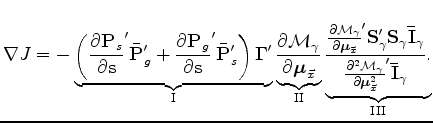 ,
as described by the second term (II).
Notice that the phase introduced by the depth derivative
of the image in (II)
is crucial for the successful backprojection into the slowness model
that is accomplished by the first term (I).
In this term, first
,
as described by the second term (II).
Notice that the phase introduced by the depth derivative
of the image in (II)
is crucial for the successful backprojection into the slowness model
that is accomplished by the first term (I).
In this term, first
 transforms the image
from the aperture-angle domain into the subsurface-offset domain.
The transformed image is scaled, horizontally shifted, and spread
across the shot axis by the application of
transforms the image
from the aperture-angle domain into the subsurface-offset domain.
The transformed image is scaled, horizontally shifted, and spread
across the shot axis by the application of
 and
and
 .
Finally,
the adjoint of operators
.
Finally,
the adjoint of operators
 and
and
 backproject the image perturbations
into the slowness model along the source wavepaths and the receiver wavepaths,
respectively.
backproject the image perturbations
into the slowness model along the source wavepaths and the receiver wavepaths,
respectively.
|
|
|
|
| Wave-equation migration velocity analysis by residual moveout fitting | |
|