|
 |
 |
 | Angle-domain illumination gathers by wave-equation-based methods |  |
![[pdf]](icons/pdf.png) |
Next: Reducing the cost by
Up: Angle-domain image and illumination
Previous: Scattering-angle-domain illumination
To overcome the limitation of the scattering-angle-domain illumination for planar reflectors discussed in the preceding section,
we further decompose the illumination into dip-angle domain, resulting in dip-dependent scattering-angle-domain illumination.
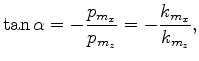
From equations 9 and 10, it is easy to obtain the tangent of the dip angle using either
 |
|
|
(14) |
or
 |
|
|
(15) |
where 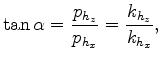 ,
,  and
and 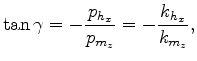 ,
,  are the horizontal and vertical components
of the midpoint wavenumber vector
and the subsurface-offset wavenumber vector, respectively.
are the horizontal and vertical components
of the midpoint wavenumber vector
and the subsurface-offset wavenumber vector, respectively.
Dip decomposition using either equation 14 or 15 has
its own pros and cons.
Equation 15 is suitable for computing dip-angle gathers for sparsely isolated
image points, because it does not require any CMP information, i.e.,  and
and  ,
and outputting gathers for sparsely isolated image points may mitigate the extra
computer time and storage spent in computing
both the horizontal and vertical subsurface offsets,
,
and outputting gathers for sparsely isolated image points may mitigate the extra
computer time and storage spent in computing
both the horizontal and vertical subsurface offsets,  and
and  .
On the other hand, equation 14 is computationally less demanding, because
it does not require computing vertical subsurface offsets. However, it estimates dips using
the CMP information, hence a block of densely sampled image points in the CMP domain should be
output to avoid dip aliasing. In the following numerical examples, we use equation
14 for dip decomposition due to the fact that it is relatively inconvenient
to output vertical subsurface offsets by using one-way wave-equation-based extrapolators.
.
On the other hand, equation 14 is computationally less demanding, because
it does not require computing vertical subsurface offsets. However, it estimates dips using
the CMP information, hence a block of densely sampled image points in the CMP domain should be
output to avoid dip aliasing. In the following numerical examples, we use equation
14 for dip decomposition due to the fact that it is relatively inconvenient
to output vertical subsurface offsets by using one-way wave-equation-based extrapolators.
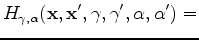
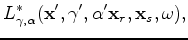
After transforming the subsurface-offset-domain sensitivity kernel into the dip-dependent scattering-angle
domain, we can proceed to compute the corresponding Hessian using
or the illumination using
 |
|
|
(17) |
where
 is the dip-dependent scattering-angle-domain sensitivity kernel.
The complete procedure can
be summarized as follows:
is the dip-dependent scattering-angle-domain sensitivity kernel.
The complete procedure can
be summarized as follows:
- for fixed
 ,
,  and
and 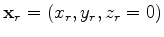 , apply 3-D Fourier transform along axes
  ,
,  and
(if only horizontal subsurface offsets are computed)
and
(if only horizontal subsurface offsets are computed)
or along
,
and
(if both horizontal and vertical subsurface offsets are computed)
- perform the mapping
according to relations 11 and 14, or
according to relations 11 and 15;
- apply inverse 2-D Fourier transform along axes
 and
and 
or inverse 1-D Fourier transform along axis
to obtain the dip-dependent scattering-angle-domain sensitivity kernel.
- compute either the dip-dependent scattering-angle-domain Hessian using equation 16 or
the illumination using equation 17.
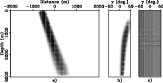
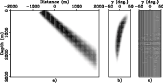
For the same constant velocity example,
Figures 7 and 8 show the dip-dependent scattering-angle-domain
illumination for  and
and
 dip angles, respectively.
The acquisition geometry is the same as that in Figure 5, i.e.,
dip angles, respectively.
The acquisition geometry is the same as that in Figure 5, i.e.,  shot and
  receivers.
The illumination gathers
(Figures 7(b) and 8(b))
successfully predict the angle-dependent illumination for both the horizontal and dipping reflectors
(Figure 7(c) and Figure 8(c)).
receivers.
The illumination gathers
(Figures 7(b) and 8(b))
successfully predict the angle-dependent illumination for both the horizontal and dipping reflectors
(Figure 7(c) and Figure 8(c)).
|
|---|
const-imag-hess-dip-adcig1
Figure 7. Dip-dependent scattering-angle-domain illumination.
Panel (a) is the illumination for a constant dip angle
 and a constant scattering angle
 ;
(b) is the illumination angle gather for a constant dip angle
and at spatial location
;
(b) is the illumination angle gather for a constant dip angle
and at spatial location  m;
(c) is the reflectivity angle gather for the horizontal reflector extracted a
m, it is the same as Figure 6(a). [CR]
m;
(c) is the reflectivity angle gather for the horizontal reflector extracted a
m, it is the same as Figure 6(a). [CR]
|
|---|
![[png]](icons/viewmag.png)
|
|---|
|
|---|
const-imag-hess-dip-adcig2
Figure 8. Dip-dependent scattering-angle-domain illumination.
Panel (a) is the illumination for a constant dip angle
 and a constant scattering angle
;
(b) is the illumination angle gather for a constant dip angle
and at spatial location
m;
(c) is the reflectivity angle gather for the dipping reflector extracted at
m, it is the same as Figure 6(b). [CR]
and a constant scattering angle
;
(b) is the illumination angle gather for a constant dip angle
and at spatial location
m;
(c) is the reflectivity angle gather for the dipping reflector extracted at
m, it is the same as Figure 6(b). [CR]
|
|---|
|
|
|---|
|
|
|
|
| Angle-domain illumination gathers by wave-equation-based methods | |
|
Next: Reducing the cost by
Up: Angle-domain image and illumination
Previous: Scattering-angle-domain illumination
2010-05-19