Next: Evaluation of the impulse
Up: R. Clapp: STANFORD EXPLORATION
Previous: Transformation to dip-dependent Common
To test our proposed method for transforming HOCIGs and VOCIGs
into DDOCIGs we modeled and migrated a synthetic data set
with a wide range of dips.
The reflector has spherical shape with radius of 500 m.
The center is at 1,000 meters depth and 3,560 meters horizontal coordinate.
The velocity is constant and equal to 2,000 m/s.
The data were recorded in 630 shot records.
The first shot was located at a surface coordinate of -2,000 meters
and the shots were spaced 10 meters apart.
The receiver array was configured with asymmetric split-spread geometry.
The minimum negative offset was constant and equal to -620 meters.
The maximum offset was 4,400 meters for all the shots,
with the exception of the first 100 shots
(from -2,000 meters to -1,000 meters),
where the maximum offset was 5,680 meters in order to record all the
useful reflections.
To avoid boundary artifacts at the top of the model
both sources and receivers were buried 250 meters.
Some of the reflections from the top of the sphere were muted out
before migration
to avoid migration artifacts caused by spurious correlation
with the first arrival of the source wavefield.
Figure ![[*]](http://sepwww.stanford.edu/latex2html/cross_ref_motif.gif) a
shows the zero-offset section (stack)
of the migrated cubes
with the correct velocity (2,000 m/s),
and Figure b
shows the zero-offset section obtained
with 4% too low of a velocity (1,920 m/s).
Notice that,
notwithstanding the large distance
between the first shot and the left edge of the sphere (about 5,000 meters),
normal incidence reflections illuminate the target only
up to about 70 degrees.
As we will see in the angle-domain CIGs,
the aperture angle coverage shrinks dramatically
with the increase of the reflector dip.
On the other hand, real data cases are likely to
have a vertical velocity gradient that improves the angle coverage
of steeply dipping reflectors.
a
shows the zero-offset section (stack)
of the migrated cubes
with the correct velocity (2,000 m/s),
and Figure b
shows the zero-offset section obtained
with 4% too low of a velocity (1,920 m/s).
Notice that,
notwithstanding the large distance
between the first shot and the left edge of the sphere (about 5,000 meters),
normal incidence reflections illuminate the target only
up to about 70 degrees.
As we will see in the angle-domain CIGs,
the aperture angle coverage shrinks dramatically
with the increase of the reflector dip.
On the other hand, real data cases are likely to
have a vertical velocity gradient that improves the angle coverage
of steeply dipping reflectors.
Figures
and
display sections of the full image cube in the case of the low velocity
migration.
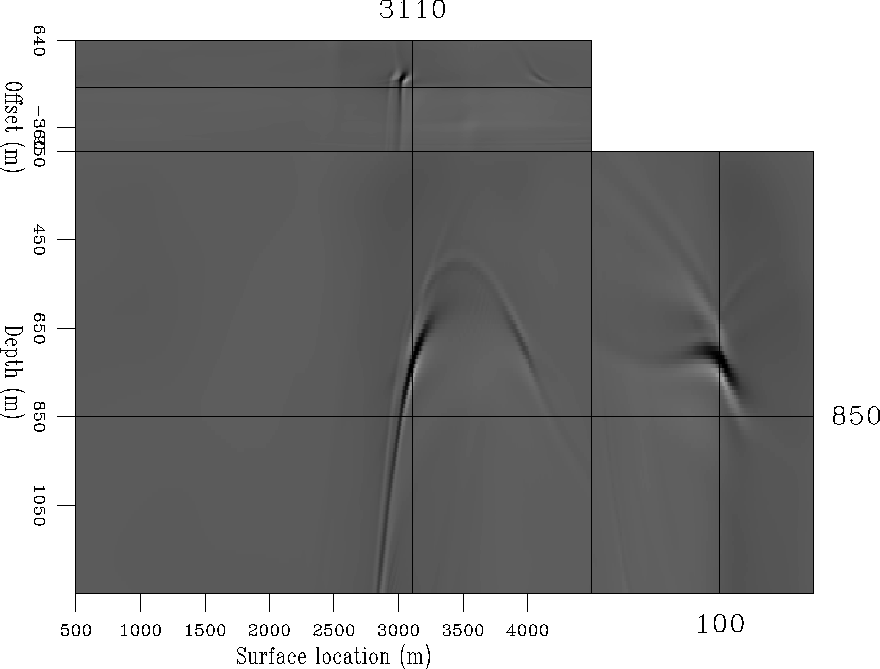
Figure displays the horizontal-offset
image cube, while
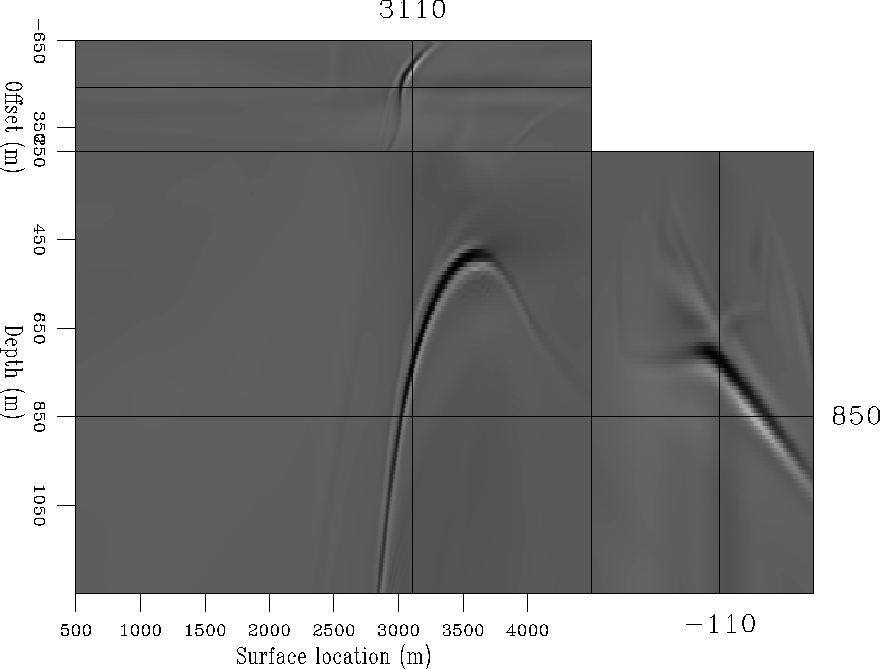
Figure display the vertical-offset
image cube
(notice that the offset axis in Figure
has been reversed
to facilitate its visual correlation with the image
cube displayed in
Figure ).
The side face of the cubes display the CIGs
taken at the surface location corresponding
to the apparent geological dip of 45 degrees.
Notice that the events in the two types of
CIGs have comparable shapes, as expected from the
geometric analysis presented in the previous section,
but their extents are different.
The differences between the two image cubes are more
apparent when comparing the front faces
that show the image at a constant offset of 110 meters
(-110 meters in Figure ).
These differences are due to the differences
in image-point dispersal for the two offset directions
[equation () and equation ()].
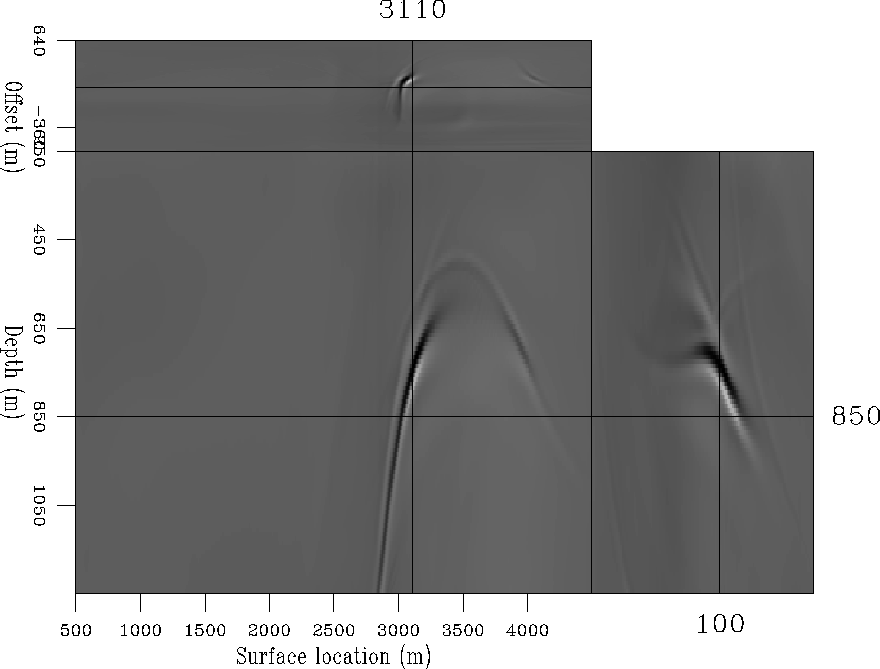
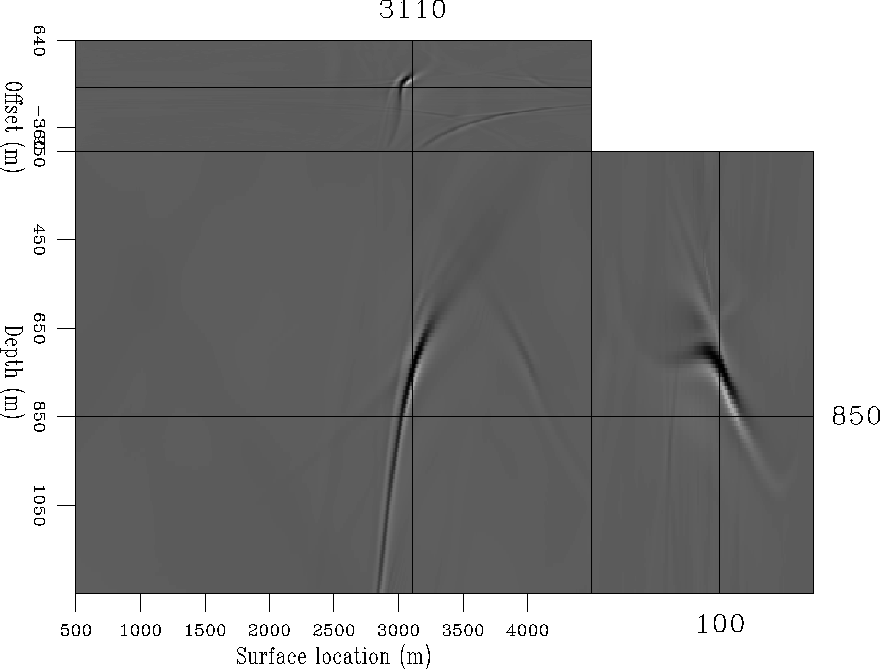
Figures
and
show the image cubes of
Figures
and
after the application of the transformations to DDOCIG,
described
in equations () and (),
respectively.
The two transformed cubes are almost identical
because both the offset stretching
and the image-point dispersal have been removed.
The only significant differences are visible in the front face
for the reflections corresponding to the top
of the sphere.
These reflections cannot be fully captured within
the vertical-offset image cube because the
expression in equation ()
diverges as  goes to zero.
Similarly, reflections from steeply dipping events
are missing from
the horizontal-offset image cube
because the expression in equation ()
diverges as goes to 90 degrees.
goes to zero.
Similarly, reflections from steeply dipping events
are missing from
the horizontal-offset image cube
because the expression in equation ()
diverges as goes to 90 degrees.
Cube-hx-ball-slow-4p
Figure 9
Horizontal-offset image cube when
the migration velocity was 4% too low.
Notice the differences with the
vertical-offset image cube shown in Figure .
|
|  |


Cube-hz-ball-slow-4p
Figure 10
Vertical-offset image cube when
the migration velocity was 4% too low.
Notice the differences with the
horizontal-offset image cube shown in Figure .
|
|  |
Cube-hx-par-ball-slow-4p
Figure 11
Transformed horizontal-offset image cube.
Notice the similarities with the
transformed vertical-offset image cube shown
in Figure .
|
|  |
Cube-hz-par-ball-slow-4p
Figure 12
Transformed vertical-offset image cube.
Notice the similarities with the
transformed horizontal-offset image cube shown
in Figure .
|
|  |
The previous figures demonstrate that the proposed
transformation converts both HOCIGs and VOCIGs into
equivalent DDOCIGs that can be constructively
averaged to create a single set of DDOCIGs ready
to be analyzed for velocity information.
In the following figures, we examine the DDOCIGs obtained
by averaging the HOCIGs and VOCIGS using the weights
in equations (),
and we compare them with the original HOCIGs and VOCIGs.
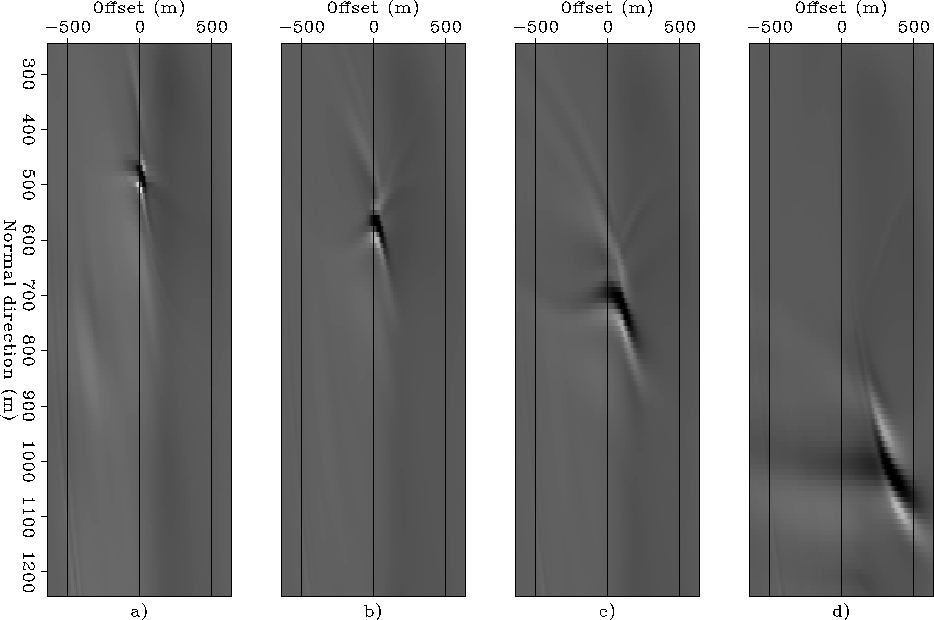
We start from analyzing the CIGs obtained
when the migration velocity was correct.
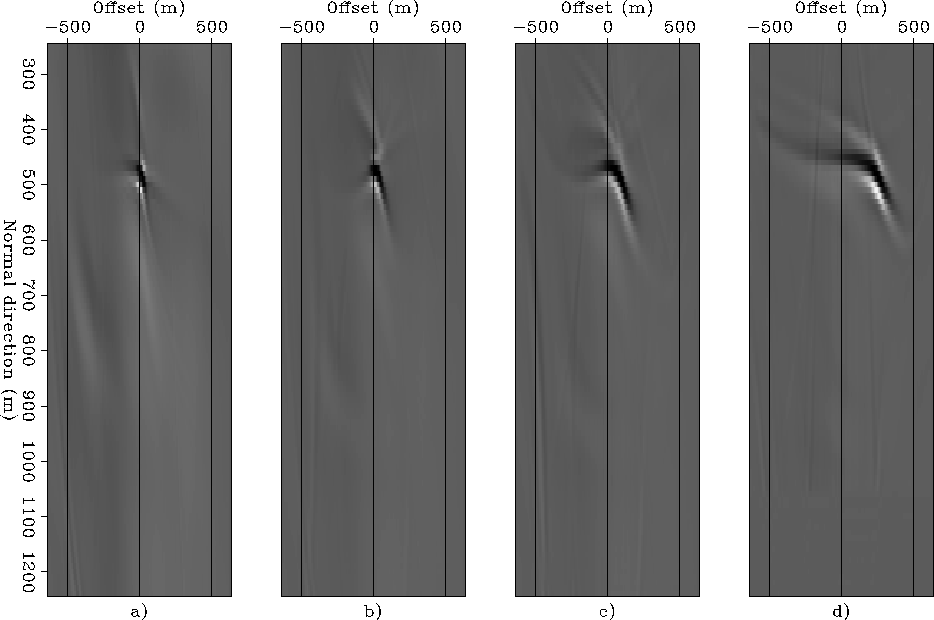
Figure shows the
HOCIGs corresponding to different apparent reflector dips:
a) degrees, b) 30 degrees, c) 45 degrees, and d) 60 degrees.
The quality of the HOCIGs degrades as
dip angle increases.
Figure shows the
VOCIGs corresponding to the same dips
as the panels in
Figure .
In this case, the quality of the VOCIGs improves
with the reflector dip.
Figure shows the
DDOCIGs corresponding to the same dips
as the panels in the previous two figures.
Notice that the quality of the DDOCIG is
similar to the quality of the HOCIG for small dip angles,
and it is similar to the
quality of the VOCIG for large dip angles.
The focusing of the dipping reflectors (e.g. 60 degrees)
is worse than the focusing of the flatter reflectors (e.g. 30 degrees)
because of incomplete illumination.
In general, the quality of the DDOCIG is ``optimal,''
given the limitations posed by reflector illumination.
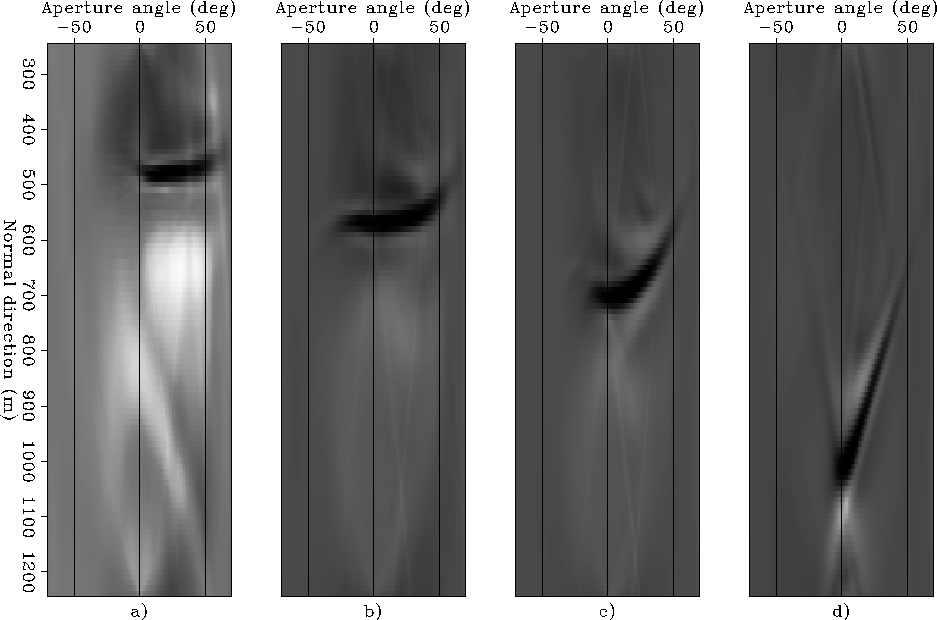
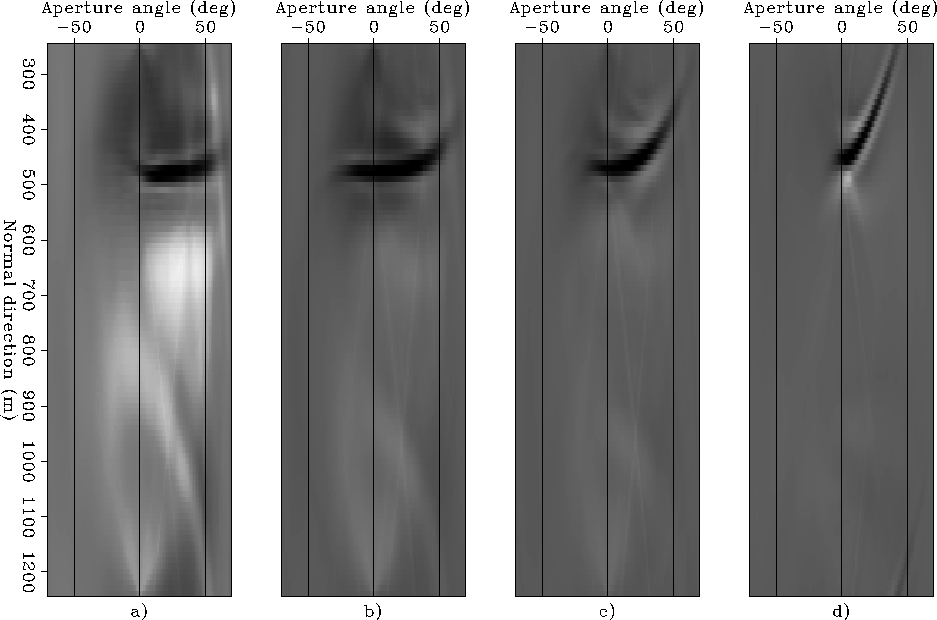
The next set of three figures
(Figure -)
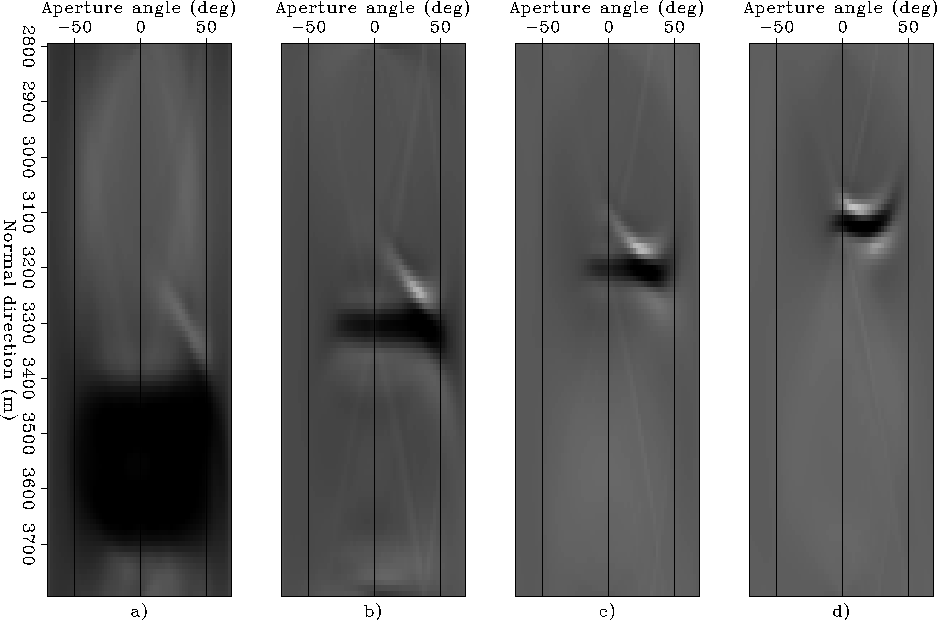
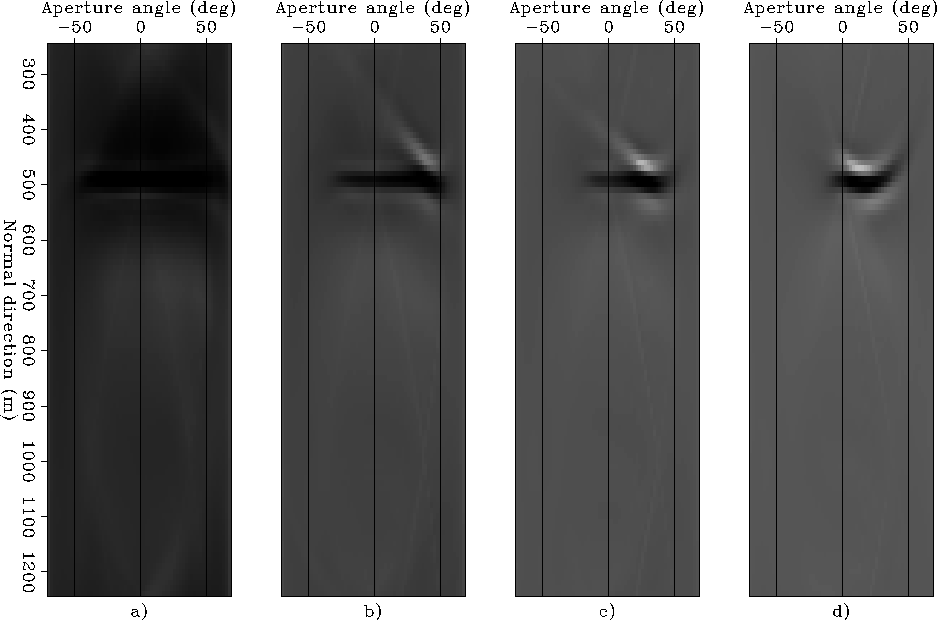
shows the previous offset-domain CIGs transformed into angle domain.
The effects of incomplete illumination are more
easily identifiable in these gathers than the offset-domain gathers.
As for the offset-domain gathers,
the angle-domain DDCIGs have consistent quality across the dip range,
while the angle-domain gathers obtained from both HOCIG
and VOCIG degrade at either end of the dip range.
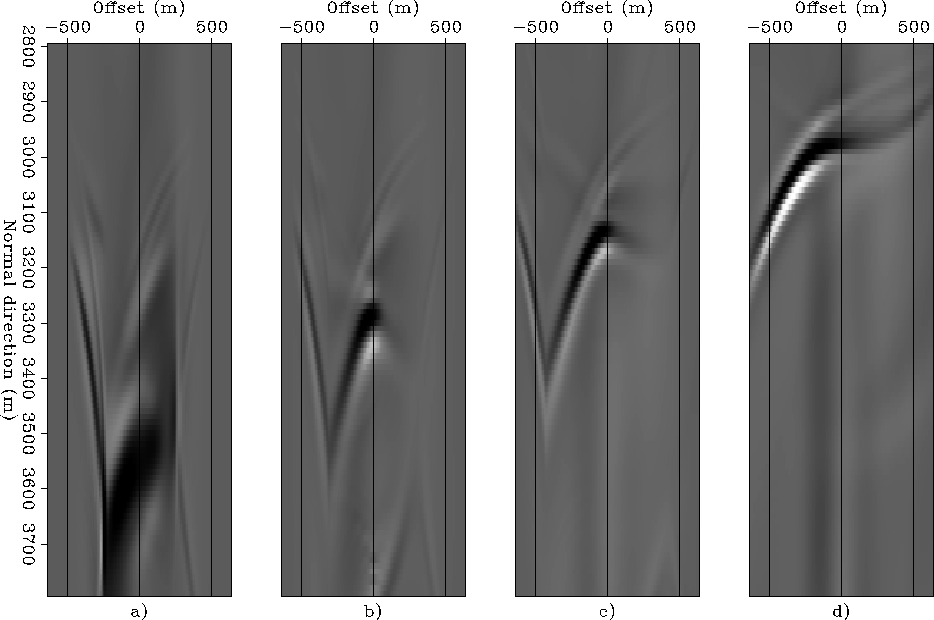
The next six figures display the same kind of gathers as the past six figures,
but obtained when the migration velocity was too low by 4%.
They are more interesting than the previous ones,
since they are more relevant to velocity updating.
Notice that the offset range is doubled with respect to
the previous figures (from  meters to
  m)
in the attempt to capture within the image cubes all the events,
even the ones imaged far from zero offset.
For shot profile migration, making the offset range wider
is not a trivial additional computational cost.
m)
in the attempt to capture within the image cubes all the events,
even the ones imaged far from zero offset.
For shot profile migration, making the offset range wider
is not a trivial additional computational cost.
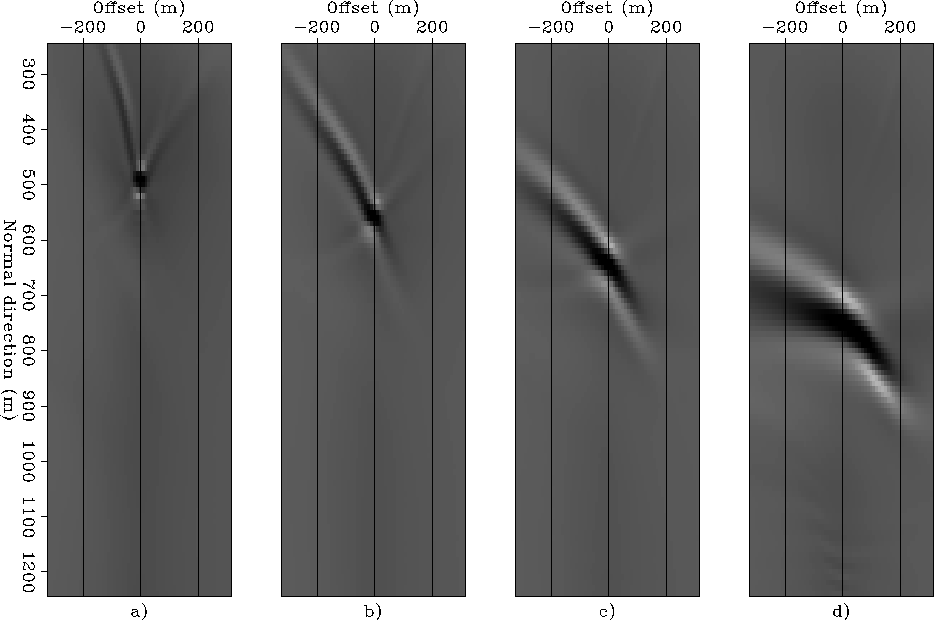
Figure
shows the HOCIGs.
The 60 degrees CIG [panel d)] is dominated by artifacts
and the corresponding angle-domain CIG
shown in Figure d
would be of difficult use for residual velocity analysis.
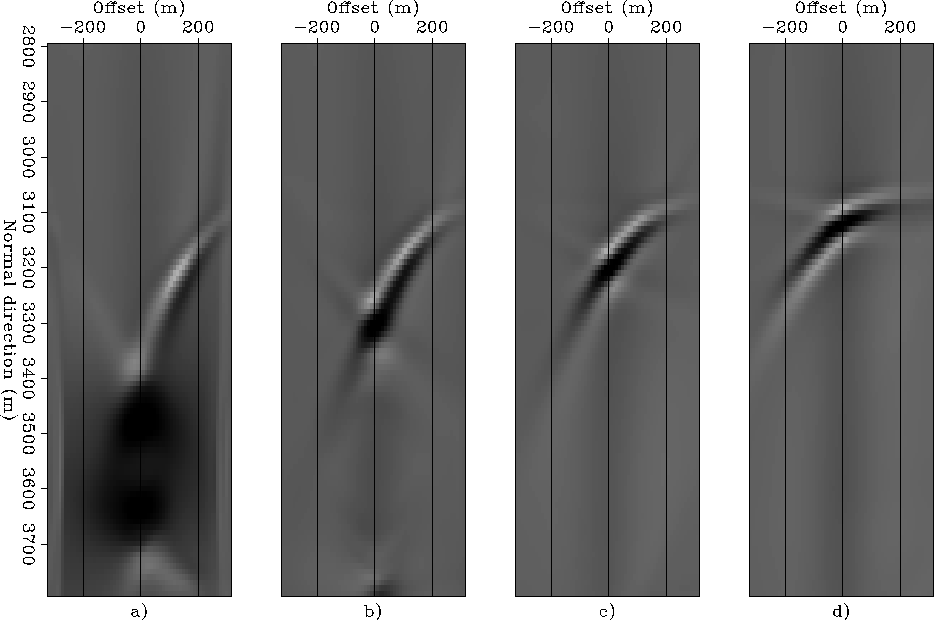
Figure
shows the VOCIGs.
As before, the CIGs corresponding to the milder dips are defocused
(the artifacts on the left of the panels are caused by the top boundary).
The 60 degrees CIG [panel d)] is better behaved than
the corresponding HOCIG
(Figure d),
but it is still affected by the
incomplete illumination.
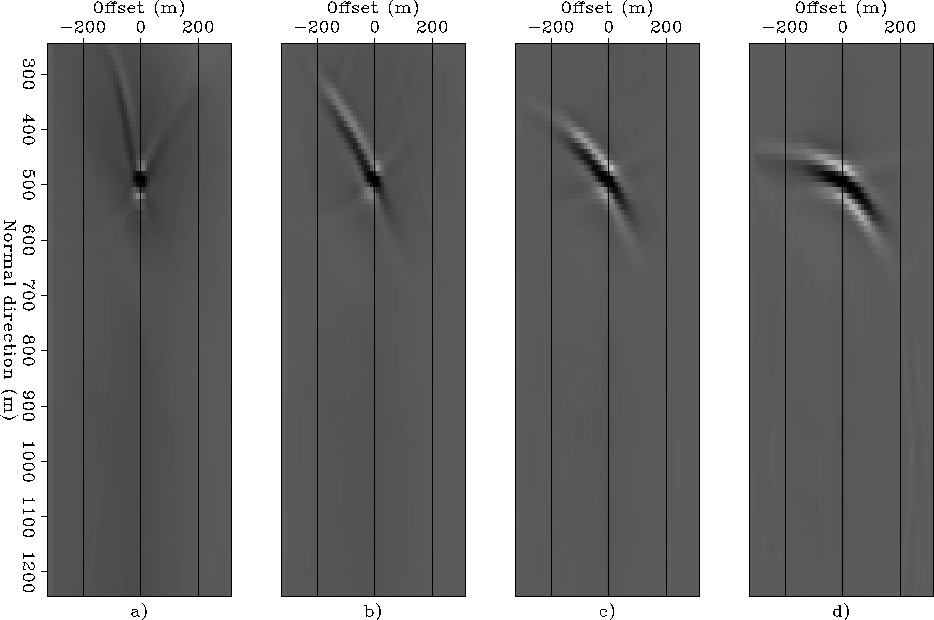
The DDOCIGs (Figure )
are the best focused CIGs.
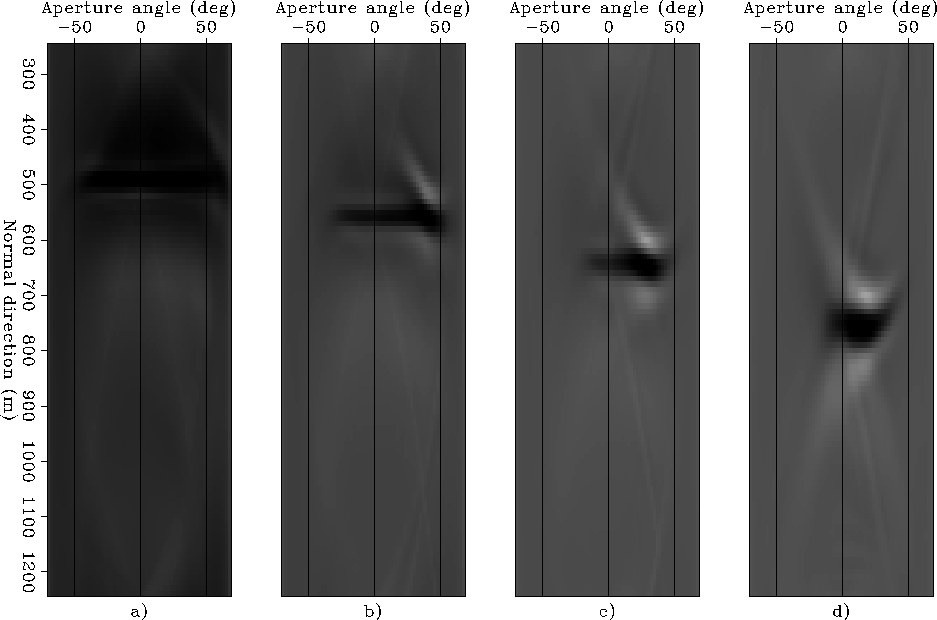
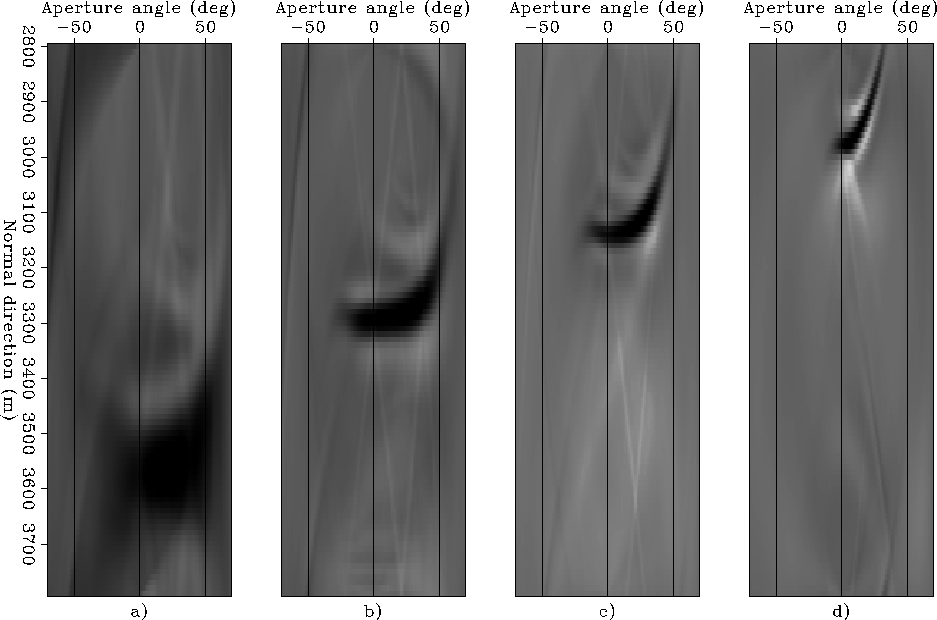
Finally the comparison of all the angle-domain CIGs
(Figures - )
confirm that the DDOCIGS provide
the highest resolution and the least-artifact prone ADCIGs,
and thus they are the best suited to residual moveout analysis.
Cig-hx-ball-allang
Figure 13
HOCIGs corresponding to different apparent reflector dips:
a)  , b)
, b)  , c)
, c)  , and d)
  .The migration velocity was correct.
Cig-hz-ball-allang
Figure 14
VOCIGs corresponding to different apparent reflector dips:
a) , b) , c) , and d) .The migration velocity was correct.
Cig-hrot-ball-allang
Figure 15
DDOCIGs obtained with the proposed method.
The panels correspond to the following apparent reflector dips:
a) , b) , c) , and d) .The migration velocity was correct.
Ang-Cig-hx-ball-allang
Figure 16
Angle-domain CIGS obtained from the HOCIGs
in Figure .
The panels correspond to the following apparent reflector dips:
a) , b) , c) , and d) .The migration velocity was correct.
Ang-Cig-hz-ball-allang
Figure 17
Angle-domain CIGS obtained from the VOCIGs
in Figure .
The panels correspond to the following apparent reflector dips:
a) , b) , c) , and d) .The migration velocity was correct.
Ang-Cig-hrot-ball-allang
Figure 18
Angle-domain CIGS obtained from the DDOCIGs
in Figure .
The panels correspond to the following apparent reflector dips:
a) , b) , c) , and d) .The migration velocity was correct.
Cig-hx-ball-allang-slow-4p
Figure 19
HOCIGs corresponding to different apparent reflector dips:
a) , b) , c) , and d) .The migration velocity was 4% too low.
Cig-hz-ball-allang-slow-4p
Figure 20
VOCIGs corresponding to different apparent reflector dips:
a) , b) , c) , and d) .The migration velocity was 4% too low.
Cig-hrot-ball-allang-slow-4p
Figure 21
DDOCIGs obtained with the proposed method.
The panels correspond to the following apparent reflector dips:
a) , b) , c) , and d) .The migration velocity was 4% too low.
Ang-Cig-hx-ball-allang-slow-4p
Figure 22
Angle-domain CIGS obtained from the HOCIGs
in Figure .
The panels correspond to the following apparent reflector dips:
a) , b) , c) , and d) .The migration velocity was 4% too low.
Ang-Cig-hz-ball-allang-slow-4p
Figure 23
Angle-domain CIGS obtained from the VOCIGs
in Figure .
The panels correspond to the following apparent reflector dips:
a) , b) , c) , and d) .The migration velocity was 4% too low.
Ang-Cig-hrot-ball-allang-slow-4p
Figure 24
Angle-domain CIGS obtained from the DDOCIGs
in Figure .
The panels correspond to the following apparent reflector dips:
a) , b) , c) , and d) .The migration velocity was 4% too low.
We have introduced a novel transformation
of offset-domain Common Image Gathers (CIGs)
that applied to either horizontal-offset CIGs (HOCIGs)
or vertical-offset CIGs (VOCIGs)
transforms them into
the equivalent CIGs that would have been computed
if the offset direction
were aligned along the local geological dip (DDOCIGs).
Transformation to DDOCIGs
improves the quality of CIGs for steeply dipping
reflections
by correcting the image cubes from the image-point dispersal.
It is particularly useful
for velocity analysis when events are not
focused around zero offset.
The creation of DDOCIGs
enables the constructive averaging of
HOCIGs with VOCIGs to form DDOCIGs
that contain accurate information
for all the geological dips.
The angle-domain CIGs obtained from the DDOCIGs
should provide the best residual moveout
information for velocity updating.
We tested the method on a synthetic data set that contains
a wide range of dips.
The results confirm the theoretical predictions and
demonstrate the improvements that are achievable
by applying the transformation to DDOCIGs
for reflections from steeply dipping reflectors.
We would like to thank Guojian Shan for helping in the computations of
the examples of HOCIG and VOCIG from the
North Sea data set.
A
PROOF THAT THE TRANSFORMATION TO DIP-DEPENDENT OFFSET COMMON IMAGE GATHERS (DDOCIG) CORRECTS FOR THE IMAGE-POINT DISPERSAL
This appendix proves that by applying the
offset transformations described
in equations ()
and ()
we automatically remove
the image-point dispersal characterized by
equations ()
and ().
The demonstration for the VOCIGs transformation
is similar to the one for the HOCIGs transformation,
and thus we present only the demonstration for the HOCIGs.
HOCIGs are transformed into DDOCIGs
by applying the following change of variable
of the offset axis hx,
in the vertical wavenumber kz
and horizontal wavenumber kx domain:
|  |
(71) |
For the sake of simplicity,
in the rest of the appendix
we will drop the  in front of
expression ()
and consider only the positive values of kx/kz.
in front of
expression ()
and consider only the positive values of kx/kz.
We want to prove that applying ()
we also automatically shifts the image by
|  |
(72) |
in the vertical direction, and
|  |
(73) |
in the horizontal direction.
The demonstration is carried out into two steps:
1) we compute the kinematics of the impulse
response of transformation ()
by a stationary-phase approximation
of the inverse Fourier transform along kz and kx,
2) we evaluate the dips of the impulse response, relate them to the
angles and  , and then demonstrate
that relations () and ()
are satisfied.
, and then demonstrate
that relations () and ()
are satisfied.
Next: Evaluation of the impulse
Up: R. Clapp: STANFORD EXPLORATION
Previous: Transformation to dip-dependent Common
Stanford Exploration Project
11/11/2002