Next: Building the steering filters
Up: Initial Errors
Previous: Initial migration
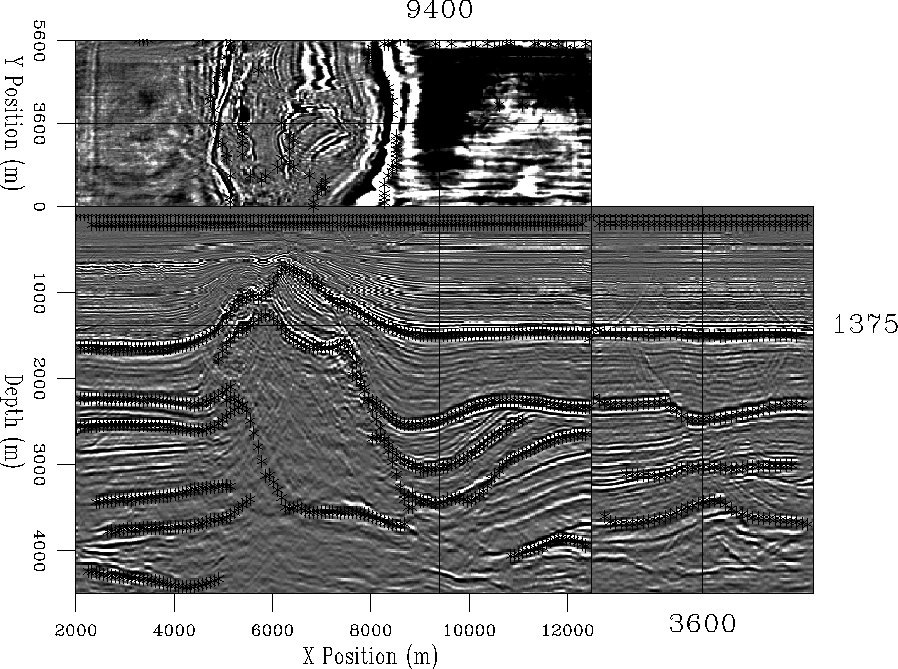
From the initial migration I chose thirteen reflectors to perform tomography
with (Figure 7). To constrain the upper
portion of the model I chose the sea bottom reflection and the chalk
boundary reflection.
I chose the salt top and bottom reflection along with four reflectors
to the left and five to the right of the salt body.
The volume of data made accurate picking of the reflectors difficult
especially under the salt edge.
As a result, I concentrated more on the area right of the salt
where reflector coherency was good in the initial migration.
elf3d.reflectors.vel0
Figure 7 The thirteen reflectors
used in tomography superimposed on the initial migration image.


I performed moveout analysis using equation (![[*]](http://sepwww.stanford.edu/latex2html/cross_ref_motif.gif) ) and
extracted the moveout along the thirteen reflectors.
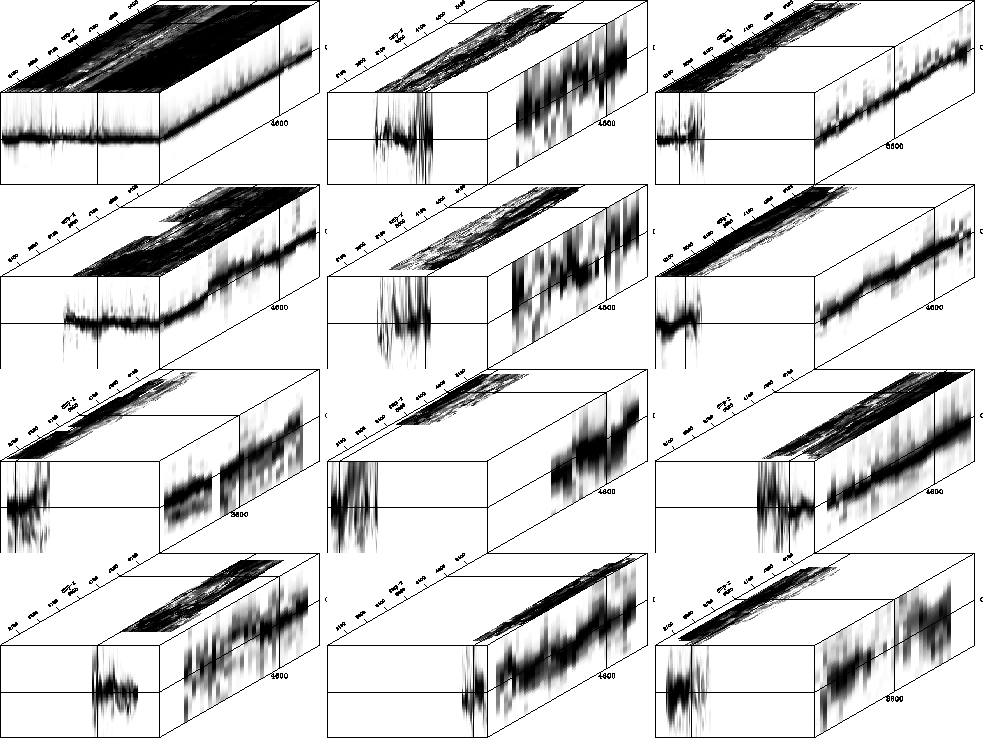
Figure 8 shows slices through the bottom 12 reflector
semblance cubes.
Generally the chalk reflector (top-left) showed little to no moveout errors.
The remaining eleven showed varying degree of residual moveout.
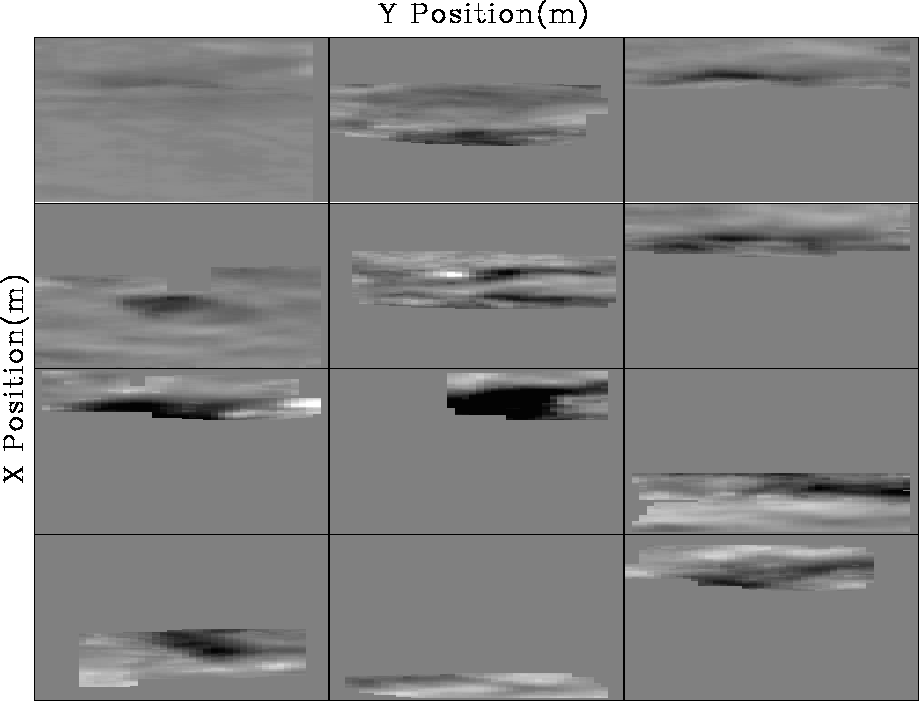
I then created smooth semblance error maps using fitting goals
similar to (), replacing the 1-D differential
operator with the Laplacian. Figure 9 shows
the resulting semblance maps for the same 12 reflectors as
Figure 8.
) and
extracted the moveout along the thirteen reflectors.
Figure 8 shows slices through the bottom 12 reflector
semblance cubes.
Generally the chalk reflector (top-left) showed little to no moveout errors.
The remaining eleven showed varying degree of residual moveout.
I then created smooth semblance error maps using fitting goals
similar to (), replacing the 1-D differential
operator with the Laplacian. Figure 9 shows
the resulting semblance maps for the same 12 reflectors as
Figure 8.
sem-ref.3d
Figure 8 Initial moveout semblance
along the lower 12 reflectors used in tomography.
![[*]](http://sepwww.stanford.edu/latex2html/movie.gif) smooth.3d
smooth.3d
Figure 9 Initial moveout semblance
along the lower 12 reflectors used in tomography.
Next: Building the steering filters
Up: Initial Errors
Previous: Initial migration
Stanford Exploration Project
4/29/2001