Next: Moveout errors
Up: Initial Errors
Previous: Initial Errors
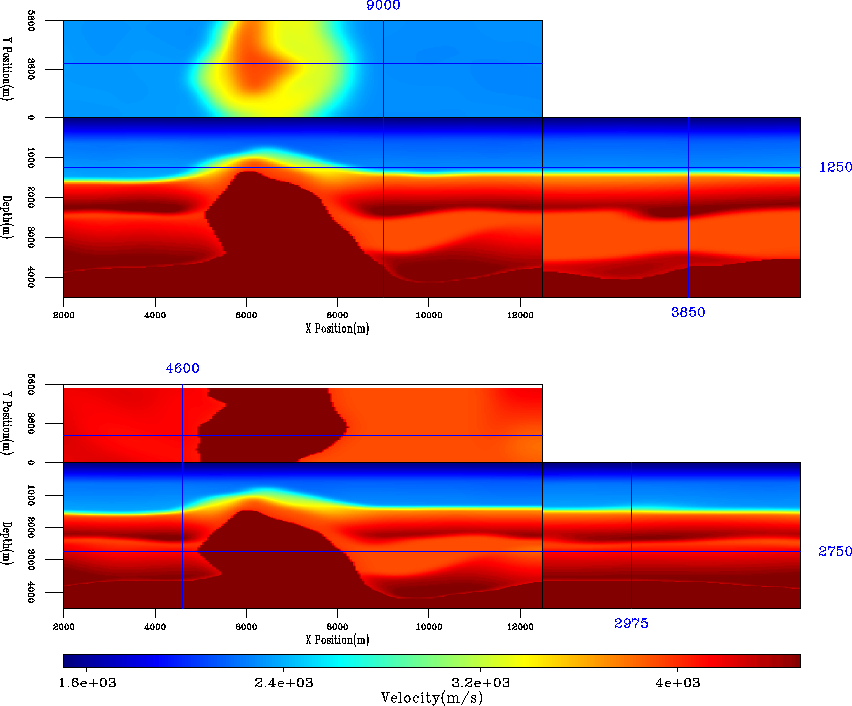
The initial velocity model was created using the
S.M.A.R.T![[*]](http://sepwww.stanford.edu/latex2html/foot_motif.gif) method (, ).
Early migration tests
showed that a better migration result could be obtained by
smoothing the model () .
As a result the S.M.A.R.T. model was smoothed,
preserving the sharp salt boundary (two slices
through the cube are shown in Figure 3).
method (, ).
Early migration tests
showed that a better migration result could be obtained by
smoothing the model () .
As a result the S.M.A.R.T. model was smoothed,
preserving the sharp salt boundary (two slices
through the cube are shown in Figure 3).
Using the velocity in Figure 3, the data was migrated
with six reference velocities and frequency range of 5 to 60 Hz
(, ).
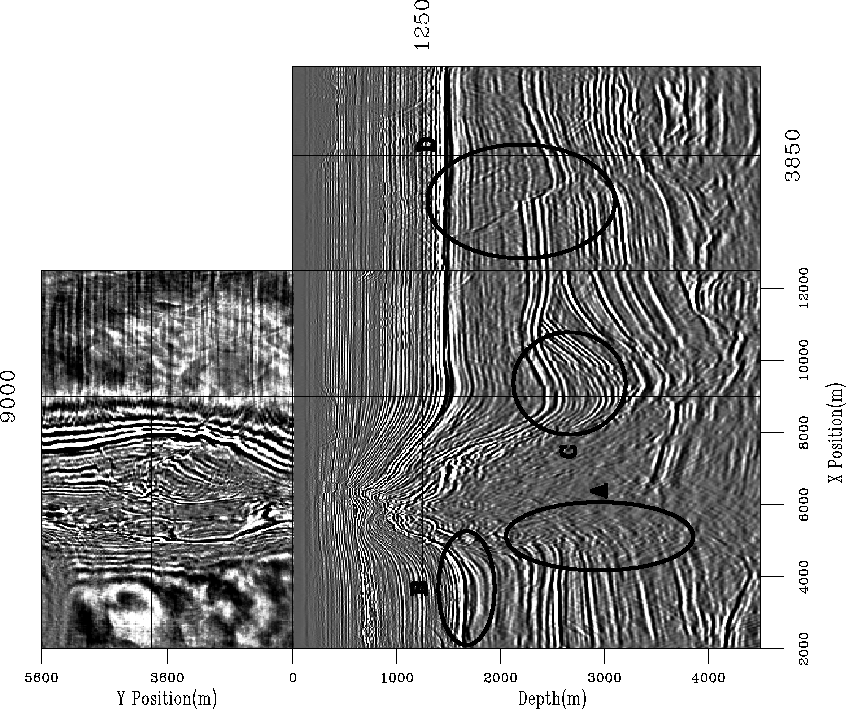
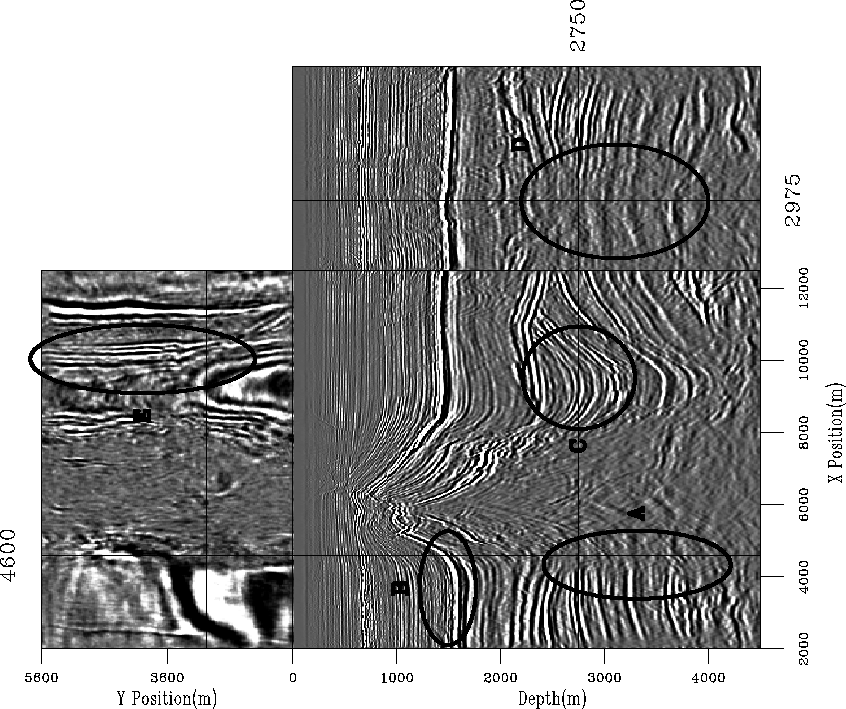
Figures 4 and 5
show two different slices through the initial migration cube.
Note how in Figure 4 the chalk boundary reflection (`B')
varies in amplitude.
Further, the reflectors under the salt edge die out (`A').
In addition the syncline
and fault structure to the right of the salt
(`C' and `D') lack crispness and some reflector continuity.
In the second view, Figure 5, we again see the problems
with the chalk boundary (`B'). As reflectors approach the salt edge
they seem to loose coherency (`A' and `D'). The valley to the right also
has problems. Reflectors seem to blur together in both the inline
view (`C') and the depth slice (`E').
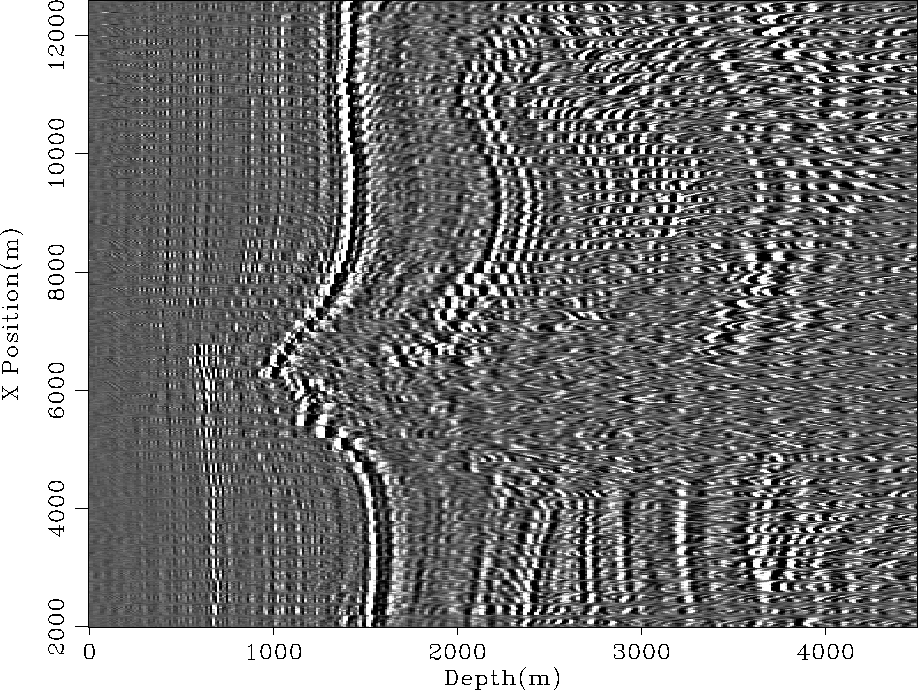
If we look at the gathers we still see significant moveout errors
(Figure 6) that the tomography can attempt
to correct.
elf3d.vel0
Figure 3 Initial ELF velocity model.


 cube.mig0.1
Figure 4 Slice through the
migrated cube using the velocity of Figure 3.
cube.mig0.2
Figure 5 A second slice through the
migrated cube using the velocity of Figure 3.
gathers.3d.vel0
Figure 6
Every 10th gather from a crossline (Y=1900).
Next: Moveout errors
Up: Initial Errors
Previous: Initial Errors
Stanford Exploration Project
4/29/2001