Next: 2-D vs. 3-D
Up: 3-D example
Previous: Migration
In an attempt to improve the focusing of the reflectors under the salt
edge, I performed another iteration of tomography. This time
I concentrated on accurately picking reflectors as close to the
salt edge as possible. In addition I relaxed the constraint
on model smoothness to allow greater changes.
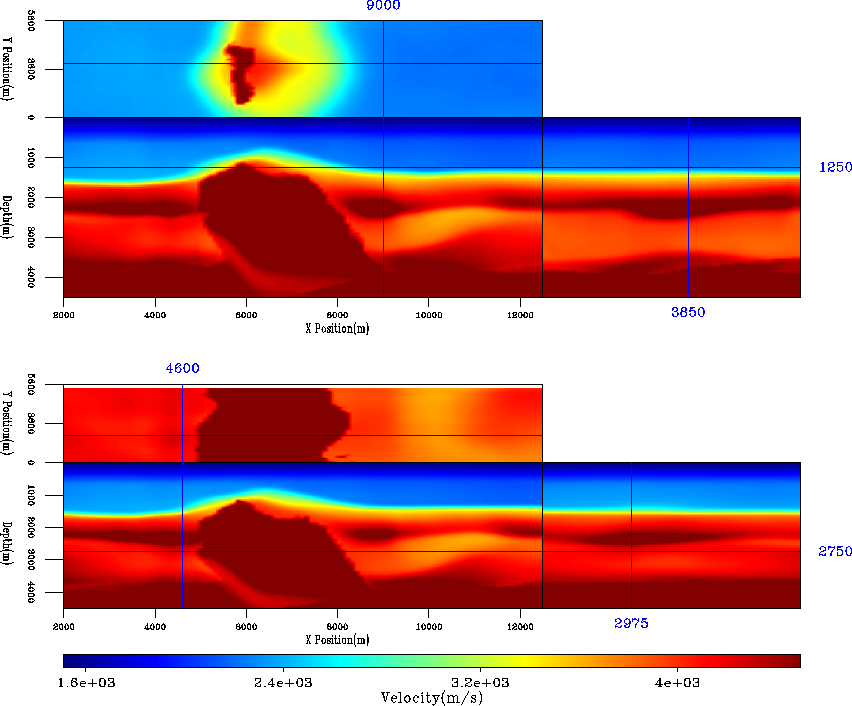
Figure 16 shows the
updated velocity model. The changes introduced to the velocity
model are significantly greater than in the first iteration of tomography
(Figures 11 and 12).
elf3d.vel2
Figure 16 Velocity after two iterations
of tomography.


If we look at the same two cube views (as Figures 3,
4,
5,
16,
13,
14, and
16), we see improved focusing
of the reflectors, especially as we approach the salt edge.
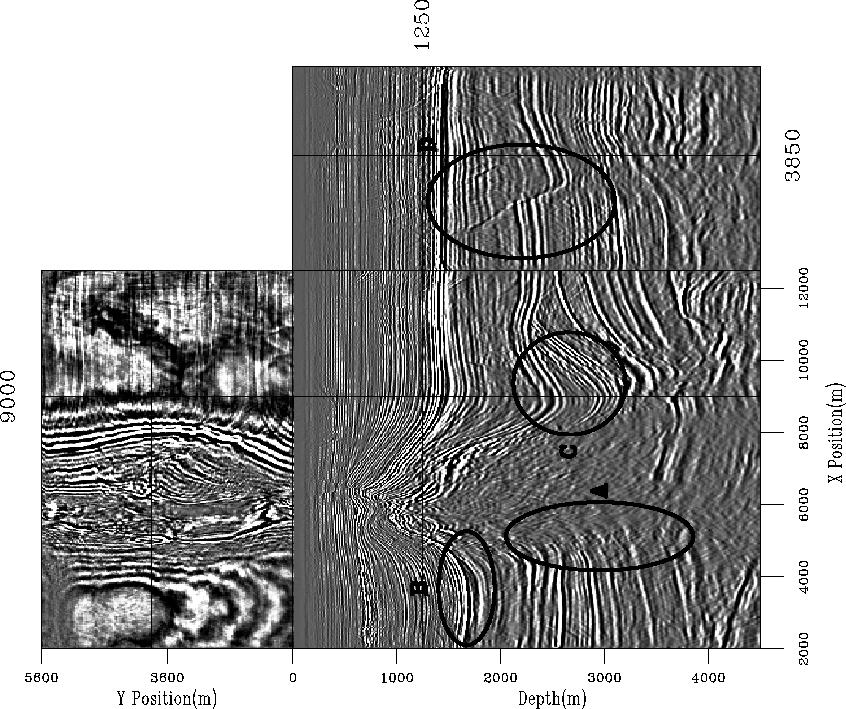
In Figure 17 note the improvement over
Figures 4 and 13 at
`A', `C' and `D'.
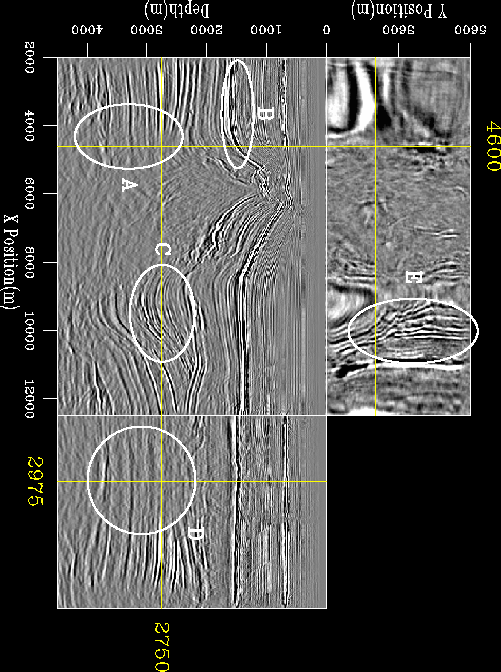
In Figure 18 we see improvements over
Figures 5 and 14 at the
same general locations (`A', `C' and D).
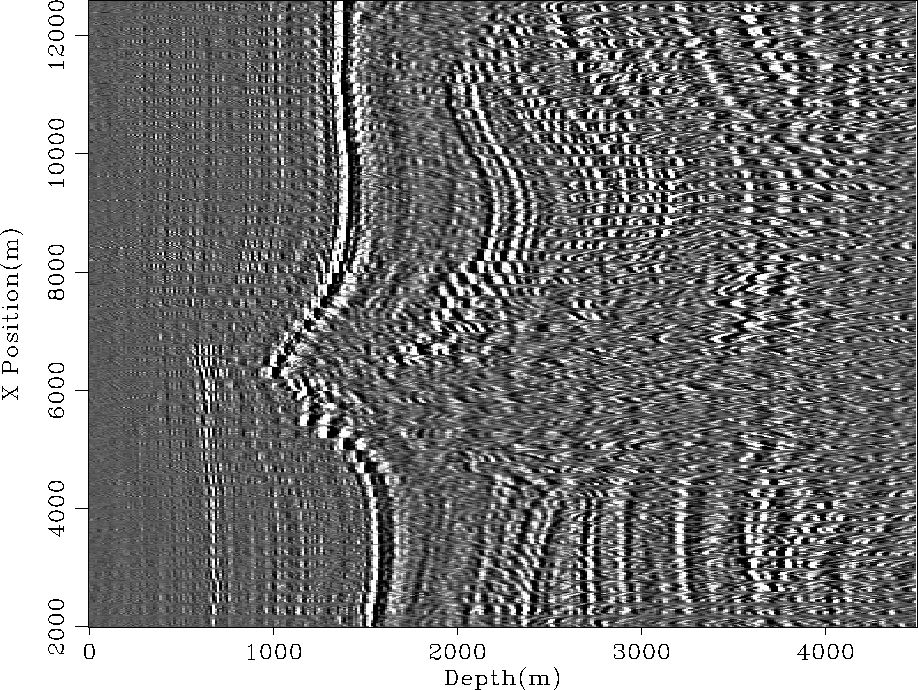
If we look at the gathers from the same crossline as Figure 6 (Figure 19) we see that
they considerably flatter and more coherent
than in the initial migration.
cube.mig2.1
Figure 17 Slices from the
3-D cube using the velocity of Figure 16
![[*]](http://sepwww.stanford.edu/latex2html/movie.gif) cube.mig2.2
cube.mig2.2
Figure 18 Slices from the
3-D cube using the velocity of Figure 16
gathers.3d.vel2
Figure 19 Gathers from
the same crossline as Figure 6.
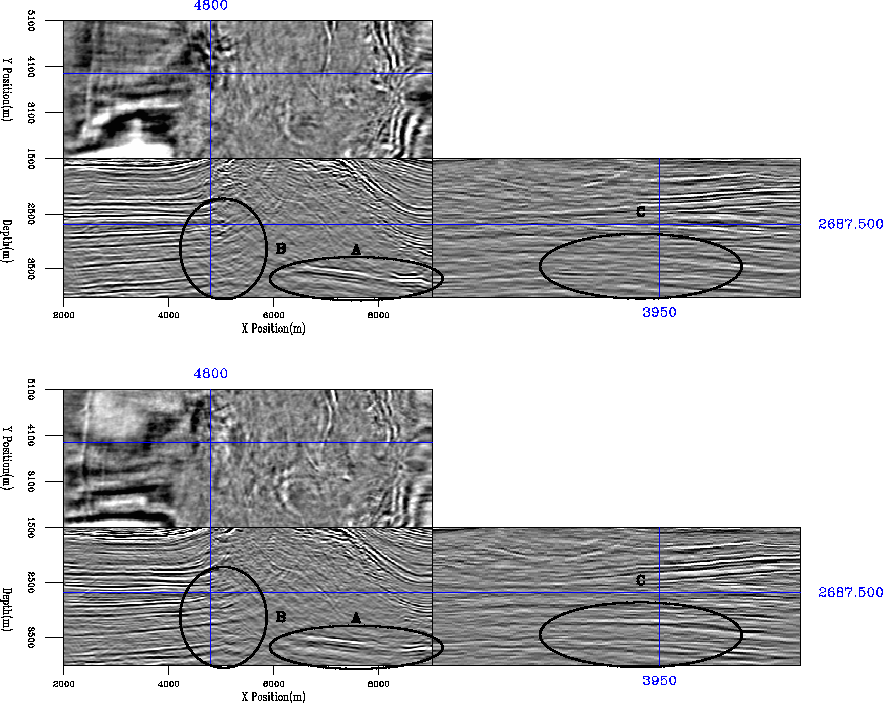
If we take a close up view of the area to the left of
the salt, Figure 20, the improvement
in image quality is very apparent. The salt bottom reflector (`A')
is more continuous. The reflectors along the edge of the salt (`B') extend
almost to the edge of the salt and are much more consistent in
amplitude. In the crossline view we see reflector continuity (`C') that
was not apparent in the initial image.
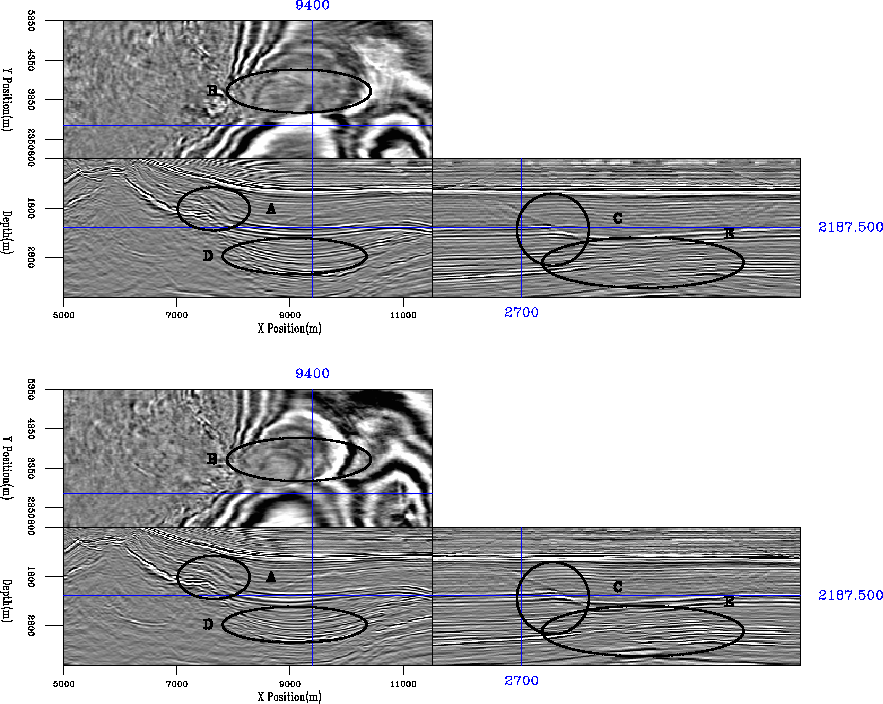
A close up view of the right portion of the
image Figure 21
also shows improvement. The strong reflector above the
salt (`A') is discontinuous with the initial velocity model, with the improved
velocity model it is much more believable. The reflectors in the basin to the
right of the salt `D' are more consistent in amplitude. The fault
in the crossline `C' is better focused and we have generally more
energy in the crossline reflectors below the fault. Finally, the depth
section `B' is higher frequency and shows more continuous reflectors.
compare1
Figure 20 A comparison along the left
edge of the salt dome. The top image is using the starting
velocity, Figure 3, the bottom using the
velocity after two iterations (Figure 16).
compare2
Figure 21
A comparison along the right
edge of the salt dome. The top image is using the starting
velocity, Figure 3, the bottom using the
velocity after two iterations (Figure 16).
Next: 2-D vs. 3-D
Up: 3-D example
Previous: Migration
Stanford Exploration Project
4/29/2001