


Several cases are shown here that illustrate the effects
of the weighting in the previous discussion.
The first case shows the effects of varying  in
equation (
in
equation (![[*]](http://sepwww.stanford.edu/latex2html/cross_ref_motif.gif) ). Figure shows
the events from which the signal filter
). Figure shows
the events from which the signal filter  and the noise filter
  are calculated.
The data in Figure are therefore taken as definitions
of signal and noise,
the signal being the flat event and the noise being the dipping event.
Figure shows the data to be separated into signal and noise.
In addition to the signal and noise seen in Figure ,
an event with a dip of intermediate slope has been added
in Figure .
This event is only slightly attenuated by the filters and .
are calculated.
The data in Figure are therefore taken as definitions
of signal and noise,
the signal being the flat event and the noise being the dipping event.
Figure shows the data to be separated into signal and noise.
In addition to the signal and noise seen in Figure ,
an event with a dip of intermediate slope has been added
in Figure .
This event is only slightly attenuated by the filters and .
By solving equation () with  ,the results seen in Figure are obtained.
The event with the intermediate slope has been about evenly distributed
between the signal and the noise.
,the results seen in Figure are obtained.
The event with the intermediate slope has been about evenly distributed
between the signal and the noise.
Next, equation () is solved with  .Increasing increases the weight given to the top part of
equation (),
.Increasing increases the weight given to the top part of
equation (),  ,
so events that do not fit extremely well get eliminated from
,
so events that do not fit extremely well get eliminated from  .As expected, Figure shows the event
with intermediate slope has been almost completely moved to the noise.
.As expected, Figure shows the event
with intermediate slope has been almost completely moved to the noise.
When is decreased to 0.1,
the weight given to the top part of equation () is decreased
so any event that does not fit the lower part of equation ()
extremely well is pushed into .This can be seen in Figure ,
where the event of intermediate slope is almost entirely
contained in the signal.
|
signalnoise.a
Figure 7 The event on the left is defined as signal, the event on the right is defined as noise. | 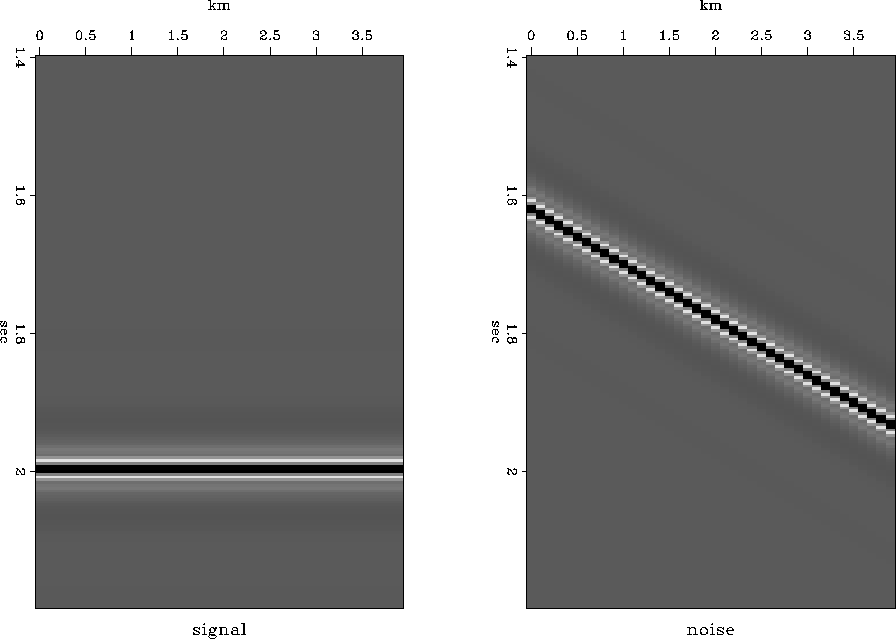 |


|
data.a
Figure 8 The data, made up of both signal and noise, and an added event. | 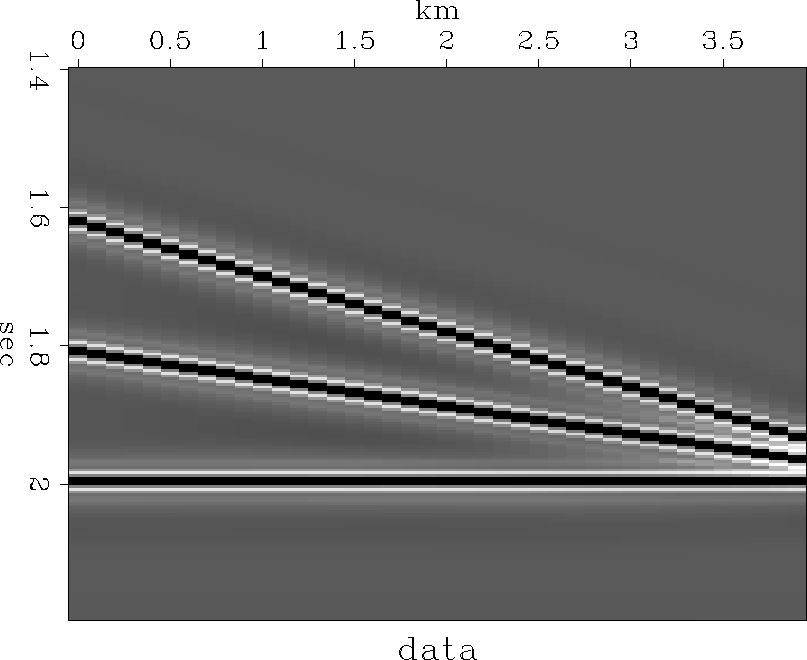 |
|
separ7sal.a.1
Figure 9 The calculated signal and noise using . | 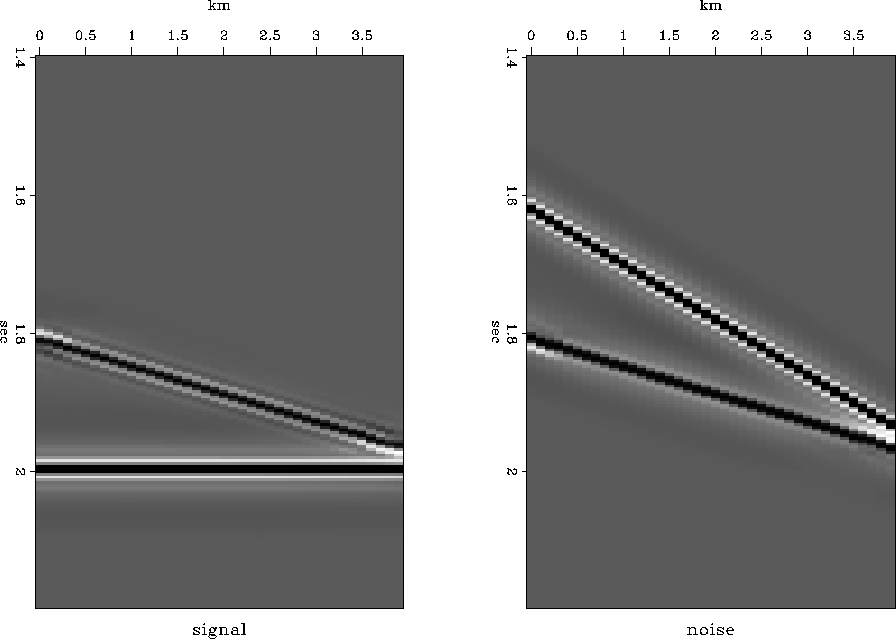 |
|
separ7sal.a.10
Figure 10 The calculated signal and noise using . | 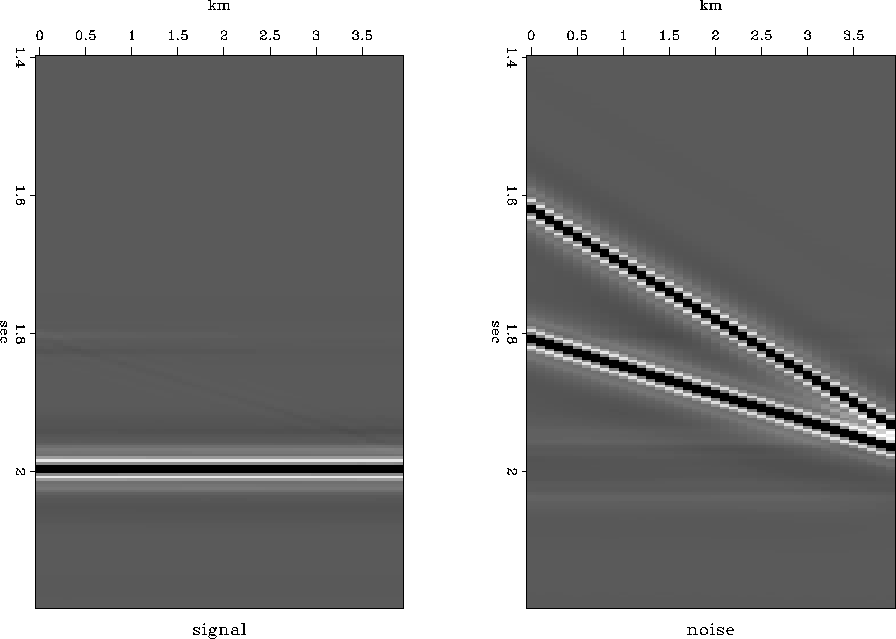 |
|
separ7sal.a.0.1
Figure 11 The calculated signal and noise using  . . | 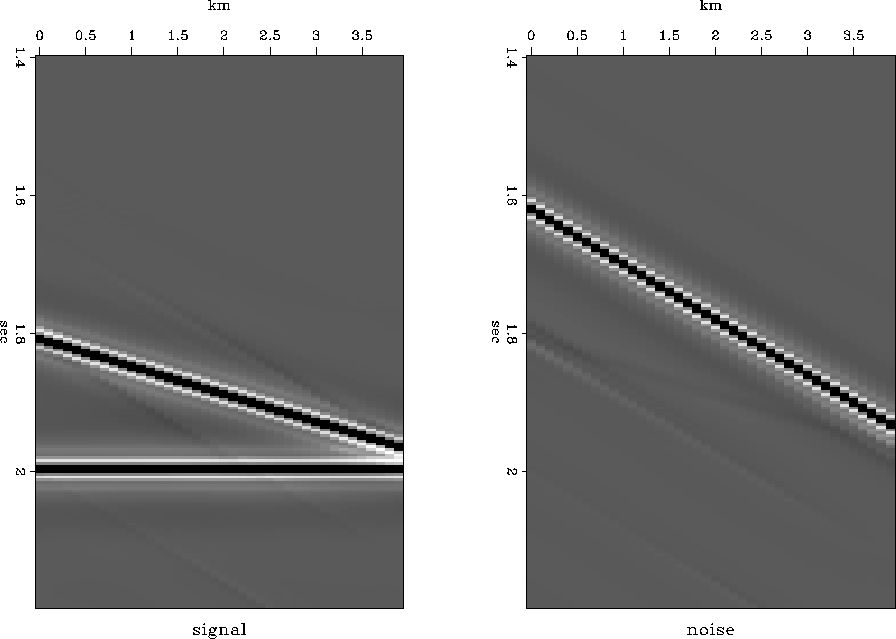 |
In the previous examples,
equation () has been solved with a zero estimated value
of .This was possible since the signal was not significantly attenuated
by the filter .In the next examples,
equation () has been solved with a preliminary estimate
of being the data  ,since both filters and can completely eliminate one part of
the data.
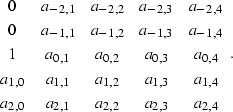
For Figures to ,
the signal filter is a two-dimensional
prediction-error filter with the form
,since both filters and can completely eliminate one part of
the data.
For Figures to ,
the signal filter is a two-dimensional
prediction-error filter with the form
 |
(97) |
is a one-dimensional
prediction-error filter with the form
 |
(98) |
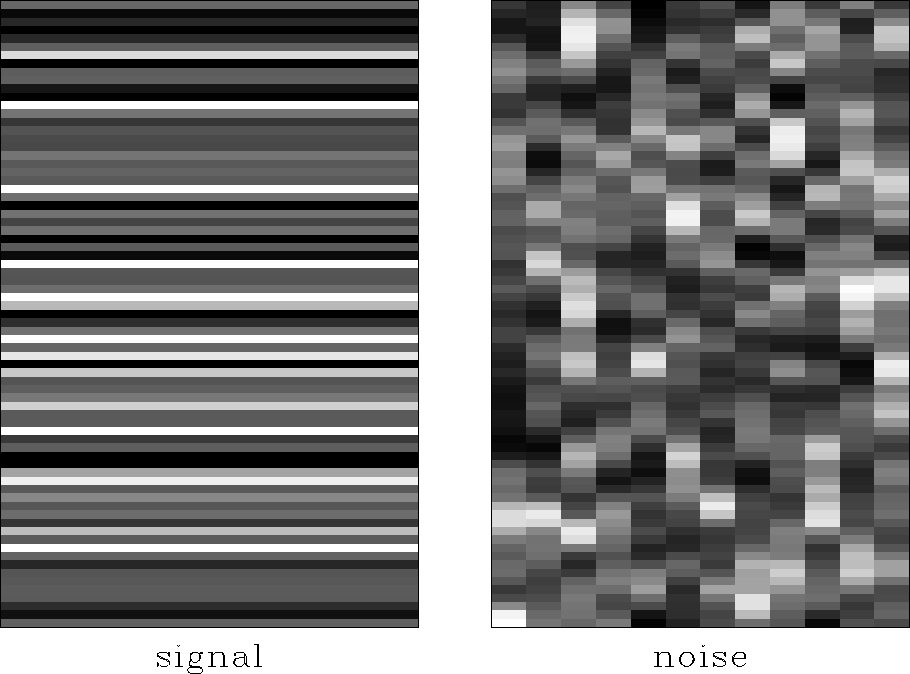
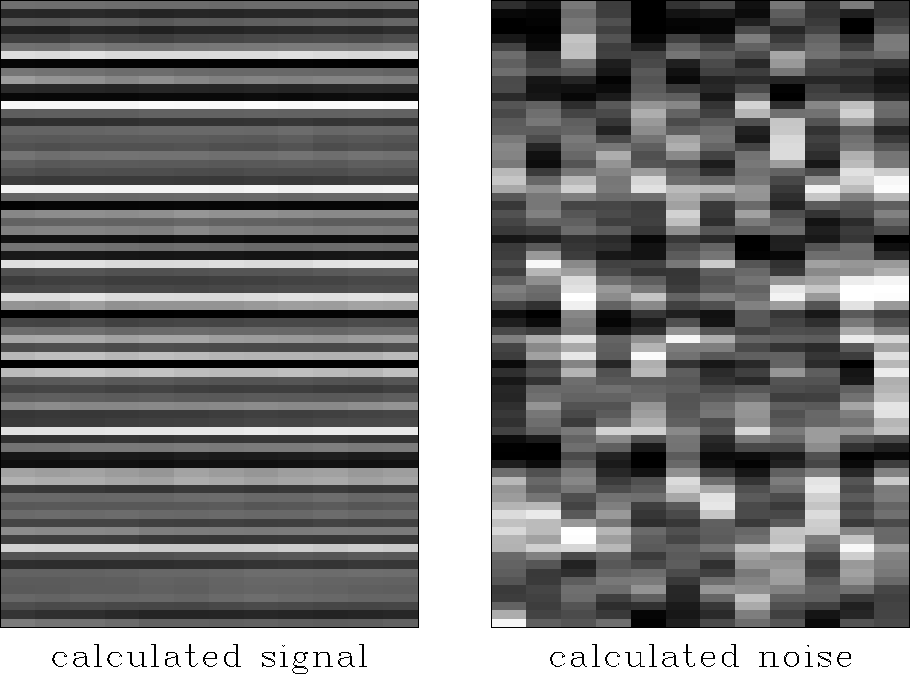
Figure shows the events defined as the signal and noise.
The signal is a series of horizontal events with random amplitudes.
The noise is mono-frequency sine waves with random shifts.
Both filters () and () will eliminate the sine waves,
since a prediction is done along the time axis,
but only filter () can predict the signal,
since the amplitudes in time are random
and unpredictable by filter ().
To allow any of the noise in the output,
equation () must be solved with a preliminary estimate
of being the data, or all the sine waves will be removed from the system.
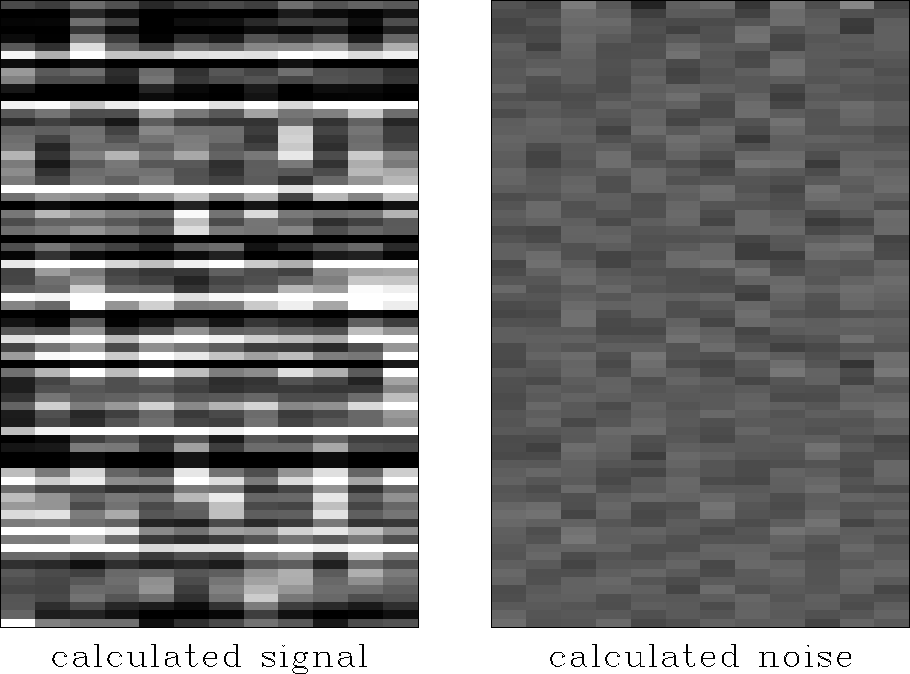
When equation () is solved with ,Figure shows that the noise is evenly distributed
between the calculated signal and the calculated noise.
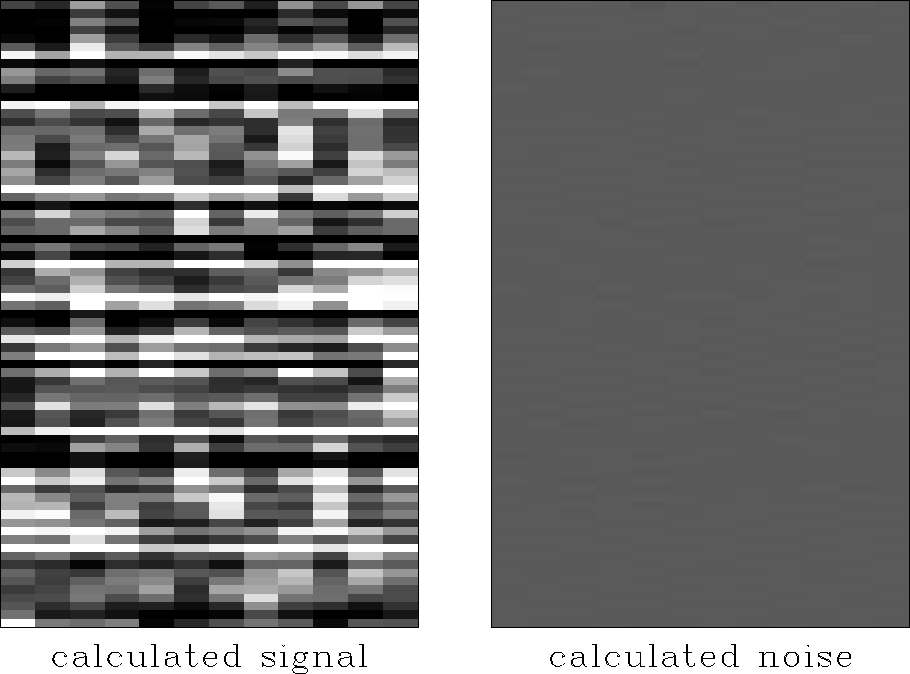
Increasing to 10 moves the sine waves into the noise section,
producing the excellent separation of signal and noise
seen in Figure .
Decreasing to 0.1 moves the sine waves
almost completely into the signal.
This weighting gives a useful tool in distributing events
between calculated signal and noise.
 |
 |
.
 |
.
 |
.