


![[pdf]](icons/pdf.png)
|
|
|
|
| Poroelastic measurements resulting in complete data sets for granular and other anisotropic porous media | |
|
Another important type of heterogeneity that can occur in practice involves heterogeneity of the pore space. One obvious issue is whether the pores are all connected to each other, or whether there may be two (or more) distinct, but intertwining, pore systems. One well-known example of this situation is the double-porosity concept (Barenblatt and Zheltov, 1960; Gurevich et al., 2009; Berryman and Pride, 2002), in which one type of pore has high volume but low permeability, while the other has low volume (imagine a system of very flat cracks or fractures) and high permeability. I can also consider that some pores might be interior to some grains and not connected to any other pores (and might therefore also be empty of pore fluid), while other subsets of the grains have no inherent porosity of this type, and so are truly solid grains.
I will not try to deal with all these cases simultaneously, as even enumerating all the possibilities quickly becomes burdensome. I will limit myself instead to one of the more typical scenarios, considered for example by Brown and Korringa (1975) and by Rice and Cleary (1976) -- and also see the recent related work of Gurevich et al. (2009).
Heterogeneity of the pore space is most important when considering flow of fluid into and out of the boundaries of
a porous sample. Then, the concept of increment of fluid content  comes into play, and special care is
required. A straightforward definition of this dimensionless parameter
(just as the strains
comes into play, and special care is
required. A straightforward definition of this dimensionless parameter
(just as the strains  ,
,  ,
,  ,
,  are all dimensionless) is given by:
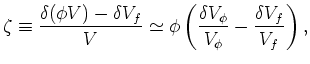 is the overall volume of the initially fully fluid-saturated porous material at the first instant of consideration,
 is the pore volume, with
  being the fluid-saturated porosity of the volume,
and
being the fluid-saturated porosity of the volume,
and  is the volume occupied by the pore-fluid, making
 at the start. The
  's indicate small
changes in the quantities following. For ``drained'' systems, there must be a reservoir of the same fluid
just outside the volume that can either supply more fluid or absorb any excreted fluid as needed during the
nonstationary phase of the poroelastic process; the amount of pore fluid can therefore either increase or decrease
from the initial amount of pore fluid, and at the same time the pore volume can also be changing, but not necessarily at
exactly the same rate as the pore fluid itself. The one exception to these statements is when the surface pores
of the total volume are sealed, in which case the system is ``undrained'' and
's indicate small
changes in the quantities following. For ``drained'' systems, there must be a reservoir of the same fluid
just outside the volume that can either supply more fluid or absorb any excreted fluid as needed during the
nonstationary phase of the poroelastic process; the amount of pore fluid can therefore either increase or decrease
from the initial amount of pore fluid, and at the same time the pore volume can also be changing, but not necessarily at
exactly the same rate as the pore fluid itself. The one exception to these statements is when the surface pores
of the total volume are sealed, in which case the system is ``undrained'' and
 , identically.
In these circumstances, it is still possible that and
are both changing,
but because of the imposed undrained boundary conditions, they are necessarily changing at the same rate.
The result is that, for an isotropic system, I have:
, identically.
In these circumstances, it is still possible that and
are both changing,
but because of the imposed undrained boundary conditions, they are necessarily changing at the same rate.
The result is that, for an isotropic system, I have:
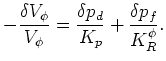 and
and
 , where
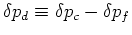 is the uniform confining pressure, if the external confining
pressure is uniform. If not, then this quantity is replaced in the definition of
is the uniform confining pressure, if the external confining
pressure is uniform. If not, then this quantity is replaced in the definition of
 by
by
 , which is the change in the mean confining pressure
and where
, which is the change in the mean confining pressure
and where
 is the definition of the mean principal stress.
Clearly, if the confining principal stress is uniform (
is the definition of the mean principal stress.
Clearly, if the confining principal stress is uniform (
 ),
then the mean stress equals this uniform confining stress. If not, then there can be additional
shearing effects that need to taken into account, but these do not play any role in the
changes of fluid content since this quantity is effectively a measure only of
the total number of fluid particles contained in the pertinent pore volume.
),
then the mean stress equals this uniform confining stress. If not, then there can be additional
shearing effects that need to taken into account, but these do not play any role in the
changes of fluid content since this quantity is effectively a measure only of
the total number of fluid particles contained in the pertinent pore volume.
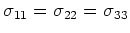
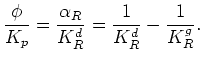
It can also be shown using poroelastic reciprocity (and I will show this later as it very clearly develops in the following anisotropic analysis) that
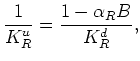 and
and
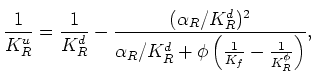 , then
(19) reduces exactly to (1). Although this result is the same
as that of Brown and Korringa (1975), I nevertheless write it differently to emphasize different features.
, then
(19) reduces exactly to (1). Although this result is the same
as that of Brown and Korringa (1975), I nevertheless write it differently to emphasize different features.
|
|
|
|
| Poroelastic measurements resulting in complete data sets for granular and other anisotropic porous media | |
|

![$\displaystyle \zeta = \phi\left[\frac{\delta\sigma_c}{K_p} + \delta p_f\left(\frac{1}{K_p} - \frac{1}{K_R^\phi} + \frac{1}{K_f}\right)\right],$](img45.png)
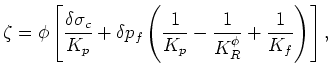
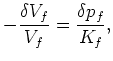
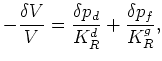
![$\displaystyle B = \left(\frac{1}{K_R^d}-\frac{1}{K_R^g}\right)\left[\left(\frac...
...{K_R^g}\right) + \phi \left(\frac{1}{K_f}-\frac{1}{K_R^\phi}\right)\right]^{-1}$](img59.png)
![$\displaystyle \frac{1}{K_R^u} = \frac{1}{K_R^d} - \left(\frac{1}{K_R^d}-\frac{1...
...{K_R^g}\right) + \phi\left(\frac{1}{K_f}-\frac{1}{K_R^\phi}\right)\right]^{-1},$](img60.png)
