


![[pdf]](icons/pdf.png)
|
|
|
|
| Hypercube viewer | |
|
Currently Hyperview supports five of the more common seismic data formats but can easily be expanded to read almost any other format. It reads SEPlib (and RSF) regular cubes in both byte and float format. It can read float formats of SEG-Y, SU, SeisSpace and the scaled integer format of SeisSpace. By default when reading float data Hyperview reads the first 5 MBs to find clip parameters and stores the entire cube in byte format based on the clip information. Adding float_format=1 to the command line it will store the data as floats rather than bytes. This feature is useful for both clipping and for actions that require more precision than bytes.
When reading in float data, the program looks for a series of command
clipping options.
It first looks for
bpclip and epclip, corresponding to a beginning and ending
clip percentile. It next looks for pclip which corresponds
to a percentile clip based on the absolute value of the data. It then looks for
minimum and maximum clip values bclip and eclip. Finally,
it looks for clip which corresponds to  and
and 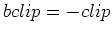 .
If none of these parameters are found, it defaults to
.
If none of these parameters are found, it defaults to  and
and  .
.
|
|
|
|
| Hypercube viewer | |
|