


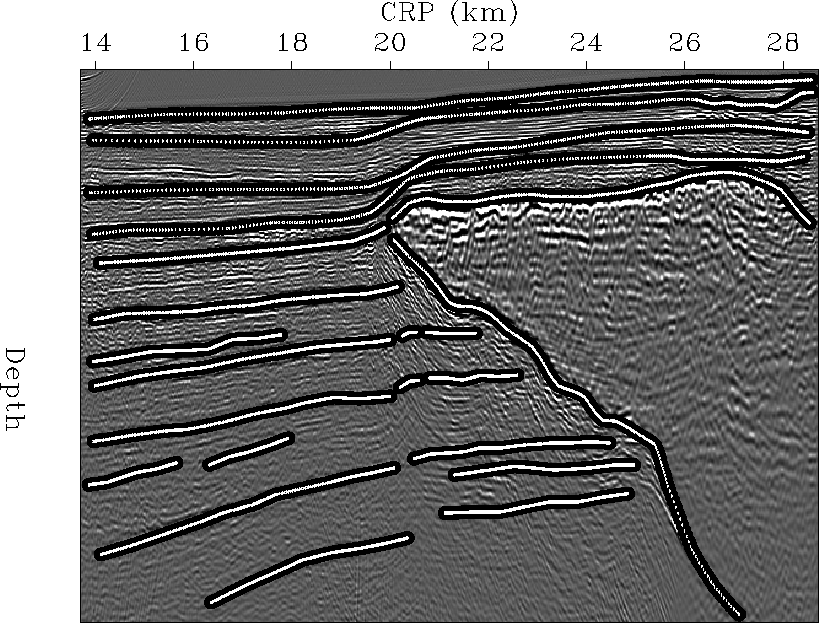
Geological RIP allows us to incorporate a geological idea of what the model
should look like into the inversion problem. I have picked several
reflectors in the migration result (Figure ![[*]](http://sepwww.stanford.edu/latex2html/cross_ref_motif.gif) ) and used
them to create a steering filter that is used to regularize the model along
with the geophysical regularization.
) and used
them to create a steering filter that is used to regularize the model along
with the geophysical regularization.
 |


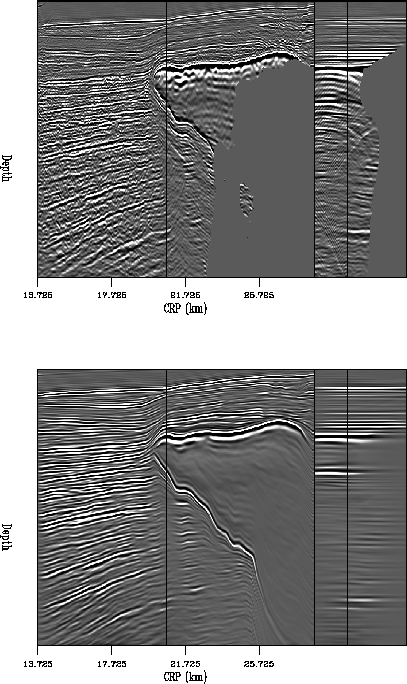
The result of 6 iterations of geological RIP using the reflectors from
Figure can be seen in Figure . Once
again, the migration result is displayed on top and the inversion result
is displayed on the bottom. It can also be compared to the geophysical
RIP result in Figure , which shows the same common ray
parameter section and common image gather. The geological RIP result has
even fewer artifacts than the geophysical RIP result and shows more
reflector continuity in the shadow zones. However, the faults are less
defined in the geological RIP result.
 |
.
![[*]](http://sepwww.stanford.edu/latex2html/movie.gif)