


![[*]](http://sepwww.stanford.edu/latex2html/cross_ref_motif.gif) presents a simple flat-layer model. Figures
and
show the result of modeling the two-way travel time with the conventional normal
moveout equation, and
with the non-hyperbolic moveout equation, using an initial velocity of 1100 m/s, a velocity
gradient of 125
presents a simple flat-layer model. Figures
and
show the result of modeling the two-way travel time with the conventional normal
moveout equation, and
with the non-hyperbolic moveout equation, using an initial velocity of 1100 m/s, a velocity
gradient of 125  and a constant value of
  .
.
Both results (Figures and ) present a hyperbolic moveout at
near offset or small offset-to-depth ratio. This result resembles the well known theoretical
presentation of
Tessmer and Behle (1988). However, the non-hyperbolic moveout is dominant for large offsets
and shallow depths, as
can be observed in Figure .
|
mod5
Figure 1 Reflectivity model. | 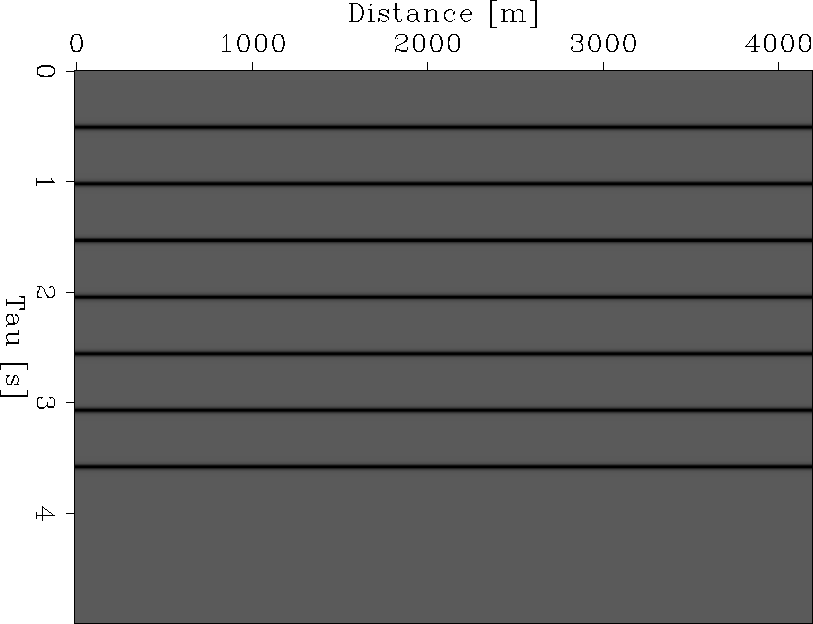 |


|
mod5NMO
Figure 2 Modeled data, using the non-hyperbolic equation with a constant value of . | 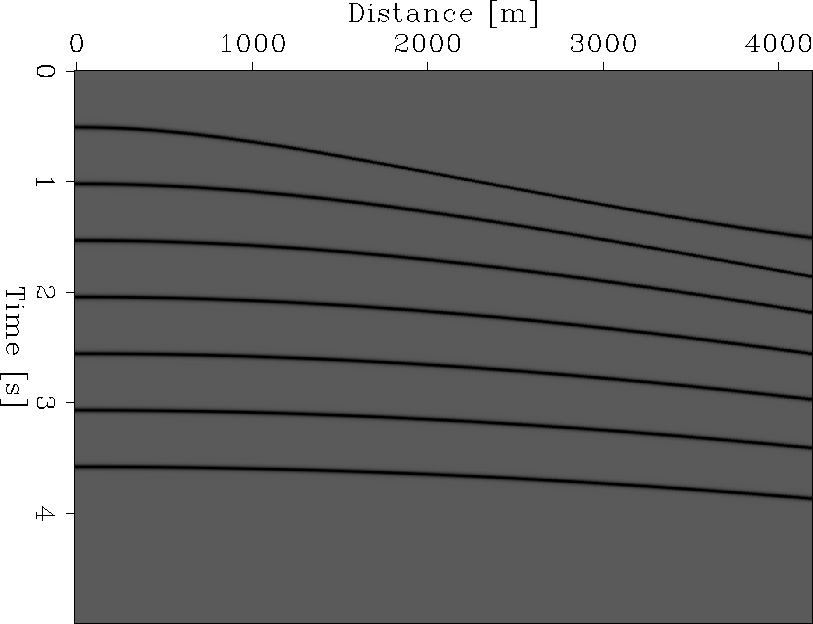 |
![[*]](http://sepwww.stanford.edu/latex2html/movie.gif)
|
mod5NMO1
Figure 3 Modeled data, using the the traditional hyperbolic equation. | 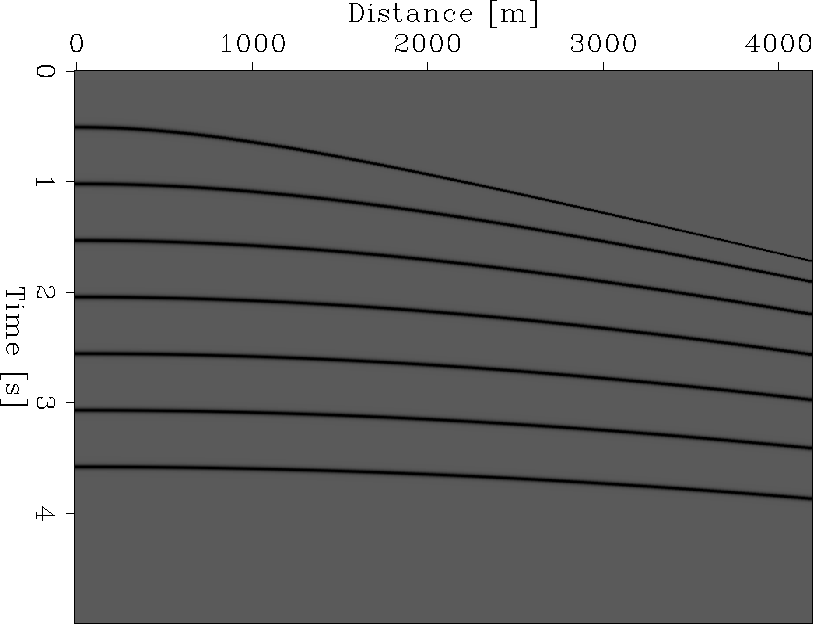 |
I also apply the non-hyperbolic moveout equation to a PS CMP gather from the Alba dataset
acquired
on the Alba oil field in the North sea. The data set is a multicomponent 3-D Ocean Bottom
Seismic experiment.
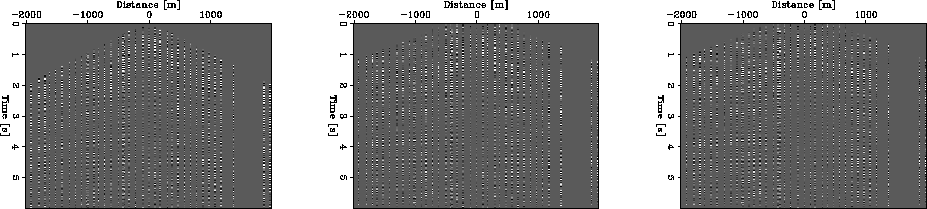
Figure shows the original CMP gather before (left), after (center)
non-hyperbolic moveout, and after traditional hyperbolic moveout (right). I use
an initial velocity value of 1100 m/s, and a velocity gradient of 125 and
a constant  . Note that even though the events are not totally corrected, the non-hyperbolic
correction gives a better result for shallow events at large offsets. These events are flatter after
the non-hyperbolic moveout correction than with the hyperbolic moveout correction.
. Note that even though the events are not totally corrected, the non-hyperbolic
correction gives a better result for shallow events at large offsets. These events are flatter after
the non-hyperbolic moveout correction than with the hyperbolic moveout correction.
 |
with for the non-hyperbolic case.