Next: Building the steering filters
Up: 2-D field tests
Previous: Introduction and summary
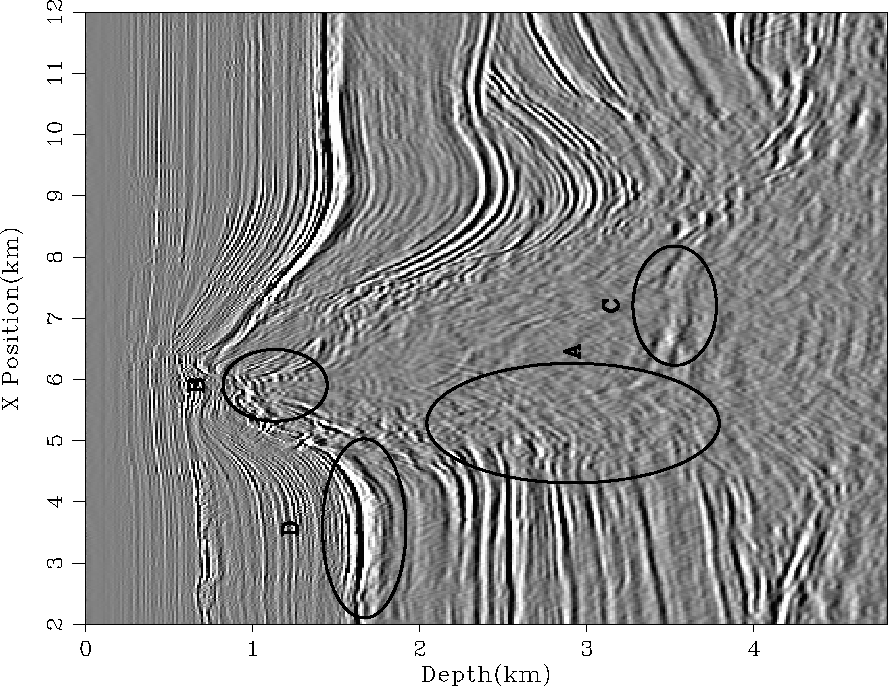
Figure 3 is result of migrating the
data with the velocity of Figure 2.
The strong chalk reflection ('D') is low frequency and focusing
problems make its
amplitude suspiciously space-variant.
The salt is generally poorly
defined. The salt top reflection (`B') is discontinuous.
The bottom of the salt (`C') is poorly imaged.
The most interesting
problem is along the salt edge (`A') where we see little reflector
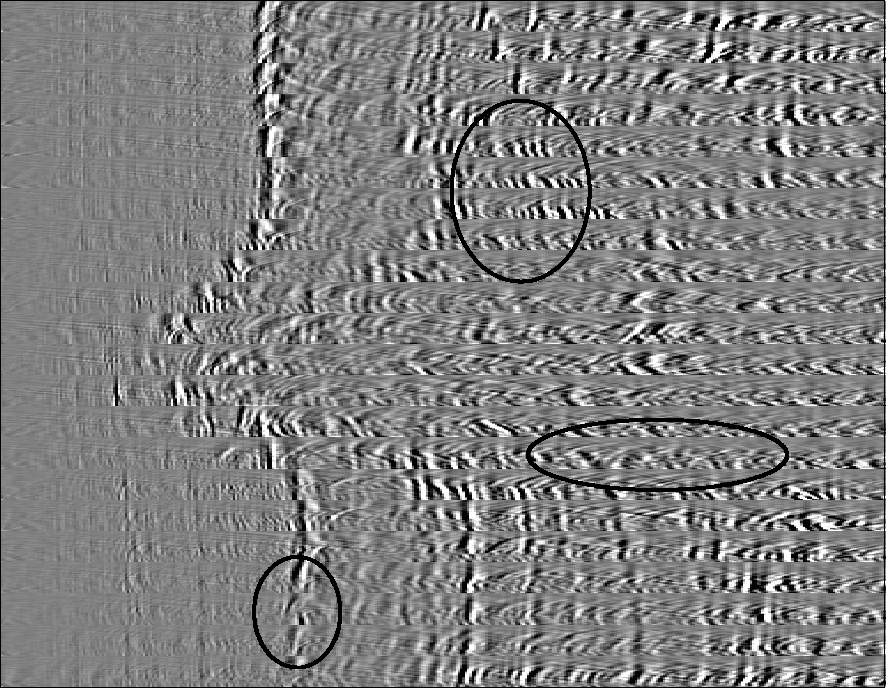
continuity below 2.8 km. If we look at the CRP gathers
(Figure 4) we see significant moveout and
focusing problems.
elf-mig0
Figure 3 Migration result using
the velocity from Figure 2. Migrations problems
can be seen at locations A-D.


 moveout-vel0
Figure 4 Every 20th CRP gather from the
initial migration. The circled areas show either focusing or
or moveout problems.
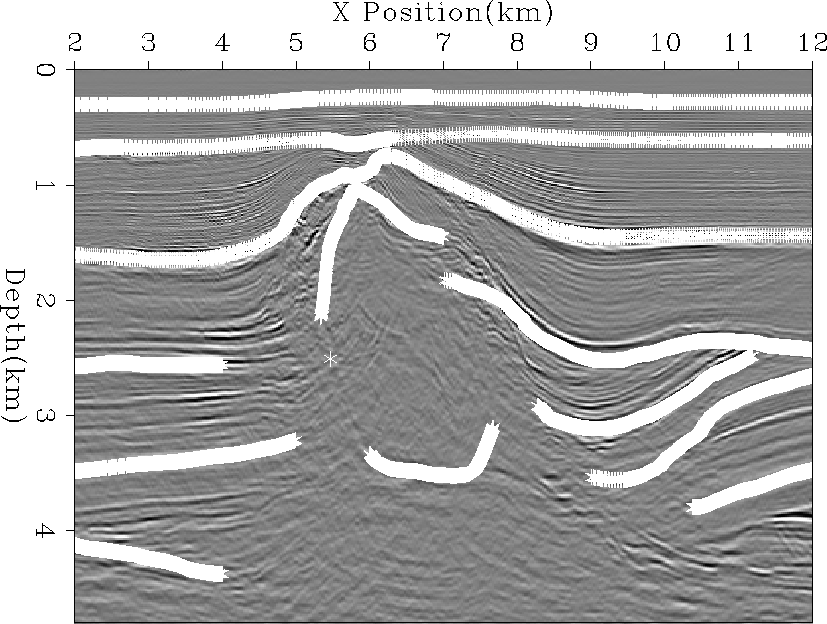
Using the initial migrated image I chose 11 reflectors to perform
tomography with (Figure 5). To constrain
the upper portion of the model I chose the
water bottom reflection and two reflectors above the salt.
I picked the salt
top and salt bottom and three reflectors
on both sides of the salt body.
overlays
Figure 5 Initial migration
with picked reflectors overlaid.
I performed moveout analysis using equation (![[*]](http://sepwww.stanford.edu/latex2html/cross_ref_motif.gif) ).
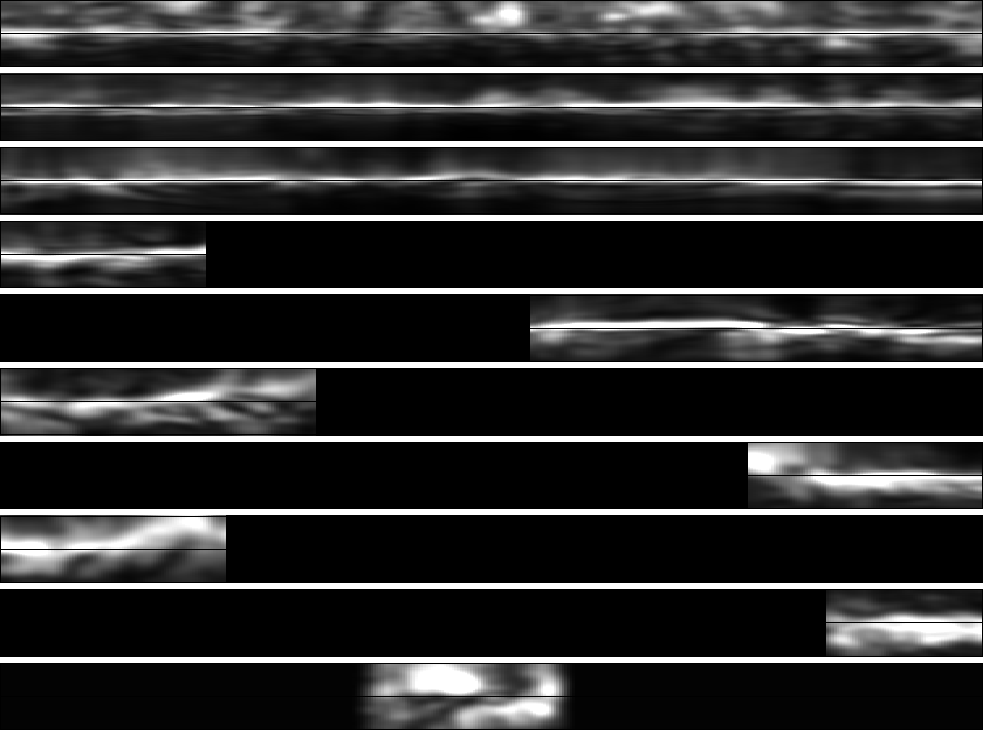
I selected the semblance at each reflector,
Figure 6, and found a
smooth curve using fitting goals ().
The top two reflectors have have almost
no moveout errors and the third reflector very little.
The remaining reflectors all have
some residual moveout errors that
tomography can attempt to resolve.
).
I selected the semblance at each reflector,
Figure 6, and found a
smooth curve using fitting goals ().
The top two reflectors have have almost
no moveout errors and the third reflector very little.
The remaining reflectors all have
some residual moveout errors that
tomography can attempt to resolve.
elf-sem-ref.vel0
Figure 6 Semblance panels from
ten of the reflectors used in the tomography. Note that that the
top two reflectors are generally flat. The third reflector shows minimal
moveout and the remaining reflectors
still have significant residual moveout.
![[*]](http://sepwww.stanford.edu/latex2html/movie.gif)
Next: Building the steering filters
Up: 2-D field tests
Previous: Introduction and summary
Stanford Exploration Project
4/29/2001