


![[pdf]](icons/pdf.png)
|
|
|
|
| An approximation of the inverse Ricker wavelet as an initial guess for bidirectional deconvolution | |
|
In theory, however, Ricker wavelets do not have a stable inverse. Therefore we must find an approximate inverse to use as the initial guesses for filters  and
and 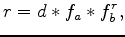 . Since we need two initial guesses, one for each filter, our approximate inverse should consist of two symmetric parts.
We have three tasks: first we must find a finite approximation for the continuous Ricker wavelet; second we must separate the approximate form into two symmetric parts; and third we must find a way to avoid the singularity problems we encounter when inverting these two parts directly in the frequency domain. Let's address these tasks one by one.
|
|
|
|
| An approximation of the inverse Ricker wavelet as an initial guess for bidirectional deconvolution | |
|