


![[pdf]](icons/pdf.png)
|
|
|
|
| Poroelastic measurements resulting in complete data sets for granular and other anisotropic porous media | |
|
There have been a great many experiments done on poroelastic systems through the years, and many attempts to measure complete poroelastic data sets. The work summarized here is designed to make this process easier by removing the need (whenever possible) for tedious fitting routines that have traditionally been used to find the pertinent drained constants for the measured fluid-saturated and undrained systems. It is of some real scientific importance to have methods like those treated here, because it is a well-known fact that the presence of the pore-fluid can alter the nature of the points of contact between neighboring grains, and therefore alter the values of the ``drained'' constants that were sought here and found via the methods developed for this purpose. Different values of the ``drained'' constants might be obtained if all the fluid is physically drained out of the system, so it is effectively ``dry'' rather than merely ``drained'' (i.e., in the sense of pore-fluid having the capability of moving in and out of the boundaries as would happen in the absence of jacketing material). In the case of a fully dry system, the grain-to-grain contacts may act very differently than they do when saturated with certain fluids. At the very least, it could be important to check experimentally whether these constants are different or not in a variety of systems, and the present analysis will permit such studies to move forward.
One especially interesting aspect of the analysis presented is that in no case did
the solution of any of the problems treated involve any analysis more complicated than
solving a linear equation. There are no quadratic equations solved in this paper, and none that
needed to be solved. The hardest calculation in the paper is the implicit inversion of a
 matrix when the real data are poroelastic stiffnesses, rather than compliances.
[Note: Matrix inversion requires only the calculation of various determinants, but not
the solution of any quadratic or cubic equations. These additional difficulties can be avoided
unless I also want or need to find the eigenvalues of the matrix. But this step
is unnecessary in the work described here.]
This situation does occur in practice whenever the elastic/poroelastic data
are obtained using wave propagation methods.
Then, the actual data have the form
matrix when the real data are poroelastic stiffnesses, rather than compliances.
[Note: Matrix inversion requires only the calculation of various determinants, but not
the solution of any quadratic or cubic equations. These additional difficulties can be avoided
unless I also want or need to find the eigenvalues of the matrix. But this step
is unnecessary in the work described here.]
This situation does occur in practice whenever the elastic/poroelastic data
are obtained using wave propagation methods.
Then, the actual data have the form
 , where
  is a wave speed,
 is a stiffness or combination of stiffnesses, and
  is the inertial density.
A complete set of the stiffnesses for the principal stresses and strains is needed for the analysis
because I require compliance data, and to obtain a complete set of compliance data
from stiffness data, I also need a complete set of the corresponding stiffness data.
All the elements of the undrained compliance matrix for the principal stresses and
strains must be known in order to proceed with the described analysis.
is the inertial density.
A complete set of the stiffnesses for the principal stresses and strains is needed for the analysis
because I require compliance data, and to obtain a complete set of compliance data
from stiffness data, I also need a complete set of the corresponding stiffness data.
All the elements of the undrained compliance matrix for the principal stresses and
strains must be known in order to proceed with the described analysis.
1.2
 -quartz, titanium, zirconium, aluminum, copper, magnesia, and spinel.
Units of shear modulus
-quartz, titanium, zirconium, aluminum, copper, magnesia, and spinel.
Units of shear modulus  are GPa. All the formulas needed to compute the various
effective moduli from the stiffness coefficients are given in Berryman (2005).
The anisotropy parameter
are GPa. All the formulas needed to compute the various
effective moduli from the stiffness coefficients are given in Berryman (2005).
The anisotropy parameter 
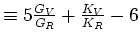 [from Ranganathan and Ostoja-Starzewski (2008a,b)].
| Material | Symmetry |  |
 |
 |
|
| Cd | Hexagonal | 22.1 | 26.4 | 1.197 | 1.174 |
SiO |
Hexagonal | 3.48 | 3.55 | 1.025 | 0.125 |
| Ti | Hexagonal | 34.1 | 44.8 | 1.31 | 0.154 |
| Zr | Hexagonal | 32.54 | 33.40 | 1.03 | 0.132 |
| Al | Cubic | 26.04 | 26.28 | 1.009 | 0.045 |
| Cu | Cubic | 40.04 | 54.67 | 1.365 | 1.825 |
| MgO | Cubic | 128.06 | 134.02 | 1.047 | 0.235 |
MgAlO |
Cubic | 107.17 | 123.52 | 1.152 | 0.76 |
The analysis has been restricted to systems having orthotropic poroelastic symmetry or higher.
Lower symmetry systems might also be studied, but I purposely avoided them here because
for such systems it is harder to know for sure from experimental data when you have determined
the true axes of symmetry. Also, in such cases of orthotropic symmetry or higher, the system of equations
to be studied is substantially reduced because there is no coupling of the fluid effects
to the shear components associated with the strains 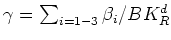 ,
,  ,
,  ,
or the the stresses
,
or the the stresses
 ,
,
 ,
,
 .
Shear effects are not ignored altogether however, as there are well-known shearing mechanisms
in poroelastic media associated with the Skempton (1954) coefficient
.
Shear effects are not ignored altogether however, as there are well-known shearing mechanisms
in poroelastic media associated with the Skempton (1954) coefficient 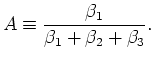 [also see Lockner and Stanchits (2002)].
These effects were studied here in some detail, and were found to be very useful
in accomplishing our main goals, since they provided a necessary mechanism for measuring
some otherwise difficult to measure off-diagonal terms in the poroelastic equations.
[also see Lockner and Stanchits (2002)].
These effects were studied here in some detail, and were found to be very useful
in accomplishing our main goals, since they provided a necessary mechanism for measuring
some otherwise difficult to measure off-diagonal terms in the poroelastic equations.
I conclude that this analysis has been successful in solving the problem of obtaining drained constants from undrained constants in all the cases considered. The chosen set of cases (orthotropic or higher symmetry) is not very restrictive from a practical point of view, as the great majority of poroelastic systems studied in practice usually have hexagonal (transversely isotropic) symmetry or higher, and therefore are all explicitly included within the range of the present analyses.
|
|
|
|
| Poroelastic measurements resulting in complete data sets for granular and other anisotropic porous media | |
|