![[pdf]](icons/pdf.png)
|
|
|
|
| Schoenberg's angle on fractures and anisotropy: A study in orthotropy | |
|
For waves propagating in the [ -
- ]-plane with wavenumbers
 and
and
 where
where
 ,
Tsvankin (1997) shows that we have the following equations
[patterned here after the notation of Berryman (1979)]:
,
Tsvankin (1997) shows that we have the following equations
[patterned here after the notation of Berryman (1979)]:
 (with no subscript) is the inertial density.
Equation (1) determines the two wave speeds
(with no subscript) is the inertial density.
Equation (1) determines the two wave speeds
 have dimensions of angular frequency, but
they are introduced mostly to simplify the form of the equations.
The pertinent phase speeds
have dimensions of angular frequency, but
they are introduced mostly to simplify the form of the equations.
The pertinent phase speeds  for quasi-
 -waves and
  for quasi-
 -waves are given respectively by values corresponding
to the
-waves are given respectively by values corresponding
to the  and
and  subscripts in the velocity equation (3).
Group velocities [Brillouin (1946); Tsvankin (2005); Rüger (2002)]
can be computed relatively easily
as well when using the methods outlined earlier by Berryman (1979).
subscripts in the velocity equation (3).
Group velocities [Brillouin (1946); Tsvankin (2005); Rüger (2002)]
can be computed relatively easily
as well when using the methods outlined earlier by Berryman (1979).
Sayers and Kachanov (1991) consider a model with two sets of possibly nonorthogonal
fractures, also possibly having two different fracture density values
 and
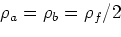
and  . Total fracture density is therefore
 .
These authors found that the pertinent fracture influence parameters were multiplied
in this situation, when the angle between the fracture sets is
.
These authors found that the pertinent fracture influence parameters were multiplied
in this situation, when the angle between the fracture sets is  ,
either solely by
,
either solely by 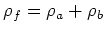 itself or by one of the two factors:
Table 1 shows the Sayers and Kachanov (1991) results for corrections
to the isotropic background values of compliance (in Voigt  matrix notation -- the original paper had results expressed
in terms of tensor notation). Those background values
are specfically for one model considered having Poisson's ratio
matrix notation -- the original paper had results expressed
in terms of tensor notation). Those background values
are specfically for one model considered having Poisson's ratio
 (dimensionless), effective bulk modulus
  ,
shear modulus
,
shear modulus  , and Young's modulus
  ,
with all moduli measured in units of GPa.
For the assumed inertial density
,
with all moduli measured in units of GPa.
For the assumed inertial density  kg/m
kg/m , the
resulting isotropic background compressional wave speed is
, the
resulting isotropic background compressional wave speed is  km/s
and shear wave speed is
km/s
and shear wave speed is  km/s.
For our computations, we also need the isotropic background compliance
values, which are
km/s.
For our computations, we also need the isotropic background compliance
values, which are
 ,
,
 , and
, and
 . The fracture influence factors
  and
and  , found
for this specific model by Berryman and Grechka (2006), are displayed in
Table 2.
Some higher order fracture-influence factors were also obtained
in the earlier work, but I will not be considering such factors
in this short paper.
, found
for this specific model by Berryman and Grechka (2006), are displayed in
Table 2.
Some higher order fracture-influence factors were also obtained
in the earlier work, but I will not be considering such factors
in this short paper.
 |
 |
 |
 |
|
 |
 |
|
 |
 |
|
 |
 |
|
 |
 |
|
 |
 |
|
 |
 |
|
 |
 |
|
 |
In the examples that follow, I will consider only the case of equal
fracture densities
 . For this somewhat
simpler situation, I also have
. For this somewhat
simpler situation, I also have
| Fracture parameter | GPa |
|
 |
|
 |
, km/s,
and km/s.
There may also be some uncertainty about exactly which of these factors is
which in this degenerate case, because of the sign ambiguity in taking
the square root of  . But I will not concern myself with this detail here.
|
|
|
|
| Schoenberg's angle on fractures and anisotropy: A study in orthotropy | |
|
![\begin{displaymath}
\rho\omega^2_{\pm} = \frac{1}{2}\left[(c_{11}+c_{55})k^2_{1} + (c_{33}+c_{55})k^2_{3}
\pm R\right],
\end{displaymath}](img12.png)
![\begin{displaymath}
R \equiv \sqrt{\left[(c_{11}-c_{55})k^2_{1} - (c_{33}-c_{55})k^2_{3}\right]^2
+ 4(c_{13}+c_{55})^2k^2_{1}k^2_{3}}
\end{displaymath}](img13.png)

![\begin{displaymath}
\begin{array}{c}
A = \rho_f + \left[\rho_f^2 - 4\rho_a\rho_b...
...t[\rho_f^2 - 4\rho_a\rho_b\sin^2\phi\right]^{1/2}.
\end{array} \end{displaymath}](img27.png)