


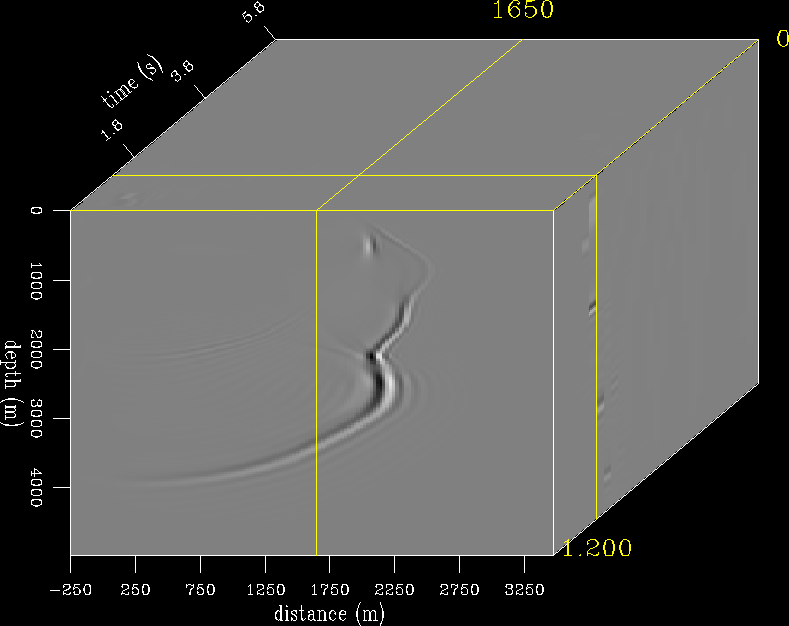
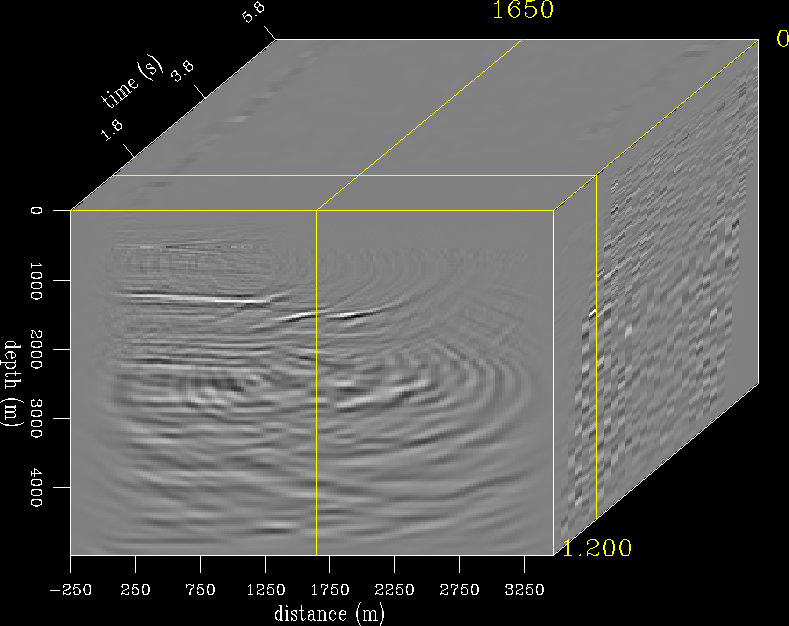
![[*]](http://sepwww.stanford.edu/latex2html/cross_ref_motif.gif) shows the source wavefield and Figure the receiver wavefield.
shows the source wavefield and Figure the receiver wavefield.
 |


 |
 |
).
 |
).
 |
).
 |
) and the variable damping (Figure ).
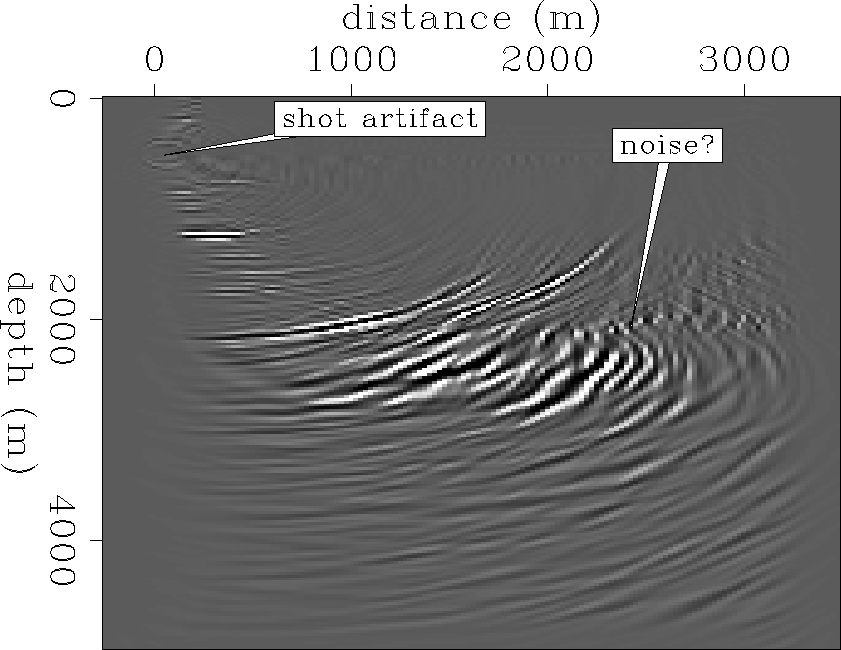
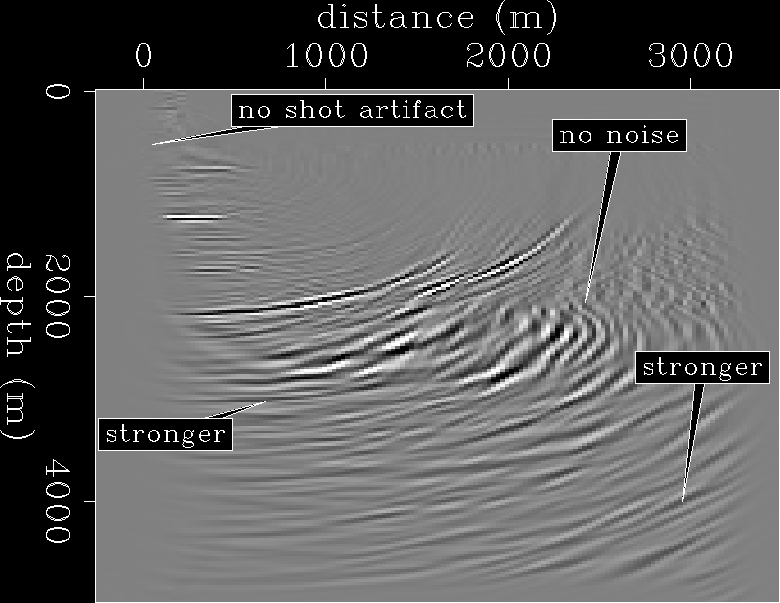
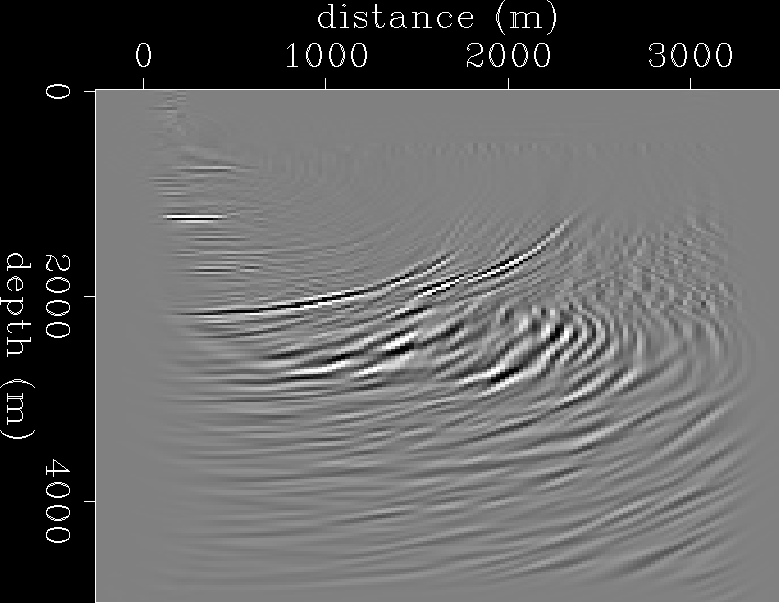
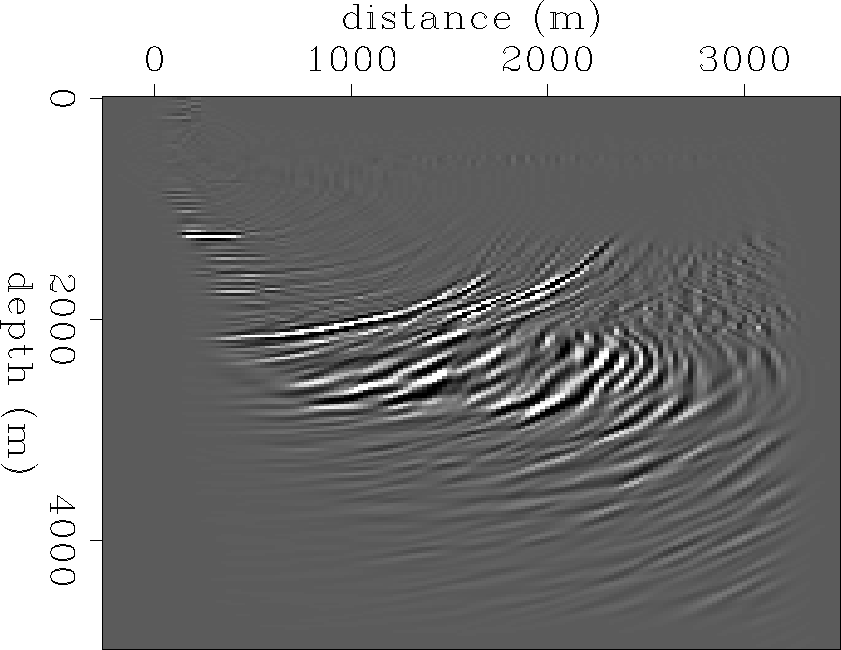
I calculated the reflection strength using the three imaging conditions stated in equations (), () and (). The results are shown in Figures -. We can see that the damped imaging conditions from equation () and equation () give a more balanced section. Some artifacts, like the shot artifact present in Figure , were eliminated in Figure and Figure . In general, the continuity of the events was enhanced.
In the two damped images compared in Figure , the difference between the images is greatest in the center where the damping was not needed and least in the corners where it is really needed.
A final test for the variable damping imaging condition should be the stack of more shots to form the final image. But issues like the data driven selection of the damping factor still need to be addressed to make it applicable to a full seismic dataset.