Next: PS results
Up: Real data results
Previous: Real data results
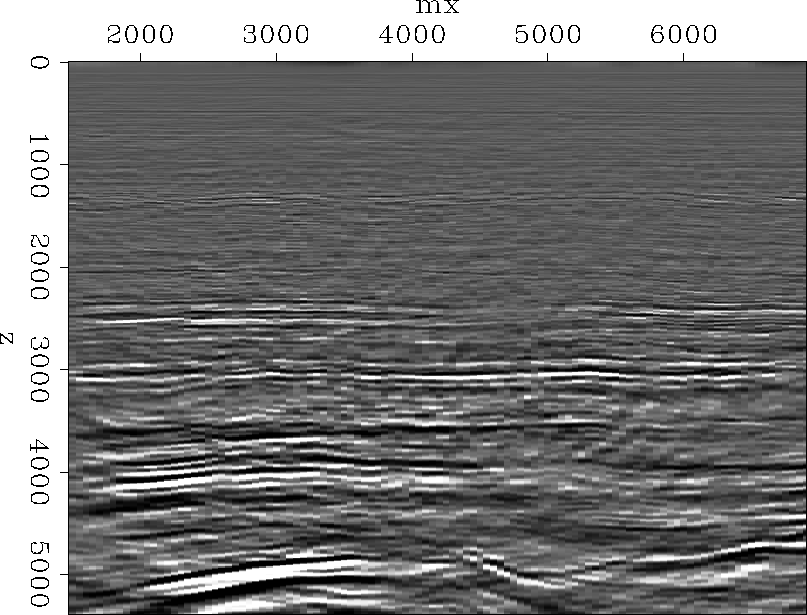
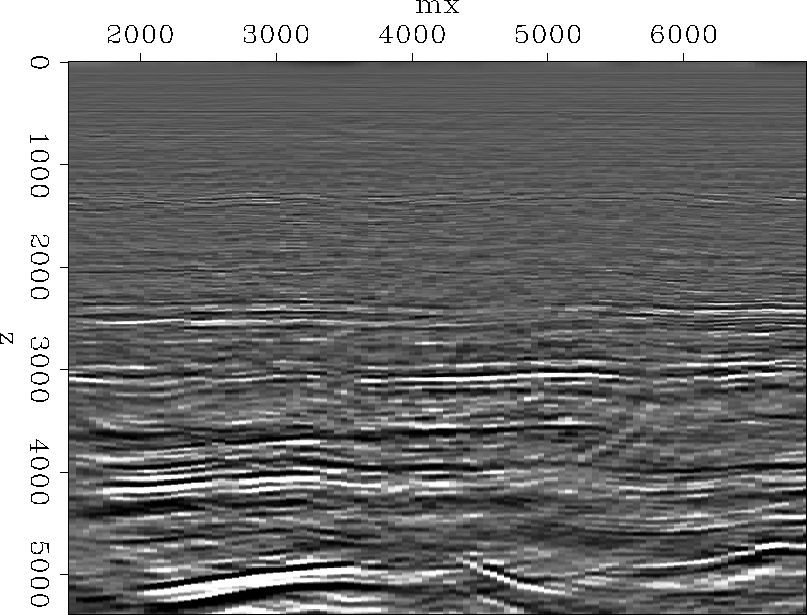
Figure ![[*]](http://sepwww.stanford.edu/latex2html/cross_ref_motif.gif) shows the migration result. Figure
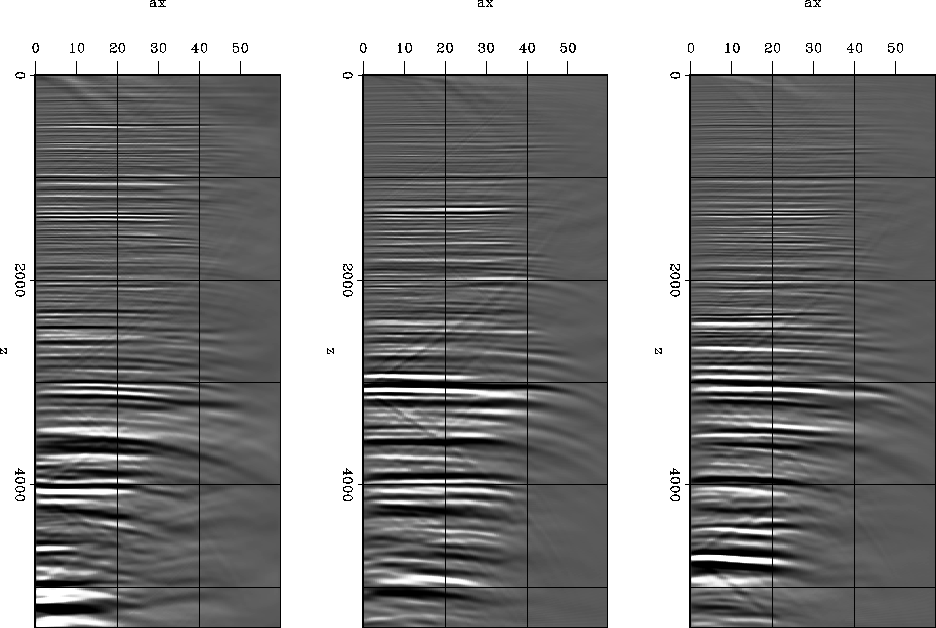
shows three angle gathers. Observe the residual moveout in these
angle gathers. This indicates errors in the velocity model.
shows the migration result. Figure
shows three angle gathers. Observe the residual moveout in these
angle gathers. This indicates errors in the velocity model.
ppmiga
Figure 1 PP migration result with
the original P-velocity model
|
|  |


 ppmigb
Figure 2 Three angle domain common
image gathers for the migration result of Figure .
They corresponds, from left to right, to a lateral
position of 2500m, 4500m and 6500m. Observe the residual curvature.
![[*]](http://sepwww.stanford.edu/latex2html/movie.gif)
I perform Stolt residual migration () over
this migration result. There is not a single value of
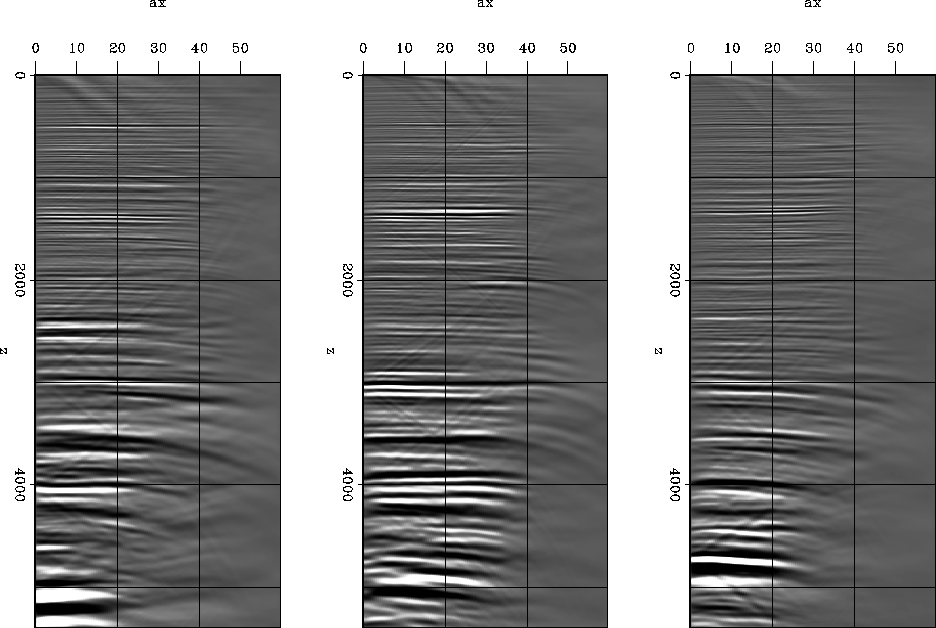
 that fixes the whole section. Figure
shows the same three angle domain common image gathers,
as in Figure . Moreover, each angle domain common
image gather corresponds to a different value of , from
left to right,
that fixes the whole section. Figure
shows the same three angle domain common image gathers,
as in Figure . Moreover, each angle domain common
image gather corresponds to a different value of , from
left to right, 
 and
and  .
Note how different events correct better for different
values.
.
Note how different events correct better for different
values.
ppsrm2
Figure 3 Angle domain common image gathers
after Stolt residual migration. They corresponds to the same
position as the angle gathers in Figure . Moreover,
from left to right they also correspond to
and
By updating the velocity model with different values at
different depths and lateral positions, I perform
a new migration. Figure shows this final
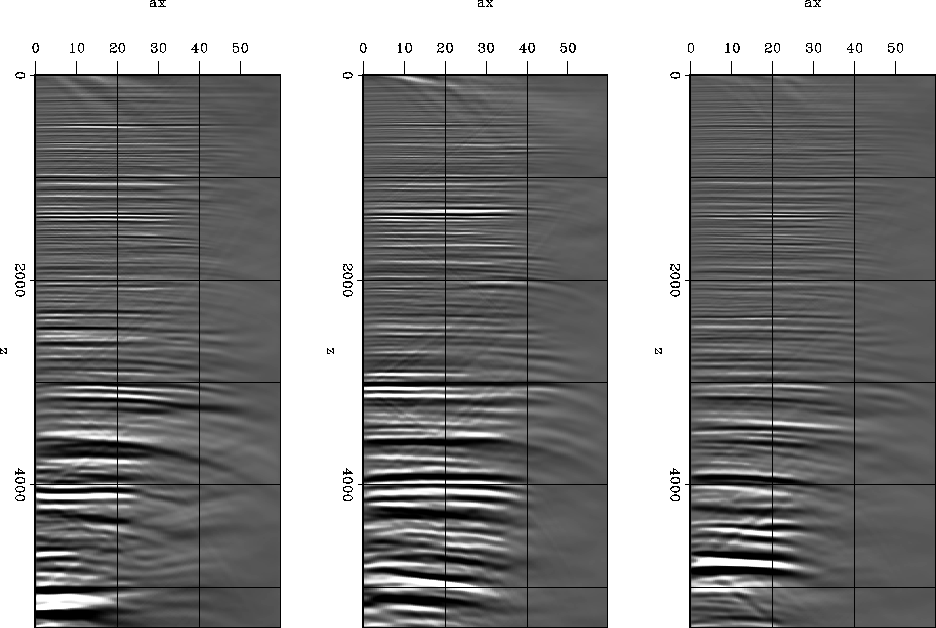
migration result. Figure shows again the
same different angle domain common image gathers for the migration
result of Figure .
finalpp
Figure 4 Migration result after updating
the P velocity model with different values of at
different depth and lateral locations.
|
|  |
finalcag
Figure 5 Angle domain common image gathers
for the migration result of Figure at the same
position of Figure .
Next: PS results
Up: Real data results
Previous: Real data results
Stanford Exploration Project
11/11/2002